Up next in 10



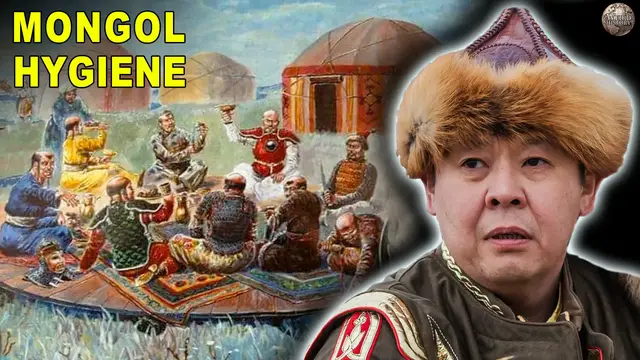
The Mongols created the largest contiguous land empire to have ever existed. Founded by Genghis Khan in 1206, the Mongol Empire spanned across Asia, extended into Eastern Europe, and reached into the Middle East. As warriors and rulers, the Mongols facilitated the integration of language, populations, and belief systems and, while their accomplishments have long been acknowledged, so, too, have their unique hygienic practices.
Show More Show Less View Video Transcript
0:00
Founded by Genghis Khan in 1206, the Mongol Empire spanned across Asia
0:06
extended into Eastern Europe, and reached into the Middle East. However, while their accomplishments were numerous
0:12
Mongol hygiene was rudimentary, at best. For while the Mongols created the largest contiguous land empire to have ever existed
0:20
cleanliness, at least by modern standards, wasn't really their thing. So today, we're going to take a look at what hygiene was like in the Mongol horde
0:30
Gout is caused by excessive eating and drinking, and it was very common among Mongols
0:36
While in the Golden Horde, 14th century traveler Ibn Battuta visited the home of a sultan's daughter
0:42
whose husband was suffering from gout, and was unable for this reason to go about on his feet
0:47
or to ride a horse, and so used to ride only in a wagon
0:51
He went on to observe that this disease is widespread among the Mongol
0:55
Kublai Khan, Genghis Khan's grandson and the ruler of China for much of the 13th century
1:00
suffered from such severe gout that it limited his movement as a warrior. Having so much experience with gout
1:06
you'd think the Mongols would have some insights into how to treat the disease, but not so much
1:11
To treat gout, Mongols were advised to stick their feet in the chest of a dead horse
1:16
Hmm, tingly. Now, if that sounds disgusting to you, don't worry. There were other options
1:22
In lieu of a horse, at least one medicine man prescribed finding a red-haired child and sticking your foot
1:28
into their abdomen. Ugh, I'll take the horse. One general tried this technique on 30 children
1:34
However, his pain didn't subside. So he offed his doctor and fed his entrails to some dogs
1:40
That's a one-star review. In the 1250s, Franciscan missionary Willem von Rubruk journeyed throughout the Mongol Empire
1:51
recording his travels. Rubruk described Mongol hairstyles, noting that men shaved sections atop their heads
1:58
along with their temples and necks, and across the forehead as far as the crown of the head
2:02
Similarly, women shaved the fronts of their heads upon marrying and grew the rest of their hair long
2:08
According to Rubruk, when they want to wash their hands or head, they fill their mouths with water
2:13
which they let trickle onto their hands, and in this way, they also wet their hair and washed their heads
2:19
Why'd they do it this way? Well, Mongols venerated water, never wanting to offend it
2:24
Mongols relate that Genghis Khan even dictated that if any water touched a person face and then went back into the water source they were to be executed So it may be fair to presume that the process was designed to prevent the Mongols from spilling water
2:38
back into the source. As avid archers, the Mongols were prone to arrow wounds
2:47
According to the 13th century work, The Secret History of the Mongols, when Genghis Khan suffered a neck laceration
2:53
that bled uncontrollably, his retainer, Zelma, sucked out blood, which he swallowed or spat out
2:59
And when the Khan asked for something to drink, Zelma brought him fermented milk and water
3:04
which presumably prevented dehydration. Persian physician and historian Rashid al-Din recorded a statement Genghis Khan was alleged to have said
3:12
about the blood-sucking exercise. He believed the procedure brought back the spark of life
3:18
which had departed, and when it was finished, he could move again. Water was sacred to the Mongols, and disrupting or polluting it was a punishable offense
3:31
Washing clothes was prohibited, and washing one's body or hands during the spring or summer
3:35
was also prohibited out of fear of thunderstorms. However, one of the worst defenses was if a person released their bodily fluids into
3:43
a body of water, like a stream or a river. Genghis Khan gave legal status to many previously religious taboos, and the Mongols
3:51
strictly forbid urination in flowing water or in a dwelling, fearful of offending spirits
3:56
In the event of accidental urination, Mongols were heavily fined or were forced to cleanse
4:01
the offended party's home and possessions. But until that cleansing took place, no one
4:06
dare enter the dwelling or take anything from it. And if a person intentionally urinated in
4:11
flowing water or in a dwelling, they received death. Yeah, if you peed in someone's house
4:17
you received capital punishment. So hopefully you can hold it in. According to the Yasa, which is a collection of rules
4:27
articulated by Genghis Khan, Mongols were forbidden from washing clothes in running water
4:33
Rubruk wrote, they never wash clothes, for they say that God would be angered thereat
4:38
and that it would thunder if they hung them up to dry. He went on to point out that Mongols deeply feared thunder
4:44
and during storms they would kick strangers out of their homes and wrapped themselves in black felt, thus hiding themselves until it passed
4:51
Rather than washing, the Khan expected his fellow Mongols to wear the same piece of clothing
4:56
until it wore out. The Mongols didn't wash much of anything, and when they ate, their hands were
5:01
reportedly covered with grease fat dirt and meat all of which they wiped on their clothes It may sound like a dirty dirty barbecue but there were some upsides The animal fat smeared on their garments
5:12
actually helped protect Mongols from the elements along the steppes of Central Asia
5:17
Covering their outer clothing and fat and grease made them water and windproof, and if the Mongols had washed their clothes, it would have stripped that protective layer
5:24
The Mongols did have other cleansing practices, and many of them revolved around fire
5:28
The Mongols considered flame an intermediary between heaven and earth, one that prepared their food, warmed their dwellings, and ultimately cleansed all things
5:37
of harmful elements. When friar Giovanni de Pien del Carpine visited the court of Gullio Khan
5:44
during the 1240s, he was made to pass between two flames just in case he was thinking something
5:49
injurious about the Khan or carrying poison. The Mongols believed the fire would neutralize either
5:58
Though the Mongols did not understand germ theory or how the disease worked, they understood
6:04
contamination and the importance of keeping outsiders at bay during a time of illness
6:09
According to Wilhelm von Rubruck, if a member of the great household or Ordu took ill, the Mongols
6:15
would place guards all around the Ordu and permit no one to pass them. They feared anyone who entered
6:21
or even a stray wind might let an evil spirit in. While they associated illness with a spiritual
6:27
disorder, the Mongols also sought to separate themselves from being tainted by whatever the
6:31
afflicted individual had done to bring on their disease. They also understood that sending
6:36
disease-ridden bodies into a besieged city would bring about illness and destruction
6:42
When the Mongols seized Kaffa in 1346, they hurled mountains of the dead, according to the
6:47
chronicler Gabriela de Moussis. As a result, the whole of the air inside Kaffa was infected and the
6:54
water poisoned by the corrupt putridity of the corpses. Apparently, the stench was so awful
7:00
that hardly one out of 1,000 remained to try to flee the Mongol army
7:08
Everybody chokes on their food once in a while. But the Mongols believed choking was
7:12
caused by some sort of demon, one that needed to be wiped out
7:16
If an individual choked on a piece of food and spit it out, the offense was twofold
7:22
Not only did the person waste food, but he also polluted the dwelling within which he ate
7:27
According to Giovanni da Piendel Carpine, if anyone takes a morsel and, unable to swallow it
7:33
spits it out of his mouth a hole is made under the dwelling and he is dragged out by that hole and without any mercy put to death Well that a tough room On the other hand a 14th century Chinese dietary and nutritional
7:46
manual written by Hu Siwi offers a different take on spitting. Written during China's Mongol era
7:53
the Yuan Dynasty, Hu Siwi's Yinchenjianyao says, it is better to spit short distances than long
8:00
distances. It is better to not spit at all than spitting short distances. This distinction may
8:05
imply that there were different forms of spitting and may require different forms of punishment for
8:09
each. Whatever the case, if you time travel back to the Mongol area, we recommend playing it safe
8:15
and trying not to spit at all. According to French chronicler Jean de Joinville, the Mongols
8:24
tenderized and cooked pieces of raw meat by putting them under their saddles. Modern academics
8:29
however, have cast some serious doubt as to whether this was true. In fact, the practice was
8:34
likely done instead to soothe saddle sores on their horses. That being said, the Mongols undoubtedly ate a lot of meat
8:42
Mongols ate mutton and lamb, as well as horse meat, the flesh of dogs, wolves, rodents, and
8:47
when there was absolutely no other option, humans. Anyway, contrary to claims that Mongols ate raw meat, in truth, they typically boiled
8:55
it to preserve its spiritual properties. It was only in times of desperation that they would eat something uncooked
9:02
According to contemporary reports, when the meat was cooked, they rinsed out the dish in which they were about to put it
9:08
with some of the boiling broth from the kettle, which they poured back into it. This was, as far as we know, the closest the Mongols came to washing their dishes
9:19
Fear of poison pervaded Mongol society so much, Genghis Khan addressed it in the Yasa, his de facto code of law
9:26
No food was supposed to be consumed until the person presenting it ate it first
9:30
a precaution to make sure it was safe. It wasn't a terrible policy, as Genghis Khan had good reason
9:36
to be concerned about poison. Namely, his father perished as a result of eating tainted food given
9:42
to him by his enemies. This paranoia about poison also extended to drinking practices
9:48
Chinese observers noted that at Mongol feasts, a single bowl or cup was passed around so everyone
9:54
could drink out of it. From what Willem von Rubruck describes, the practice, though needed
9:59
for precautionary measures was also somewhat fun. During one celebration, he witnessed a playful exchange
10:05
in which three singing and dancing Mongols playfully teased another with a cup
10:09
before handing it off to him. Those Mongols know how to party
#Health
#People & Society