Up next in 10



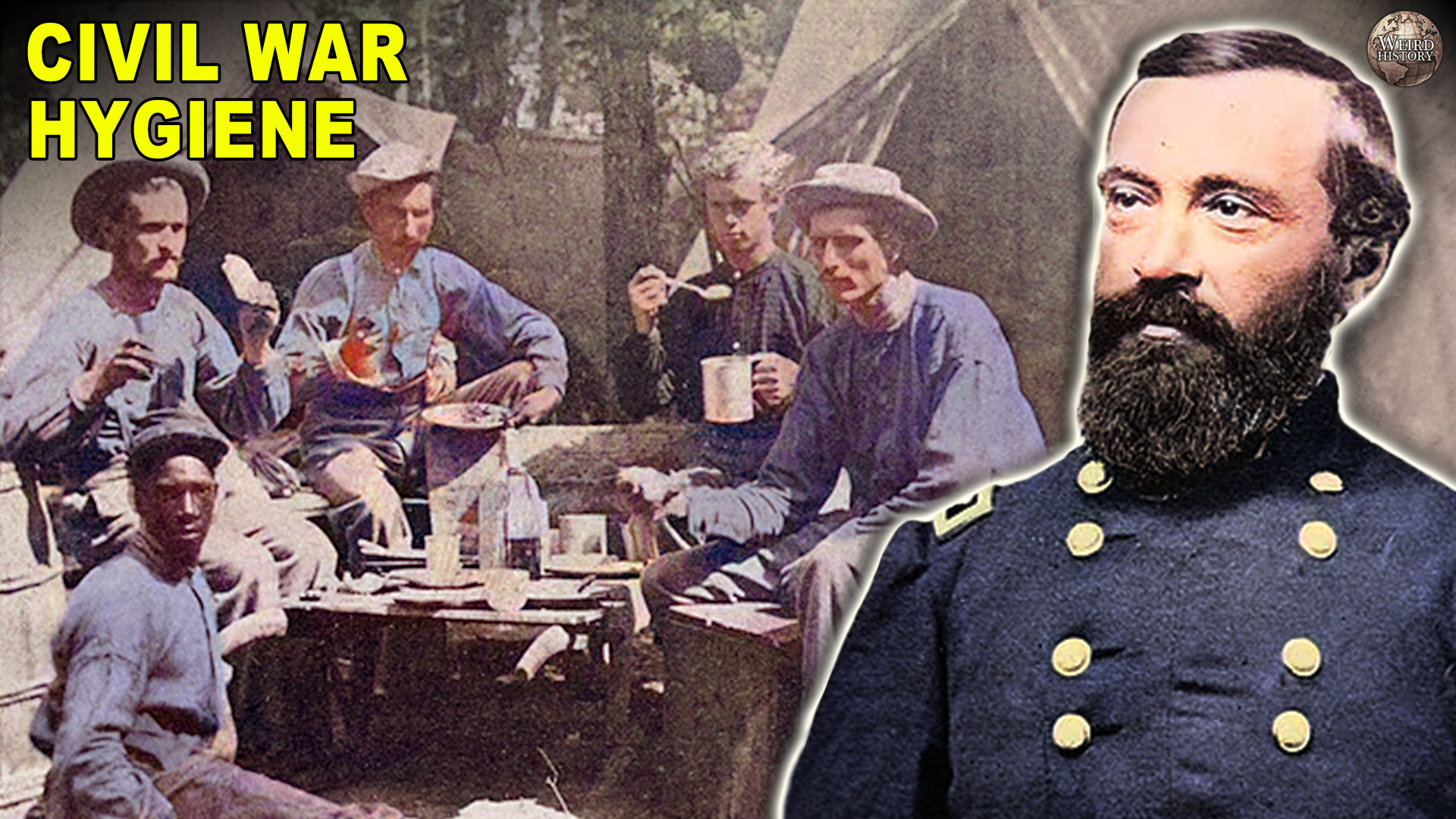
What was hygiene like during the Civil War? By contemporary standards, it was pretty grim for both Union and Confederate troops. Confronted by unsanitary living conditions and the ever-present risk of disease, many soldiers were unwittingly locked in a fight not only for the nation but their own health as well. The American Civil War was fought between 1861 and 1865, before the advent of antiseptics or a full understanding of how diseases spread.
Show More Show Less View Video Transcript
0:00
During the American Civil War of the mid-19th century
0:04
soldiers were actually more likely to succumb to infections and unsanitary living conditions
0:09
than they were from rifle and cannon fire. And that's really saying something because cannons are in fact quite dangerous
0:16
It's been projected that of the 3.5 million soldiers who served in the war between 1861 and 1865
0:23
over half a million succumbed to disease. So, today on Weird History, we're looking at what hygiene was like for soldiers in the Civil War
0:32
Okay, time to heal the wounds of this great nation and disinfect them
0:40
Issues with basic cleanliness cost hundreds of thousands of lives on both sides of the Civil War
0:45
exacerbating deaths from infection with the rapid spread of disease such as malaria, dysentery, and typhoid
0:51
Historian Drew Gilpin Faust estimates that this number is nearly double the amount of
0:56
Civil War soldiers who actually perished in combat. Enlisted men would undergo a medical examination before being sent off to fight, but these
1:04
tended to focus exclusively on their physical and mental ability to handle combat
1:09
Whether they could stand up, march in a straight line, hold a rifle, and follow basic instructions
1:14
were the primary considerations. As a result, the exams were not exactly thorough
1:20
In fact, many were so lax that the women soldiers were forbidden from joining either army
1:25
At least 400 managed to successfully enlist as men over the course of the conflict
1:29
That kind of says more about the doctors conducting the exams. Bringing together so many individuals from across a large and diverse continent also brought along its own challenges
1:39
Soldiers who grew up in remote or rural areas often had not been exposed to common childhood diseases among city dwellers
1:46
such as chickenpox, measles, or the mumps. As waves of new recruits would arrive in camps, anyone without a fully armed immune system would
1:54
likely succumb to one of these illnesses. Vaccination programs helped stem the spread
1:58
of smallpox in the camps, but it remained a viable concern. To compound matters, though they were
2:04
often required by commanders to bathe once per week, no one was really checking on the soldiers
2:08
to make sure. It wasn't like Stonewall Jackson was going to be on the front lines sniffing
2:12
everyone's armpits, so a lot of people ignored this requirement. Soldiers at the front would
2:17
also frequently end up sharing or reusing one another's clothes. Uniforms were hastily being fashioned for both Union and Confederate troops, sometimes
2:26
with subpar materials, leading them to fall apart quickly or fail to successfully keep
2:31
troops warm during particularly cold nights outdoors. Many soldiers also didn't have access to sufficient footwear
2:37
An estimated one-third of Confederate soldiers went barefoot throughout the conflict. If you're fighting the Civil War and you're barefoot, the universe does not want you to succeed
2:46
Normally, having to share clothes is just kind of irritating, particularly if you're the youngest
2:52
and your older siblings lack a sense of personal flair and style Come over here and look at yourself They look amazing on you But in wartime it can actually be a health hazard For example lice infestations became extremely routine
3:06
and the pests were easily transferred around camps where men were sharing clothes and living
3:10
in tightly packed close quarters. More than a nuisance, lice could spread typhus
3:15
a common and deadly disease at the time. Lice became such a fact of life during the Civil War
3:20
they even made their way into popular culture. Soldiers would sometimes hold louse races, in which they'd put the bugs on a custom racetrack
3:28
and set them against one another, sometimes wagering money on the winner. Louse fights were also reported, though it's unclear how these were officiated
3:36
Additionally, many soldiers, particularly undersupplied confederates, would frequently steal boots and other clothing from the dead, imprisoned, or wounded enemy troops
3:45
This also contributed to the spread of disease, though not in as overwhelming and dire a way
3:50
as the camps in which the soldiers lived. To put it in concrete terms, the tent camps alongside travel routes and battlefields where
4:02
soldiers would live and sleep were pretty filthy, by any standard. This constant exposure to the
4:08
outdoors and elements, and all kinds of weather, obviously led to a host of health complications
4:13
among the troops. Though many were outfitted with a rubber blanket to protect them from the wet
4:17
ground, these were heavy to carry, and many soldiers abandoned them in order to lighten their load
4:22
As a result, many soldiers slept on the wet or damp ground, which was sometimes ripe with
4:26
mosquitoes or other pests. This led to an epidemic of skin diseases and also outbreaks of malaria
4:33
Malaria ultimately went on to post one of the highest KD ratios of the entire war, claiming
4:38
the lives of over 10,000 soldiers and more than 1.3 million reported infections
4:43
The problem became so significant, Scientific American magazine started recommending that soldiers treat themselves with quinine as a preventative measure
4:52
Pneumonia was also another common illness, which took out an estimated 20,000 Union troops
4:57
during the conflict. Almost 30,000 troops were infected by tuberculosis as well, leading to 7,000 early graves
5:04
One Union inspector at the time reported finding camps littered with trash and discarded food
5:09
some of it already in a state of decomposition. He also reported on the digging of pits just outside the camp's borders into which refuse
5:16
slop, manure, and offal would be cavalierly discarded. This was not only a health hazard
5:22
but it gave the camps a uniformly putrid, rotting stench, like an egg salad sandwich that expired two presidents ago
5:29
And if that weren't stinky enough, another major problem was human waste
5:33
Camps were outfitted with makeshift latrines and bathing areas known as sinks
5:37
which were usually little more than open ditches. Often, these latrines were placed near an area
5:43
where soldiers would be sleeping. I mean, I get it, it's convenient for those late-night pee breaks
5:47
but that turns out to be a horrible hygiene practice. Life was generally more smelly back then If the latrines were far away or occupied sometimes soldiers would take care of their business elsewhere in nearby trees and bushes which could also serve as something of a biohazard if it was close to where people
6:04
were sleeping or eating. Sometimes soldiers would dig their latrines too close
6:08
to a local water source and contaminate the entire camp's drinking water
6:12
Medical authorities knew that boiling water would purify it, yet this simple technique wasn't widely practiced
6:18
As a result, many troops were infected by diseases that spread through contaminated water
6:23
The stress of being at war, combined with poor eating habits and malnutrition and the spread of illnesses
6:28
like dysentery, cholera, and typhoid, also led to mass cases of diarrhea and constipation
6:34
By some estimates, the Union Army alone experienced more than 1.5 million cases of dysentery or acute
6:41
diarrhea during the conflict. And nearly three-fourths of Union soldiers experienced serious bowel complaints
6:46
at some point during the war, mostly due to the lack of potable drinking water
6:51
Fresh fruits and vegetables were particularly hard to come by among the troops
6:56
and they didn't have Metamucil or probiotic yogurt hawked by Jamie Lee Curtis
7:00
So getting your daily fiber and keeping regular was a real issue. These conditions were also treated with quinine, as well as opium in some cases
7:09
if you were really lucky. At the time, it was believed that mercury mixed with chalk worked as a laxative
7:15
And even though that's incredibly toxic, it's also technically true. Your body will indeed begin to expel itself if you consume enough mercury
7:23
So it became a popular treatment as well. Though the dangers of drinking latrine water were already fairly well understood
7:31
medical science had yet to entirely wrap its head around concepts like food poisoning
7:36
Soldiers frequently dined off of unsanitary plates with dirty utensils only to catch foodborne illnesses
7:42
This was a considerable enough problem to prompt the U.S. Sanitary Commission
7:46
to specifically warn soldiers against using dirty dishes, recommending that they scour their pans
7:51
rather than risk getting sick on the job. The Civil War went down just a few years
8:00
before Joseph Lister published his landmark article, An Address on the Antiseptic System of Treatment in Surgery
8:07
in the medical journal Lancet in 1867. Lister outlined some simple techniques
8:13
including washing your hands and spraying wounds, surgical tools, and dressings with carbolic acid that helped to kill infection-causing germs
8:20
leading to more positive surgical outcomes. Prior to Lister's innovations, the risk of
8:25
wounds becoming infected, leading to conditions such as gangrene, remained extremely high
8:31
Often, surgeons were simply unaware of the importance of using clean and sanitary equipment
8:35
leading them to reuse the same surgical instruments on multiple patients. As these procedures were often going down during the heat of battle
8:42
With a long line of grievously wounded men waiting for treatment of their own, often the tools wouldn't even
8:48
be rinsed down between operations In particularly extreme cases surgeons would resort to simply using their bare hands to root around inside patients looking for shrapnel bits of bone or other debris If their hands were still dirty or worse covered in blood and body fluids from a prior patient this put everyone at significantly greater risk of infection
9:08
Sponges that were covered in blood and pus would sometimes just get a quick rinse before being applied to another patient
9:14
Sponges would also sometimes be used in place of cotton rags among medics who were chronically under-equipped, especially in the South
9:21
Other doctors came up with, let's call them creative solutions, to common battlefield conditions
9:27
like using maggots to eat away at dead tissue around an infection, in the hopes that healthy tissue would grow in its place
9:33
The resulting infections, bringing with them so-called surgical fevers, had a higher mortality rate than the actual surgical procedures themselves
9:43
The risk of infection was so high, amputation was often the first and only available option
9:50
for Civil War medics treating soldiers with significant wounds or injuries. That is why there are so many leg-song scenes in Civil War movies
9:58
However, while many of these movies indicate that battlefield surgeries in this era were
10:03
carried out without anesthesia, with soldiers being given nothing but bullets or a belt
10:07
to bite down on to deal with the pain, this is not historically accurate
10:12
Anesthesia was developed in the 1830s and was in regular use during the war
10:17
In fact, it's estimated that 95% of all Civil War surgeries were carried out under the influence
10:22
of either chloroform or ether. Some historians estimate over 60,000 amputations were carried out on Civil War battlefields
10:31
And while those amputations may have saved the patient's lives, they could become a health
10:35
hazard for everyone else. There was no proper and clean way to dispose of all those severed limbs
10:41
and piles of them would accumulate during large battles, as surgeons had to work quickly and move
10:46
between many injured patients. At Gettysburg, a local boy named Hugh Ziegler
10:51
was actually employed to help move around amputated limbs. He later recalled that the piles resembled stove wood
10:57
and were large enough to have filled a wagon bed. Imagine that's your first summer job
11:02
battlefield limb collector. Eh, it's better than a paper route. Some surgeons rejected the pile method
11:08
and instead would place the severed limbs into large pits. There is a bit of light at the end of this grimy tunnel, though
11:18
A movement for public health reform had already started in US cities by around the 1830s
11:24
But the Civil War clearly highlighted the need for improved hygienic practices among all Americans
11:29
and gave the effort a natural boost. The US Sanitary Commission was founded by civilians in 1861
11:35
to inspect union camps and hospitals and provide guidelines for avoiding mass infections
11:40
Though obviously their efforts didn't entirely assuage the problems during the war, their work
11:45
became an inspiration for post-war health and sanitation efforts, particularly in large cities such as New York
11:51
historically the cleanest city in America
#Infectious Diseases
#Public Health