Up next in 10



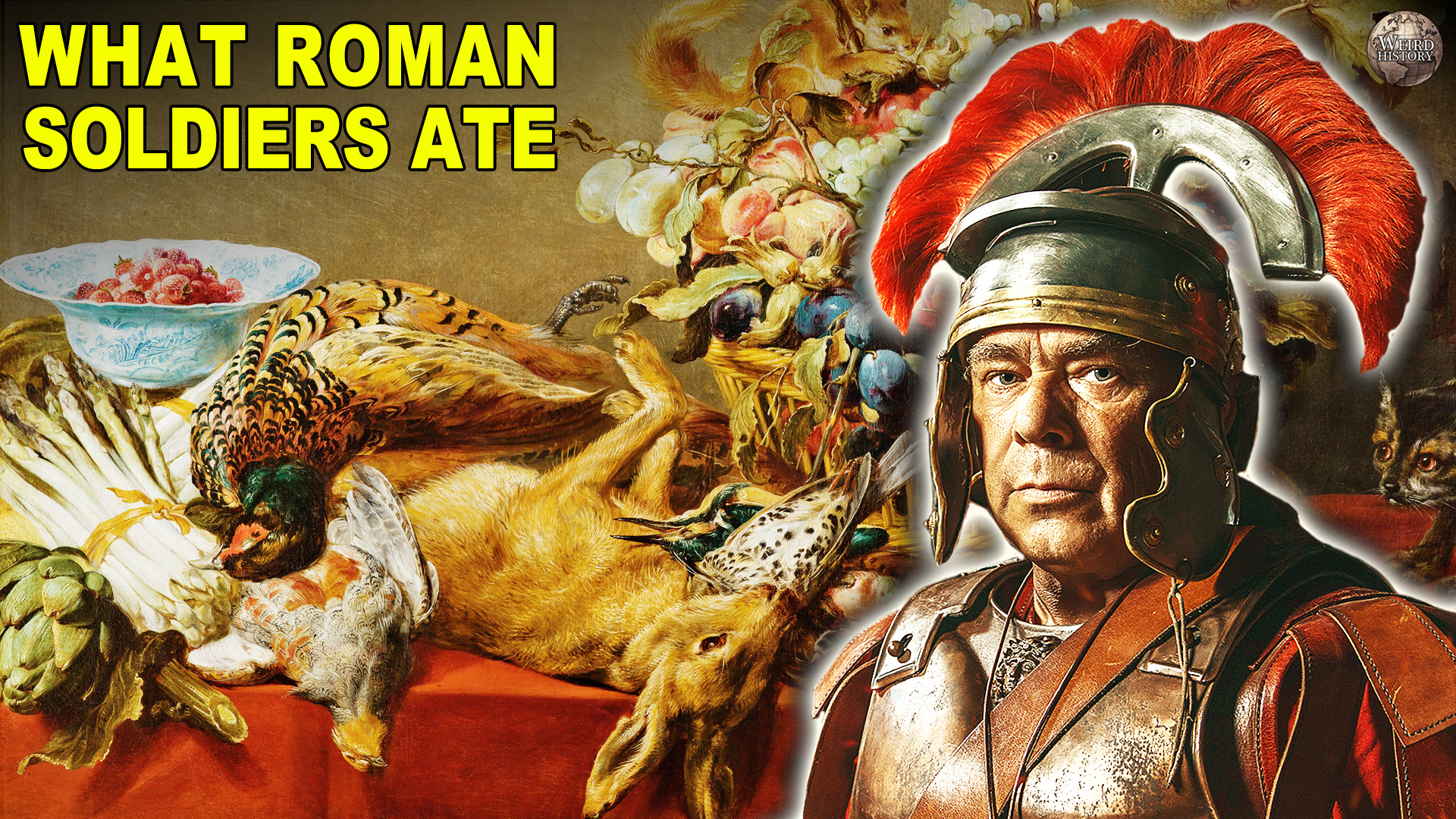
Throughout both its Republican and Imperial periods, Rome was one of the most dominant cultures in the history of the world. That dominance was mainly based on the military strength of Roman Legions -- but if the Legionnaires powered Rome, what powered the Legionnaires?
Show More Show Less View Video Transcript
0:00
Throughout both its republican and imperial periods
0:03
Rome was one of the most dominant cultures in the history of the world
0:07
That dominance was mainly based on the military strength of Roman legions
0:12
But if the legionnaires powered Rome, what powered the legionnaires? Well, today we're going to take a look
0:19
at what Roman soldiers ate. OK, time to chow down on some weird history
0:24
Because mentions of meat are few and far between in histories of the era
0:33
a popular misconception formed that Roman soldiers were vegetarians. However, nothing could be further from the truth, except maybe thinking they were vegans
0:43
In fact, meat is believed to have accounted for nearly a quarter of the calories in a Roman
0:47
soldier's diet. Roman legions often kept their own cattle to slaughter and were actually issued a
0:52
small ration of meat by the government, usually a pound of bacon. The exact amount vanilla ice
0:57
would later cook alongside sucka MCs. However, without refrigeration, that ration wouldn't go
1:03
too far. So to make sure they were getting their daily supply of protein, regionnaires would eat
1:08
pretty much any animal they were capable of catching. Archaeologists have found equipment
1:12
used for roasting and boiling meat. This, of course, raises the question, if Roman soldiers
1:17
ate meat, why do so many people believe they didn't? Well, first off, it's not an unreasonable
1:22
assumption, since Roman gladiators commonly swore off meat, sort of like Hugh Jackman preparing for
1:28
another Wolverine movie. The confusion is also partially attributable to Appian of Alexandria
1:35
a historian who lived during the reigns of emperors Trajan, Hadrian, and Antoninus Pius
1:41
When describing Lucius Lucullus' unsuccessful winter campaign of 150 BCE in central Spain
1:47
Appian wrote, Their soldiers were sick because of the unaccustomed food which the country afforded
1:53
They had no wine, no salt, no vinegar, no oil, but lived on wheat and barley, and the
1:58
flesh of deer and rabbits boiled without salt, which caused dysentery, from which many died
2:04
Many historians interpreted this to mean that Roman soldiers did not usually eat meat at
2:08
all. But other sources make it clear that soldiers were merely reluctant to eat meat that wasn't
2:14
treated with salt, since it was likely to spoil. Appian, in other passages, mentioned soldiers
2:19
eating boiled and roasted meat. And the historian Plutarch reports that soldiers were supposed to
2:23
eat meat, bread, and stew. Given how susceptible meat was to infection and decay, plus the fact
2:33
that this was several centuries before the invention of McDonald's french fries, every
2:37
soldier received a generous salt ration. This was considered essential because weak soldiers
2:42
made a weak legion. In fact salt was so important to survival that military salt works were established any time a legion found themselves too far from seawater To really drive home how valuable salt was to the Romans we like to
2:56
point out that the English word salary is derived from the Latin word salarium, which means pay
3:02
and was used to describe a soldier's pay, which they could use to buy more salt
3:06
The Roman author Pliny the Elder believed that the word salarium itself was derived from the word
3:11
salarius, which means salt. He even claimed that Roman soldiers received their wages in the form
3:17
of salt, which while appreciated on the battlefield was presumably difficult to invest
3:25
In addition to roasted and boiled meat, many Roman soldiers also kept a supply of
3:30
lucanica, which was a type of dried sausage that was good for eating on the go
3:35
like gas station beef jerky. According to a 5th century book on ancient cuisine called
3:40
Dei Re Coquinaria, Lucanica was a smoked sausage made with black pepper, cumin, savory
3:47
rue, parsley, bay laurel oil, liquamen, and well-minsed lean meat. The book doesn't mention
3:54
what kind of meat was used, but other ancient sources suggest it might have been a pork sausage
3:59
and that the dish was often served with white porridge. Lucanica is actually still eaten in
4:04
Italy to this very day, although the recipe has changed a bit over the centuries. Look for it
4:09
under the slightly different name of Luganaga. Grains were a primary source of sustenance for Rome's fearsome legions
4:21
Serial grains gave Roman soldiers the quick energy bursts they needed for training and
4:25
surviving on a battlefield. In fact, the typical Roman soldier ate somewhere in the neighborhood of a third of a ton of
4:31
grain on an annual basis. That's a whole lot of frosted flakes
4:35
That being the case, one of the most basic staples of a Roman soldier's diet was bread
4:40
Unlike meat, fish, fruits, or vegetables, bread wouldn't spoil in the heat
4:44
It was also easy to make, transport, and store in large amounts, regardless of climate
4:49
The Greek historian Polybius reported that in his day, a Roman infantry soldier was rationed
4:55
26 kilograms of bread or hardtack, which was a type of biscuit or cracker made from flour
5:00
water, and salt, each month. Despite Polybius' testimony, modern historians believe it was far more common that legionnaires
5:07
were provided with grain, which they would then have to make into bread themselves
5:12
We know from several ancient sources that Roman legionnaires were expert bakers and cooks
5:17
Each soldier had to carry his own rations, and when camp was made, each soldier would
5:21
have to grind his own wheat into flour using a mill. That mill was typically shared with many other soldiers, so you could probably assume a line formed
5:29
there's something appealing about the idea of warriors baking like if wonder bread were a branch
5:35
of the special forces the bread baked by roman soldiers which was known as panis militaris or military bread was very similar to bread as we know it today The basic type was a mix of flour water and salt but depending on the season millet
5:51
barley, and oats may also be included. Some soldiers also included animal fat from their meat ration to increase the calorie count
5:59
Once the dough was mixed, it was left to rise in a humid environment. Next, it would be placed under a small bell-shaped bread oven known as a Klebanus
6:07
You know, it kind of sounds like more historic battles could have been settled with a bake-off
6:17
Legionnaires didn't just get their grain to make bread. They also used it to create porridge, which is basically just wet bread
6:23
So hold your applause. Known as pulmentum, or pulls, the porridge was highly nutritious and easy to make in the field
6:30
It could be made from grains like millet, barley, farro, or spelt
6:34
The base ingredient would be toasted on hot stones, then ground up and mixed with boiling
6:39
water, salt, and sometimes meat, if any slow-moving animals happened to be nearby
6:44
The resulting mush could be eaten as porridge, or allowed to set into firm cakes, which was
6:48
a handy way of preserving leftovers. Porridge-making was such a common practice that in the early Republic era, Roman soldiers
6:55
were given the nickname politionives, or porridge-eaters by their Greek neighbors. Cheese occupied a central place in the diet of Roman military men
7:08
A legionnaire's daily rations typically included one ounce of hard cheese, or as the Romans called it, dry cheese, known as pecorino
7:16
Pecorino translates from Italian as sheep, so you can probably guess where it came from
7:21
That's right, the dairy section of the sheeply wiggly. Just kidding. Sheep and goats were a common source of cheese in Mediterranean regions
7:30
Soldiers stationed in the northern parts of Europe, however, tended to use the milk of cows they impounded from the locals
7:37
And in the later parts of the Roman era, cow's milk would become more popular in general
7:42
Cheese was popular because its fat contributed to disease resistance and longevity
7:47
Also, many of the soldiers owned their own livestock, which made it cheap and convenient to make cheese from the milk of their own animals
7:53
Romans were actually so big on cheese, they often educated new subjects they conquered in the fine art of cheesemaking
8:00
Can you imagine? First, your village is razed during a siege. Now your captors are making you take cheese-making courses, typically booked by newlyweds on their honeymoon. War truly is hell
8:12
Unlike your average five-year-old, Roman soldiers love to eat vegetables. Unfortunately, vegetables tend to spoil quickly and don't travel easily
8:26
So if the legions wanted vegetables they usually had to well steal them Farmers just had to live with the possibility that on any given day an army might show up on their land and take some or even all of their crops
8:38
It is a matter of historical record that you just couldn't say no to the Roman Legion
8:43
As for what kinds of vegetables the Roman army consumed, that's a bit of a mystery
8:48
Historians tend to think the soldiers probably weren't too picky. When it came to vegetables
8:52
if it was edible, the legionnaires were probably willing to eat it. That being said
8:57
whatever they were eating didn't seem to help them ward off scurvy, as reports of the disease were fairly common
9:03
Sounds like they should have plundered a few citrus groves. So with all this meat and cheese and grain to eat
9:11
the soldiers obviously needed something to wash it all down. And that something was usually posca
9:17
Essentially just spoiled wine or vinegar mixed with water, posca was sometimes mixed with herbs, salt, lemon juice, or fruit
9:23
to make it a little tastier. Emphasis on a little. Posca was typically associated with slaves, paupers, and lower-ranking soldiers
9:32
In fact, it was so strongly associated with the common man that generals and other high-ranking
9:38
officers would often drink Posca with the rank and file troops as a show of solidarity
9:43
Think of it as the ancient equivalent of a factory owner scoring points for the workforce
9:47
by sharing a six-pack of Milwaukee's best with them. Posca had the reputation of being an acquired taste that was surprisingly refreshing
9:55
As a bonus, it had the ability to disinfect non-putable water. Actually, that kind of makes it sound like you shouldn't be drinking it, right
10:06
Of course, when it came to drinking, Roman soldiers often wanted something a little stronger than posca, namely wine
10:14
Wine was supposed to be drunk on alternate days with posca, but the soldiers had a habit of overindulging
10:21
In fact, legionnaires liked their wine so much that on several occasions, generals had
10:26
to issue decrees to prevent them from getting too hammered. The Roman soldiers were so into wine that they planted vineyards wherever they went
10:34
Beer, which was popular with the Celts and Germanic tribes, was considered a barbarian
10:38
drink that wasn't fit for a Roman legionnaire. The feeling, however, was not mutual
10:44
The Celts and the Germanic tribes apparently held Roman wine in such high regard, they
10:49
sometimes traded one slave per jar for it, and that wasn't even the really good stuff
10:54
The wine consumed by Roman warriors wasn't the same quality of what the emperor or the
10:59
nobles and senators drank. While the wounded or the sick would sometimes get a taste of the better vintages, what your
11:05
average soldier drank was actually more chemically similar to vinegar. That being said, the soldiers definitely weren't complaining
11:12
It was still better than Posca, was usually much safer to drink than the water found in
11:17
the field and acted as a counteragent against pathogens and bacteria. We'd definitely drink to that
#Meat & Seafood