Up next in 10



Extreme stage magic has more in common with daredevil stuntwork than carefully crafted illusions. Its practitioners walk a metaphorical, and sometimes literal, tightrope to create a thrilling spectacle for the audience. But tempting fate can have disastrous results, and not even magicians are immune to deadly mishaps.
Show More Show Less View Video Transcript
0:00
Extreme stage magic has more in common with daredevil's stunt work than carefully crafted illusions
0:07
Its practitioners walk a metaphorical, and sometimes literal, tightrope to create a thrilling spectacle for the audience
0:14
But tempting fate can have disastrous results, and not even magicians are immune to deadly mishaps
0:21
So, today we're conjuring up ten doomed magic acts that ended in tragedy
0:27
All right, everyone, pick a card, any card. Except that one. Royden Joseph Gilbert Raison de la Gnesta
0:39
a name as elaborate as the man's aspirations, attempted to follow in iconic magician Harry Houdini's footsteps
0:46
Performing as the simpler Gilbert Gnesta, his act centered on the milk can escape
0:51
a stunt that had become synonymous with Houdini's name. But Houdini died tragically
0:56
and Gnesta was about to find out the corporeal limits of that inspiration
1:01
The trick was straightforward. Gnesta would be locked inside a large milk can filled with water
1:07
seemingly left to drown unless he could escape. Like Houdini's version, the stunt relied on a hidden mechanism
1:12
that allowed the performer to exit the can unnoticed. In 1930, during a performance in Frankfurt, Kentucky, disaster struck
1:20
Gnesta's milk can, damaged during transport, had a dent that rendered the escape mechanism inoperable
1:27
As the audience watched, oblivious to the mounting peril, Gnesta struggled inside the can
1:32
By the time his assistants realized something was wrong, it was too late
1:36
Despite their frantic efforts, Gnesta drowned. His death is a grim reminder of how dangerous escape tricks truly are
1:44
which is one reason why they've mostly fallen out of practice since then, David Blaine notwithstanding
1:53
Charles Rowan, better known as Car the Magician, embraced danger with reckless abandon, like all the coolest magicians
2:01
His act wasn't about clever illusions or a sleight of hand. It was about adrenaline
2:07
Rowan's signature stunt involved escaping from a straitjacket with a speeding car bearing down on him
2:12
A stunt like that requires even more split-second timing than a milk can escape
2:16
But unfortunately, during a performance in South Africa in 1930, Rowan's timing was off
2:22
The car struck him at 45 miles per hour before he could free himself
2:26
The impact was fatal, and Rowan perished in front of a horrified audience
2:30
Hopefully, there weren't any kids there. But let's be honest, there were lots of kids there
2:36
Rowan's death highlights a recurring theme in Magical Mishaps, the performer's willingness
2:40
to gamble their life for the sake of entertainment It also a reminder that in daredevil situations a split second is the difference between the coolest thing you ever seen and the worst thing you ever seen
2:56
As any magician or Christopher Nolan fan can tell you, few magic tricks carry the mystique
3:01
and the danger of the bullet catch. The premise is simple yet outlandish
3:06
The magician appears to catch a bullet fired from a gun, defying physics and common sense. However, the trick's long history is littered with
3:15
injurious mishaps and fatalities, earning it a reputation as one of the deadliest delusions
3:20
in magic. It's never the magicians you want, though. One of the trick's earliest recorded
3:25
casualties was Madame Dolinsky, who performed alongside her husband in the early 19th century
3:31
In 1820, during a performance in Poland, six soldiers were enlisted to participate in the trick
3:37
Each soldier was instructed to load their rifle with a blank cartridge, but human error intervened
3:43
One soldier, whether nervous or just not paying much attention, loaded a live round
3:48
The result was devastating. Dolinsky, who was pregnant at the time, was fatally shot on stage
3:54
Her death shocked audiences and cast a controversial shadow over the bullet catch
3:58
though it continues to fascinate modern performers and audiences alike. Magicians Penn and Teller have modernized the trick
4:04
incorporating safety measures to mitigate its risks while turning it into a commentary on the idea of dangerous magic tricks
4:15
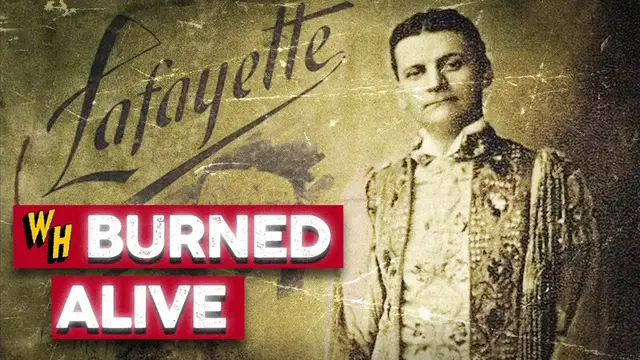
Sigmund Neuberger, known to the world as the Great Lafayette, was a magician of unparalleled showmanship
4:22
His performances were opulent, his illusions grand, and his secrets fiercely guarded
4:27
But in 1911, his insistence on control contributed to his tragic end
4:33
During an Edinburgh performance of his signature set piece called The Lion's Bride
4:37
a stage lantern ignited a fire that quickly consumed the elaborate set
4:42
Panic erupted amongst the cast and crew, who found themselves trapped by Lafayette's strict backstage security measures
4:48
Only one exit was unlocked, a precaution meant to protect his secrets, but one that now hindered escape
4:54
Lafayette managed to flee the inferno briefly, but returned to save his beloved horse, a central figure in his act
5:00
Both he and the horse perished in the blaze. In a final twist, the remains of a body double were discovered beneath the stage
5:08
That guy was really dedicated. Dr. Vivian Hensley, an Australian dentist with a passion for amateur magic
5:19
tragically learned the dangers of illusion in 1938. Performing a razor blade swallow trick for his wife and son
5:26
Hensley actually swallowed the blade instead of stashing it up his sleeve as the trick is supposed to go Oh yeah you could see how someone could make that mistake If only he practiced more After being rushed to a doctor he was fed cotton wool in an attempt to cushion the blade
5:42
And surgeons sought to locate it, but to no avail. Days later, Hensley succumbed to his injuries
5:48
What began as a lighthearted performance ended in disaster. A sobering reminder of why you shouldn't jump right into dangerous tricks
5:56
Hensley's story highlights the risks that amateur magicians especially face when a trick becomes all too real
6:05
Joseph W. Burrus, an aspiring magician who performed as the Amazing Joe
6:10
sought to honor Houdini's legacy with a stunt of his own invention. On Halloween night in 1990, Burrus attempted a buried alive trick
6:19
encasing himself in a transparent coffin beneath seven tons of dirt and wet cement
6:23
If you're saying to yourself, that sounds like way too much weight, the Amazing Joe could have used you on his team
6:29
Unlike Houdini, whose stunts were carefully controlled illusions, Burris opted for the real thing
6:34
possibly assuming that the greatest magician in history performed the trick differently for no particular reason
6:41
Tragically, the weight of the cement proved too much for the coffin, which collapsed, crushing him to death
6:46
He died on the 64th anniversary of Houdini's death, which, considering that Houdini's death may have been the result
6:52
of one of his famous stunts, does kind of honor the man? Chong Ling Su was a famous Chinese magician
7:02
in the early 20th century, except he wasn't. His real name was William Ellsworth Robinson
7:08
a white American and magician's assistant who borrowed the persona of Chong Ling Su
7:13
To complete the illusion, he wore piles of makeup to overcome his stage awkwardness
7:17
and avoided speaking during performances. He even maintained the illusion offstage, using an interpreter
7:24
It's possible you're familiar with his story. A character clearly inspired by Robinson made a notable appearance in the 2006 film The Prestige
7:32
And like Christian Bale in that movie, the real-life magician couldn't resist messing around with the notorious bullet catch trick
7:40
In 1918, while performing the bullet catch during an act called Condemned to Death by the Boxers
7:46
disaster struck, or more specifically, a bullet struck. a failure to clean residual gunpowder from the firearm caused it to fire an actual bullet
7:55
which perforated Robinson. Breaking character for the first and final time, he uttered his last words in English
8:02
Oh my God, something's happened. Lower the curtain. And as if obeying his command, the curtain lowered on Chung Ling Su for good
8:10
Jeff Rayburn Hopper a magician in Winona Lake Indiana met tragedy in 1984 while rehearsing a daring underwater escape His stunt required him to free himself from chains
8:25
while submerged in open water, a feat meant to showcase his skill and courage and his swimming skills
8:32
Hopper successfully slipped the chains, but nature proved a far more formidable adversary
8:37
than he expected, which is usually how it gets you. Caught by high winds and turbulent water
8:42
he managed to surface, calling desperately for help. Yet rescue wasn't possible in the chaotic conditions
8:49
and Hopper drowned at 23 years old. Maybe we should just quit it with the water escapes
8:54
Do we need to keep bringing up the prestige? Swedish-born Johan Moeller, known as Balabrega if you're nasty
9:04
sought to dazzle audiences with The Moth and the Flame, a pyrotechnic spectacle where assistance vanished into a candle's glow
9:12
During Brazil in 1900, Balabrega faced a logistical challenge. The region lacked the gas supply his act required to produce the flame
9:21
Undeterred, he turned to acetylene gas bags, a volatile alternative he could easily transport
9:27
Well, not so easily as it turns out. Did you ever see that movie Sorcerer
9:32
It's about some guys trying to drive nitroglycerin through the jungle and, well, you know what
9:36
Let's just stick with the prestige. As we mentioned, acetylene gas, like nitroglycerin, is extremely volatile
9:43
Handling it improperly, even in the slightest, will land you a spectacular obituary
9:48
And while setting up for the gas transport, disaster struck Balabrega. One of the gas bags exploded, killing the magician and his assistant instantly
9:57
The blast also severely injured his manager, leaving a shaken cast and crew as witnesses to the catastrophe
10:07
In 1840, magician Arnold Buck took his final blow during a bullet catch gone wrong at London's Queen's Theatre
10:15
We need to put the bullet catch in the same box as the water escape. This is getting out of hand
10:20
A volunteer was invited on stage to handle the firearm, which is an essential part of the act's illusion
10:26
But when instructed to reload the gun with a harmless bullet, the volunteer, either out of malice or misguided humor, inserted nails into the barrel instead
10:36
The performance ended in tragedy as Buck was fatally struck by the improvised shrapnel
10:41
leaving the audience stunned. Adding to the grim scene, Buck's assistant revealed the original fake bullet
10:47
proving the trick had been sabotaged by its deranged participant. Again, like in the prestige
10:54
Even in a public theater setting, magicians can't really predict how an audience member is going to behave
11:00
which is one reason why they frequently plant assistants in the crowd, and why birthday clowns don't do the bullet catch