Up next in 10



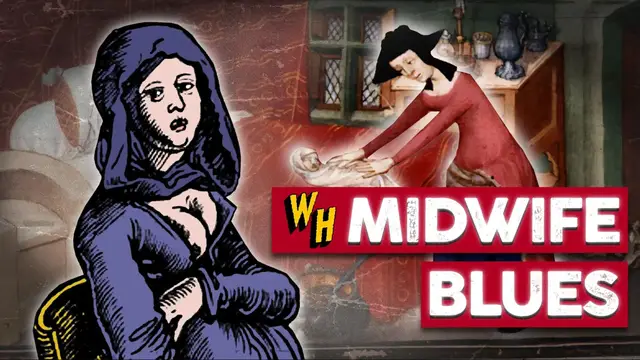
While no two births are quite the same, everyone enters the world the same basic way - someone cries, someone else yells, and a third person tries to remember where the towels are. Amid this flurry of chaos, there exists an age-old profession - midwifery. You’d think helping parents bring their children into this world would be considered a noble pursuit. But being a midwife has never been simple. They were lauded as heroes in one century, persecuted as witches in the next, and are still given the occasional side-eye today.
Show More Show Less View Video Transcript
0:00
While no two births are quite the same, everyone enters the world the same basic way
0:05
Someone cries, someone else yells, and a third person tries to remember where the towels are
0:10
Amid this flurry of chaos, there exists an age-old profession, midwifery. You'd think
0:17
helping parents bring their children into this world would be considered a noble pursuit
0:20
but being a midwife has never been simple. They were lauded as heroes in one century
0:26
persecuted as witches in the necks, and are still given the occasional side-eye today
0:31
So, today we're delivering the history of midwifery. Congratulations, viewers, it's a video
0:42
Midwifery has been practiced for millennia, with roots in prehistoric societies where experienced women
0:47
often mothers or older female relatives, helped during childbirth. This communal approach likely contributed
0:53
to population growth in the Neolithic period, where research suggests the average woman bore between eight and ten children
1:00
Early midwives were not only birth attendants, but prophetic figures, bridging the biological and spiritual realms
1:07
For instance, in the Bible, Rachel's midwife assures her that she will bear a son
1:12
reflecting the midwife's dual role in medicine and mysticism. Although, to be fair, her midwife had a 50-50 shot of getting that one right
1:19
The first recorded evidence of midwifery comes from Egypt around 1900 BCE
1:24
in the medical text known as the Cahoon Gynecological Papyrus, which addresses women's health, fertility, and childbirth
1:31
Another document, the Ebert's Papyrus, provides further insight, detailing midwives' tasks in diagnosing pregnancies
1:38
delivering babies, and warding off malevolent spirits. It's a lot to read, so feel free to skim the wiki papyrus
1:49
You'd think delivering babies would be enough of a responsibility for one person
1:53
But midwives, particularly in medieval Europe, had one more task on their to-do list, saving souls
1:59
You see, at the time, the Catholic Church wasn't only concerned with getting the baby into the world safely
2:04
it was also worried about what might happen if the baby didn't survive. An unbaptized baby, according to religious doctrine
2:10
was in danger of languishing in purgatory for eternity. So if things went south during a birth
2:16
midwives were instructed to baptize the child regardless, including stillborn children and other tragic circumstances
2:21
that we won't get into here. Suffice it to say that it's all a real bummer
2:26
But this practice was indicative of the most important role midwives played in childbirth
2:30
as both an attendant and a priest Hopefully they at least got time and a half Throughout history the education of midwives has been more practical than formal
2:43
In ancient Greece, midwives were trained by institutions linked to the Hippocratic school
2:48
though many remained illiterate. In other regions, like the Roman Empire, midwives' knowledge was passed down orally, creating a rich generational tradition among
2:57
women of the trade. By the 1300s, the term midwife was used to describe women who had
3:01
attended births, but formal training programs were still centuries away. Universities, not typically
3:07
open to women, left midwives to rely on their own methods and remedies, which were all derived from
3:12
that long oral history. In the late Middle Ages, midwives with good reputations could find
3:21
employment with royalty, tasked with delivering future heirs to the throne. These positions were
3:26
prestigious but fraught with pressure. A single mistake during a royal birth could result in
3:32
imprisonment or even execution. But it wasn't just royalty that employed midwives. Towns also
3:38
hired reputable midwives to oversee births within their jurisdictions. Midwives have always been resourceful, which is fortunate, as they often had little more than
3:50
birthing stools, bandages, and maybe a glass of water if they were lucky. Then in the 1500s
3:56
Things got fancy with barber-surgeon Peter Chamberlain's invention of forceps, a tool that was both a blessing and a curse, depending on who you asked
4:05
and the skill of the hands wielding them. And then there was the medical chainsaw
4:10
Yes, you heard that right. Originally invented to perform a symphysiotomy, the totally chill and relaxed process of cutting the pelvic bone's cartilage
4:18
to widen the pelvis during childbirth, this hand-cranked device was not quite the gas-powered Texas Massacre tool you're picturing
4:25
But it was a close enough relative that medical science eventually decided to find a more delicate and precise way to perform surgery
4:36
Imagine this. You've just had a baby in 16th century England. Your midwife examines the child with a discerning eye
4:44
This isn't just a health checkup. This is a test that might very well determine whether your baby will live or die
4:50
You see, back in the day, deformities were not merely medical issues
4:54
They were both a moral and supernatural conundrum as well. If a child was born with a defect
4:59
many would assume that something had gone terribly and perhaps diabolically wrong
5:04
The midwife was often at the center of these suspicions. She could be seen as a bringer of life Or in cahoots with some evil force No pressure Midwives for all their importance haven always been trusted especially in times when
5:21
science and superstition got muddled. The Middle Ages and early modern period saw midwives accused
5:26
of being witches, particularly when births went wrong. After all, if your child didn't survive
5:31
it had to be someone's fault. And who better to blame than the woman who quite literally
5:36
had her hands on the situation. Witch hunts swept through Europe, and midwives were often caught in
5:41
the crossfire. They were accused of everything, from cursing pregnancies to delivering stillborns
5:46
on purpose as an offering to demons, if not Hell's head honcho himself. The Malleus Maleficarum
5:52
which sounds like a book in Doctor Strange's bathroom, but is actually a bona fide real-life
5:56
tome on witchcraft, proclaimed midwives to be especially dangerous, and many women were burned
6:02
drowned, or otherwise snuffed out for their supposed crimes. These witch-hunting episodes
6:06
highlight the precarious nature of midwifery, a profession that simultaneously held immense
6:11
respect and a deep-rooted suspicion. Midwives knew too much, or so people thought. They understood
6:17
the mysteries of life and death, and in a society that featured anything it couldn't control
6:22
that made them worthy of suspicion. Let's move on to what everyone associates with childbirth
6:29
1940s London during the Blitz. That's what you were all thinking, right
6:34
The Blitz was an extended bombing campaign conducted by Nazi Germany that devastated the city
6:39
Many women of the Blitz, heroes of the home front, scurried into air raid shelters with only a helmet
6:44
and a heart full of nerves to deliver babies while bombs dropped around them
6:48
Meanwhile, across the channel in Germany, midwives were practically drafted into service
6:53
with laws requiring their presence at every birth across the Reich. One woman, Stanislau Elashinska
6:58
defied not just societal expectations, but also the very orders of the infamous Dr. Joseph Mengele
7:05
himself, saving babies in Auschwitz while risking her own life. Where's that movie
7:13
Throughout history, male scholars have written extensively about childbirth and midwifery, despite not being directly involved in the process. Plato, Hippocrates, and Soranus of
7:23
Ephesus all had opinions on how best to bring a baby into the world, but it was the midwives who
7:28
who did the actual work. In many cultures, women were forbidden from studying medicine, but midwives continued
7:33
to practice their craft, passing down their knowledge through generations. One particularly notable figure in this context is Agnotis
7:40
an ancient Greek woman who disguised herself as a man to practice midwifery in Athens Her story highlights the struggles women faced in gaining formal medical education Yet despite the barriers midwives remained at the literal forefront of childbirth trusted for their experience and wisdom
7:56
While men didn't officially join the profession until the 17th century, they often dipped their toes into the pool
8:02
particularly when new technology came onto the scene, like those snazzy forceps we mentioned earlier
8:06
Because no matter the time period, men love gadgets. As the 18th century progressed
8:12
formal training programs and manuals began to emerge. giving midwives the education they had long been denied
8:18
This marked the beginning of the professionalization of midwifery, laying the groundwork for the modern day profession
8:24
But at the same time, in many urban centers, births attended by male midwives
8:28
or accuchers, became the norm. Guess midhusband sounded too much like an insult
8:34
It wasn't that the men were inherently more skilled. It was simply a result of the rising medical profession
8:38
and its emphasis on science over tradition. Yet for many rural women
8:42
the local midwife remained their most trusted ally. as male doctors could still be seen as outsiders to the deeply personal experience of childbirth
8:53
Fast forward to the 1970s, when midwifery experienced something of a renaissance
8:58
Thanks in large part to the feminist movement, women were reclaiming control over their bodies
9:03
and with that came a desire to take childbirth back from the sterile and impersonal environment
9:07
of a hospital. Home births and birthing centers sprang up across the globe, and midwives
9:12
once relegated to the margins, found themselves back at the center of the birthing process
9:17
In the U.S., nurse midwife programs were formalized, offering a bridge between traditional
9:22
midwifery and modern medicine. Meanwhile, in the U.K., the government formally recognized
9:27
midwifery as an essential service, with the National Health Service offering training
9:31
programs and qualifications. By 1983, men were officially allowed to become midwives in the U.K.
9:37
a move that caused some initial controversy, but eventually became an accepted practice
9:42
While midwives and physicians often worked together, their relationship was far from equal
9:51
Physicians may have had formal training, but midwives had practical experience that was often
9:56
more valuable in the moment. Their knowledge of childbirth, gained through years of hands-on work
10:01
surpassed that of the physicians who were called in only when things went wrong
10:04
Over time, the two professions merged more closely, with physicians relying on midwives
10:10
expertise during complicated births. Yet even as the medical profession grew in prestige
10:15
midwives maintained their crucial role, continuing to bring new life into the world with skill
10:21
care, and a deep understanding of the human body. Just be sure to never use the word midhusband