Up next in 10



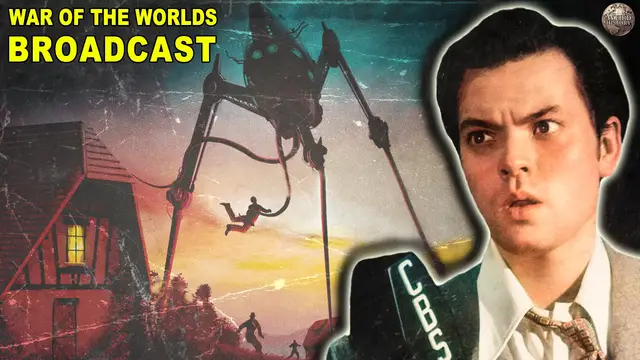
In 1938, aliens attacked. Well, that's at least what Americans heard over the radio. Orson Welles and a group of actors interrupted a radio broadcast to warn the public that the planet had been invaded by aliens - really, they were just reading a script based off the novel, The War of the Worlds, by H.G. Wells. Unlike successful real-life alien hoaxes, this '38 fake news story spiraled the entire country into mass hysteria... Or did it?
Show More Show Less View Video Transcript
0:00
In 1938, Orson Welles and a group of actors
0:03
interrupted a radio broadcast to warn the public that the planet had been invaded by aliens
0:09
While they were really just reading a script based on H.G. Wells' novel, The War of the Worlds
0:15
the fake news story spiraled out of control and plunged the entire country into a state of mass hysteria
0:21
Or did it? Today, we're going to take a look at the original War of the Worlds broadcast
0:27
Now, who shall dwell in these worlds if they be inhabited? Are we or they, lords of the world
0:36
And how are all things made for man? While classic films like Citizen Kane, The Magnificent Ambersons, and Transformers the movie
0:48
were still on the horizon for Orson Welles in 1938, he was already a respected actor, director, and storyteller
0:56
So it shouldn't have come as much of a surprise to anyone that he was just spinning a Halloween
1:01
yarn when he took to the radio on October 30th of that year to announce that aliens had landed
1:06
on Earth and were attacking New York. But apparently, it did. In reality, the broadcast
1:12
which started at 8 p.m. Eastern time, was the product of Wells' Mercury Theater Group
1:17
The story they told placed the start of the invasion at Grover's Mill, New Jersey
1:21
Why there? Well, turns out Mercury Theater playwright Howard Koch picked the location
1:27
at random off a map that was hanging in a gas station he stopped at while driving to his
1:31
parents' house. But it was unlikely details like that which made the whole thing so believable to
1:37
so many. The narrative claimed that the Martians had walking war machines that fired heat rays at
1:42
the human beings who came to see their crash site. They then easily killed 7,000 National Guardsmen
1:48
The U.S. military subsequently attacked with artillery and bombers, but the Martians were unfazed and responded by releasing toxic gas into the air
1:58
The invasion then continued as more Martians landed in Chicago and St. Louis
2:02
The use of sophisticated sound effects, coupled with the Mercury Theater troops' terrifyingly realistic performances as radio announcers and witnesses to events, gave the whole thing a verisimilitude that convinced many it was the real deal
2:18
The New Yorker's The New Yorker's The New Yorker Since the broadcast, some reports have claimed
2:24
that thousands of people spiraled into a panic at the announcement of the alien invasion
2:29
And some commentators have even hiked those numbers up to nearly a million One of the more widespread rumors was that thousands of New Yorkers flooded the streets to see the invasion firsthand It seemed Wells decision to pepper the broadcast with fake
2:43
radio reports from the US Infantry and Air Force had up the tension almost too effectively
2:49
The town of Grovers Mill, New Jersey, took the brunt of the panic, with its residents reportedly
2:53
being led to believe their water tower had been taken over by aliens
2:57
Some reports even have citizens trying to shoot at it in order to protect themselves from the Martians
3:02
While the truth behind those reports can be difficult to discern, some people were certainly taking the potential dangers of the broadcast seriously
3:10
namely the police. One actor from the Mercury Theater group, Stefan Schnabel
3:15
later recalled the studio slowly filling with policemen bent on stopping the broadcast
3:20
They struggled with pages and CBS executives who held them off until the show could be completed
3:25
After it was over, the studio phones rang off the hook. Paul White, then head of CBS News, described the scene as bedlam. Amusingly, he also ran into a
3:35
disheartened Orson Welles. The future director of Citizen Kane told him, I'm through, and seemed to believe that after this, he would be washed up
3:48
Today, many take it for granted that the famous broadcast caused mayhem in the streets
3:53
and even cost some people their lives. However, despite numerous newspaper reports of widespread
3:59
panic in various cities, it probably never happened on anything close to the scale portrayed
4:04
in the urban legends. According to modern researchers, the vast majority of those who
4:09
were tuned in recognized that the broadcast was merely a Halloween prank. One tip-off was that
4:14
the broadcast was preceded by a voice on the radio saying, the Columbia Broadcasting System
4:19
and its affiliated stations present Orson Welles and the Mercury Theater on the air in War of the
4:25
Worlds by H.G. Wells. There was also the fact that no other stations were carrying the news of the
4:31
alleged alien invasion. Wells probably never meant the broadcast to cause panic either. He was working
4:36
off a script that should have been recognizable to anyone who had read H.G. Wells' classic book
4:41
In addition, CBS required Wells to announce that the broadcast was fiction both before
4:46
and during the act. You had to be working pretty hard to miss all that
4:55
So if there was no great war of the world's panic, why do we think there was
5:00
Well, one big reason why the ridiculous rumors became so widespread was because various major
5:05
newspapers such as the Chicago Herald the San Francisco Chronicle and the Boston Daily Globe gleefully reported the supposed panic You see the newspapers who were the traditional carriers of the news were eager to discredit radio which was a fairly new medium at the time
5:22
They also had a specific bone to pick with radio, and that bone was money
5:27
Turns out, radio advertising had attracted some of the monies that had previously been
5:30
spent on print advertising during the Great Depression. The shift was extremely detrimental to the newspaper industry
5:37
When Wells' broadcast rubbed some folks the wrong way, the newspapermen made every effort to fan the flames and portray radio as an unreliable source of news
5:47
They sensationalized the story and played up the idea of radio causing a panic in order to convince potential advertisers that the new medium was unreliable and their money was better spent on print ads
5:58
Despite reports by Radiolab that claimed 12 million people were listening to Wells' broadcast
6:04
and that 1 in 12 believed the story of an alien invasion
6:08
an investigation by Slate found that of the 5,000 households interviewed about the broadcast
6:13
under 2% were actually tuned into The War of the Worlds. It wasn't surprising that so few people were listening to Wells' broadcast
6:21
It competed directly with one of the most popular national programs at the time
6:26
namely ventriloquist Edgar Bergen's Chase and Sanborn Hour, a comedy variety show
6:32
A PBS documentary on the subject agreed, saying that even though tens of millions of Americans
6:37
were listening to their radios that night, not many of them were listening to the War of the
6:42
Worlds when it began because of the comedy show's popularity. Apparently, Wells did not predict the outpour of panic, or the widespread rumors of panic in any
6:55
case. Turns out he just wanted to conduct a bit of an experiment. The alleged point was to teach
7:01
the American people a lesson about not believing everything they hear on the radio. According to
7:06
Wells, we wanted people to understand that they shouldn't take any opinion pre-digested, and they
7:11
shouldn't swallow everything that came through the tap, whether it was radio or not. But as I say
7:16
it was only a partial experiment. We had no idea the extent of the thing. A valuable and important
7:21
lesson, no doubt. After it surfaced that many of the reports of panic were falsified or exaggerated
7:27
there was plenty of backlash, probably because it didn't make America look too great or too smart
7:33
Even Hitler threw in a comment about the hoax. Yeah, that's right. The man who ruined the name
7:38
Adolf, Adolf Hitler, himself spoke out about the rumored panic of the American people
7:43
calling it evidence of the decadence and corrupt condition of democracy Who knew Hitler was an entertainment critic The government agency in charge of watching over the public radio waves was and still is
7:59
the Federal Communications Commission, or FCC. And after the alleged War of the Worlds panic
8:04
they did, in fact, investigate the circumstances surrounding the broadcast. Ultimately, however
8:10
they concluded that no laws were broken. This is the biggest key to debunking the myth that
8:15
the broadcast stirred nationwide hysteria. If it had triggered mass panic, the FCC clearly
8:21
would have had more of an issue with Orson Welles than it did. In fact, the FCC found so little wrongdoing
8:27
on the part of Welles and CBS that they even went so far as to prevent complaints about the program from being used
8:33
in license renewal hearings, which was basically their way of declaring the panic
8:37
was just a myth. If Welles was concerned his career would be affected
8:42
those fears, to say the least, turned out to be unfounded. Wells went on to have an immensely successful Hollywood career
8:49
maybe even partly thanks to the publicity garnered from his 1938 stunt
8:53
or because he was one of the most talented directors in Hollywood. Eh, could be either
9:01
The War of the Worlds may have stirred up controversy and gossip, but it was not the first radio hoax
9:07
In fact, it missed that honor by over a decade. Turns out, 12 years earlier, in January of 1926, the BBC was subject to an interruption
9:17
during a discussion of 18th century literature. The 12-minute interruption claimed that there were intense riots all around London
9:25
It then falsely reported that Big Ben had been blown up, a politician had been lynched
9:29
and a hotel burned to the ground. The most fascinating part? The script was written by a Catholic priest
9:35
While this man of the cloth may have beaten Orson Welles to the radio hoax punch
9:39
He did not, as far as we know, go on to direct any of the greatest movies of all time
9:44
We've all heard that life imitates art, and sadly, it sometimes imitates urban legends about art
9:51
For although the reports of mass panic and hysteria after Wells' broadcast turned out to be untrue
9:57
they certainly came true after a similar script was performed on the radio in Ecuador
10:01
In 1949, Eduardo El-Carez and Leonardo Paez produced a Spanish-language version of Wells
10:09
1938 script. After it was broadcast, panic erupted, which soon exploded into riots and chaos in the streets
10:17
At least seven people were killed, including Paez's own girlfriend and nephew
10:22
Both the radio station and a newspaper that fanned the flames of the hoax were burned to
10:26
the ground. Well, that escalated quickly