Up next in 10



It's a 1,200-year-old institution that has weathered wars, disease, and everything in between. But why has the British monarchy survived when so many others have faltered? The modern British monarchy can trace its roots back centuries, to the period when the island of Great Britain was a collection of disparate kingdoms in England, Scotland, and Wales. That changed over time, as these kingdoms consolidated into a single monarchy.
Show More Show Less View Video Transcript
0:00
The modern British monarchy traces its roots all the way back to the times before the kingdom was
0:05
united. We're talking upwards of 1,200 years here. That's no small feat. In that time, monarchies
0:12
rose and fell, and political systems evolved in vastly different ways. So how did the British
0:18
monarchy make it all the way to 2023 with their heads intact? Today, we're taking a look at how
0:23
the British monarchy has survived for so long. Time to learn why the sun never sets on the British
0:29
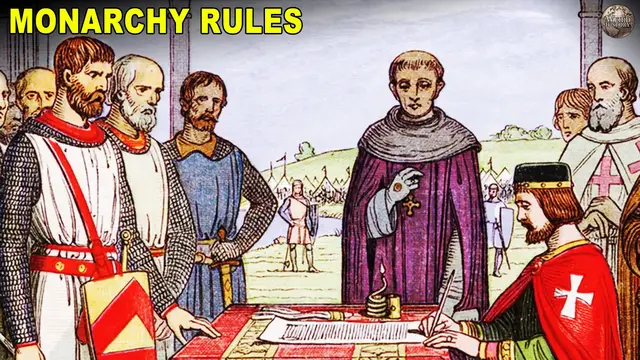
Champa. King John signed the Magna Carta in 1215 to appease his rebellious barons
0:39
This Bill of Rights for nobles outlined all the liberties these barons were entitled to
0:43
such as what property they could own, which legal rights they had, and what brands of frozen pizza
0:47
they could put their likenesses on. The Magna Carta also encouraged the idea that the king
0:52
would only be allowed to rule under law. Clause 61 of the Magna Carta, called the Security Clause
0:58
stated that all it took to declare war on the king was 25 barons willing to say that he wasn't
1:04
doing his job. That's roughly the same number of people on a major league baseball team
1:08
so essentially you could get booted off the throne if you didn't keep the brewers happy
1:12
And although John predictably did not keep the terms of the document when the first baron's war
1:17
swept through the kingdom, the document still had its importance. It finally defined the monarchy
1:22
under written law, which meant the crowd could now be held accountable for any and all shenanigans
1:28
If you think the royal family can just traipse around and do whatever they want, well, you would be partly right
1:34
But ever since the English Civil War in the 17th century, parliament has pretty much been pulling all the strings
1:40
Back in 1688, England wanted the country and the monarchy to be Protestant
1:45
King James II, a devout Catholic, was the monkey wrench in that plan
1:49
A monkey wrench wearing a jaunty little pope hat. The solution was to oust James and install his Protestant daughter
1:57
Mary and her husband William to rule in his place. This period was called the Glorious Revolution
2:03
and served as a reminder that Parliament really held the checkbook in this relationship and not whomever happened to be wearing the crown at the time
2:10
Not ones to bite the hands that fed them, William and Mary endorsed the Bill of Rights in 1689
2:16
which ordered the monarchy to be subject to Parliament and not the other way around
2:20
Things have run that way ever since. The late 1700s to early 1800s were an age of revolution
2:27
aptly called the Age of Revolutions. These revolutions meant a lot of nervous monarchies
2:32
Institutions were being upended left and right. Americans were saying, cheerio, to the British Empire
2:38
And France was working on getting rid of its monarchy which involved getting rid of King Louis XVI and Queen Marie Antoinette heads Yes times were a and heads were a So how on earth did British royalty manage to persevere with their heads still on their shoulders
2:54
Well, for starters, Britain's monarchy was totally different from France's. The French had established their monarchy in the decades before the revolution was even whispered about
3:04
Britain had formed the Bill of Rights of 1689, which stripped away some of the regal authority the crown had previously possessed
3:12
In a neat twist of fate, the laws that were put in place to limit the power of the monarchy went on to preserve it
3:18
Once the French Revolution came around 100 years later, King George III was, according to historian Marilyn Morris
3:25
more the embodiment of British heritage rather than any kind of lawmaker
3:29
So in other words, not worth whacking. A kingdom without a ruler isn't really a kingdom
3:39
It's more like, I don't know, a music festival. But that's exactly what happened in 1649
3:45
In the middle of the 17th century, England had no king at all
3:49
All of us have spats with our co-workers. But King Charles I was known to have such frequent arguments with the English parliament
3:55
that it led to the English Civil War. It was during that war that the good king lost his throne and his head
4:02
Both items turned out to be too expensive for him to replace. After that, England became a Republican Commonwealth
4:09
a state with no king. This kingless Commonwealth, under the protectorship of Oliver Cromwell, was short-lived
4:17
After Cromwell bit the dust in 1658, King Charlie's son returned from exile
4:21
and ruled as Charles II. Historian Sarah Gristwood believes that this trial period without a monarchy
4:27
ultimately protected the crown in the long term, immunizing Britain against revolution
4:32
The British were like, eh, we've tried it both ways, and we honestly prefer the king stuff
4:41
In the 20th and 21st century, the British monarchy decided to focus mainly on serving its subjects
4:47
something Queen Elizabeth II had been particularly passionate about since the late 1940s, when she was still a mere princess
4:54
The future queen is quoted as saying her whole life, long or short
4:58
shall be devoted to your service. Notice the emphasis we placed on long. She hung in there
5:04
To that end, the Royal Family began involving themselves in more charitable organizations
5:08
while shedding light on some major issues that affect Britain. But aside from their propensity for charitable causes, the Royal Family has historically
5:16
played a pivotal role in boosting morale during periods of crisis. During the German Air Force's targeted blitz, which relentlessly bombed British cities during
5:25
World War II the Royal Family could be found visiting the impacted areas and making reassuring radio addresses Even as recently as 2020 Queen Elizabeth II delivered an address regarding the COVID pandemic
5:36
In that speech, the Queen urged unity and promised Britain would overcome the pandemic
5:41
by working together. The speech was described by the BBC as reassuring and inspiring
5:47
And the world needed some inspiration to keep logging into Zoom every day
5:52
Of all the things that can be said about royalty, it cannot be denied that they're pretty neat to look at. Royal pageants, spectacles, and about a
6:00
million Disney princess movies have been a useful tool in bringing an imperial nation together
6:05
Historian David Cannondine says that crowns are worn by iconic personages who embody a nation's
6:12
history, traditions, and identity. And he's right. Jubilees, monarch anniversaries, and royal weddings
6:18
are all considered extremely special occasions. During the Napoleonic Wars in 1809
6:23
George III's 50th anniversary was celebrated throughout Britain, despite millions of people perishing on the battlefield
6:29
at the time. Which just goes to prove there is no wrong time to party
6:34
Historian Linda Coley observed that the purpose was to bring the nation together
6:39
Over a century later, in 1977, Queen Elizabeth II celebrated her Silver Jubilee
6:45
The 25-year celebration was sullied slightly by the economic turmoil gripping the country
6:50
But like George III's anniversary, the belief was that the Jubilee actually
6:54
served to unify the country in a time of crisis. Biographer William Shawcross stated
6:59
that the celebration represented a nostalgic longing for what Britain had once been
7:04
Eh, we get it. That's why we hang on to our old yearbooks. The monarch isn't all crowns and thorns and cakes
7:14
and your picture on a bunch of oversized money. he or she also holds the distinction of being a symbolic figurehead
7:21
embodying the characteristics and values of the kingdom. The thrones and cakes are just some of the perks
7:26
Queen Elizabeth II stated her role as head of nation included responsibilities such as
7:31
being the focus for national identity and providing a sense of stability and continuity
7:36
while supporting the ideal of voluntary service. In other words, it's a big job
7:41
But ideas and people change, and the crown has been forced to adapt to these changes in order to project the country's image
7:49
Warrior kings like Edward I in the Middle Ages were celebrated as the embodiment of a strong
7:54
aggressive kingdom. But during the Victorian era, domesticity was all the rage, so Queen
7:59
Victoria promoted a more family-oriented lifestyle. Most recently, Queen Elizabeth II helped bring the monarchy into the 21st century by being England's longest-reigning monarch
8:09
and the longest reigning female monarch in history Birth order is now the name of the game as far as the line of succession goes which means women can inherit the throne in the same terms as men Taxation has the ability to
8:21
make or break a monarchy. When your taxes are fair and used properly, things usually work out okay
8:27
But once you start getting into unfair tax territory, that's when things get hairy
8:33
like George Washington crossing the Delaware hairy. Taxes were the direct reasons for both
8:38
the French Revolution, and the English Civil War, both paved by Charles' disagreements with
8:43
Parliament over money. Queen Elizabeth II learned from her predecessors that royalties should really
8:48
consider paying their taxes. In 1992, she volunteered to pay income tax like any other
8:54
schlub in the kingdom. Not even royalty is above the law, though they do get some pretty sweet tax
8:59
breaks. Keeping and maintaining a symbolic figurehead is an expensive job. Between 2015 and 2020, the cost of the royal family nearly doubled, from £35.7 million to £69.4 million annually
9:18
Maybe they should look into seeing if any cheaper royals are available, like someone who did a little TV back in the day but is looking to break back into the game
9:26
You know, someone like Scott Bakula. But that very same year, the crown generated about £550 million in tourism revenue for Britain
9:34
Turns out people really want to see the rich family with all the sparkly crowns
9:39
However, just because they generate some serious scratch for the kingdom doesn't mean the royal family is above shaking down some less than reputable side hustles
9:47
The Panama Papers revealed that the queen and other members of her royal family
9:51
have a bunch of money scrolled away in offshore accounts. Ever since Parliament stripped the king and queen's power down to basically nothing
10:01
monarchs have lived by one guiding principle. Stay out of politics. Under a constitutional monarchy, any royal sticking his or her nose in political activity
10:12
is interpreted as majorly stepping out of bounds. Historian Sarah Gristwood seems to think it's working in the monarchy's favor
10:20
She writes that the royals are able to safely stay out of the political spotlight
10:24
When the various parties are trash-talking each other, the royal family can keep their
10:28
heads down and avoid a whole lot of public ire. But it doesn't always work out that way
10:33
When Scotland considered leaving the UK in 2014, the Queen told them to think very carefully about the future
10:41
which kind of sort of sounds political and also like a threat
10:45
like the Queen is going to break some kneecaps if Scotland doesn't play ball. Prince Charles has also been known to lobby about a particular issue here and there
10:53
In fact, some say the opinions of the royals accidentally get leaked to the press all the
10:57
time in order to sway public opinion. But you didn't hear that from us