Up next in 10



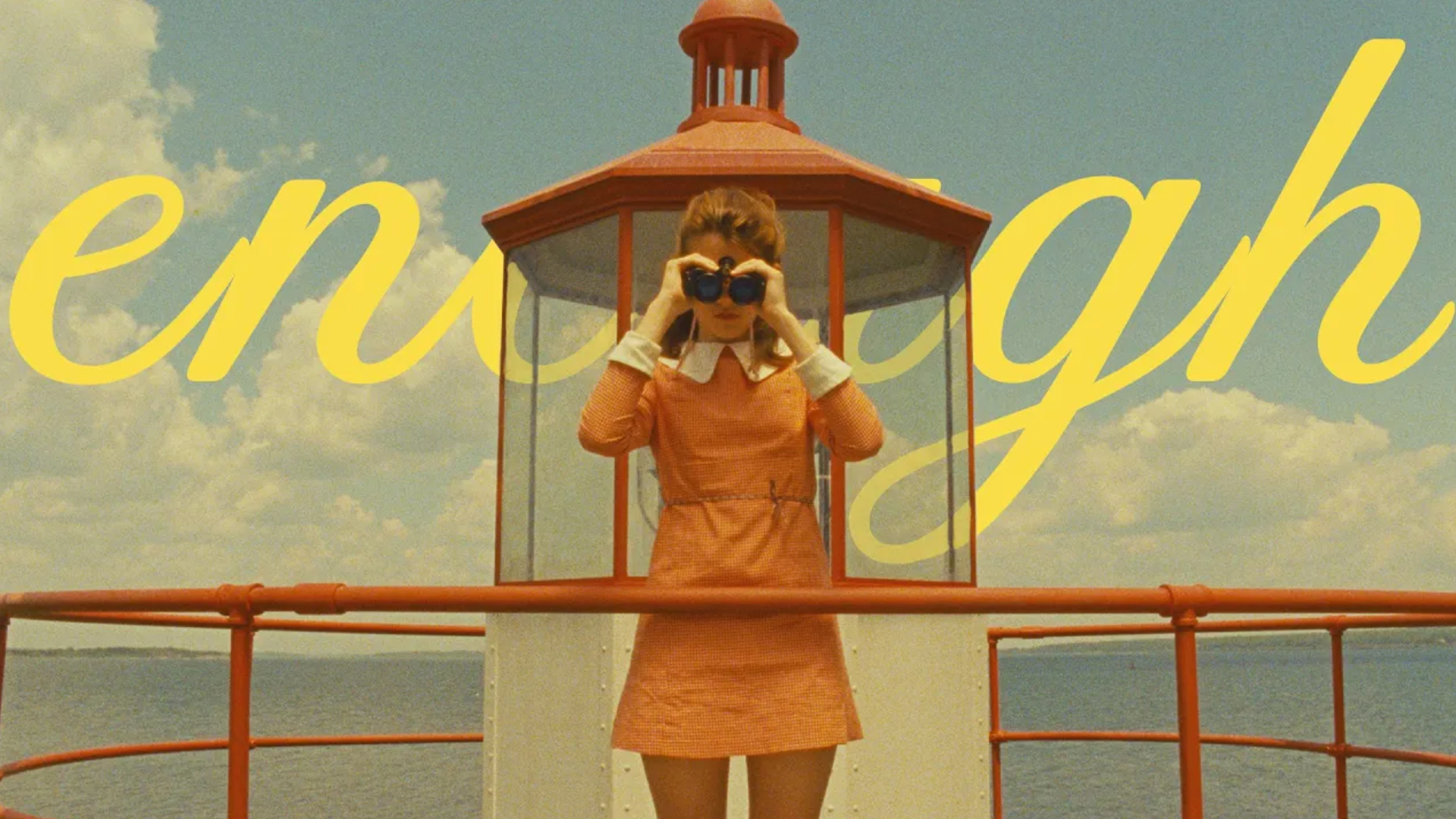
Wes Anderson is a director with very specific tastes. Starting out his films were unlike anything people had seen before. Movies like Bottle Rocket, Rushmore, The Royal Tenenbaums, and The Life Aquatic with Steve Zissou put Wes Anderson on the map. But as time went on, his symmetrical framing, limited palate, and quirky characters all started to feel part of a formula. With each passing movie, the tropes got more intense, and it felt he was leaning more into being "Wes Anderson" than making quality films like he used to. It all came to a point during this specific moment when I personally started to get tired of Wes Anderson.
Show More Show Less View Video Transcript
0:00
Boys aren't allowed in here. What happened to your hand
0:04
I got hit in the mirror. Really? How did that happen? I lost my temper myself
0:09
Moonrise Kingdom would prove to be a pivotal turning point in the cultural enthusiasm surrounding
0:14
filmmaker Wes Anderson. The story of childhood love and fantasy adventure, filled with whimsical
0:19
imagery, quirky characters, and visual stylization was so quintessentially Anderson that it almost
0:25
became a parody of itself. Wes Anderson is one of those filmmakers that occupies a distinct
0:31
and wholly unique position in the modern cinematic landscape. He's a writer and director that
0:37
aside from his Roald Dahl adaptations, makes completely original films. He works with star-studded
0:42
casts and creates unique worlds that transport audiences from around the globe into his hyper
0:48
specific and tangibly unique storytelling sensibility. Anderson has made 11 theatrical films. While these movies don't exist in an interconnected universe the way many contemporary
0:58
moviegoers might want, they share a common thematic fabric. Parental abandonment, sibling
1:03
conflict, and quirky character-based comedic dialogue are a staple of his films. However
1:17
he also has visual tropes that pop up in just about all his films too. Wide-angle lenses
1:21
limited palettes, symmetrical compositions, and an emphasis on intricately executed, often stylized to the point of artificially production design
1:30
He's also obsessed with scenes set to obscure pop songs and distinctive use of slow motion
1:35
Over the course of his first three films, these tropes began to solidify themselves
1:40
starting with 1996's Bottle Rocket, a Texas-based screwball heist film which received positive
1:45
critical reviews but was a box office disappointment. and then, moving through 1998's Rushmore and 2001's The Royal Tenenbaums
1:53
Anderson solidified himself as a director firmly on the rise. This momentum was sealed when Tenenbaums was granted a Best Original Screenplay nomination for Anderson and his co Owen Wilson The original idea was just to do a movie that was about a family of geniuses As it evolved it became kind of more about family than about geniuses but that was the original idea Tenenbaums was unique within the filmic landscape of 2001
2:17
drawing upon influences like Orson Welles' The Magnificent Ambersons and J.D. Salinger's Franny and Zoe
2:22
It was fresh, unique, and completely unlike the glossy, hyper-commercial fare of the burgeoning comic book genre
2:29
fantasy epics, and other big-budget studio films being produced at the time
2:33
Tenenbaums felt like a handmade piece of art coming from someone who had a refined aesthetic in mind
2:38
Take, for example, the scene where Luke Wilson's Ritchie prepares to end his own life set to Elliot Smith's Needle in the Hay
2:44
or the way the film prominently features Alec Baldwin's voiceover as a disembodied narrator
2:48
Royal had lived in the Lindbergh Palace Hotel for 22 years. Or even just the fact that he's visually creating callbacks to the influences at the core of the piece by including chapter titles and snippets of the novel that the movie is a visualization of
3:02
All of these choices make the film feel completely unique. Anderson had the attention of the world
3:08
and film fans were waiting with bated breath to see what he would do next. The Life Aquatic with Steve Zissou
3:13
a deeply emotional film inspired by the life career of deep-sea explorer Jacques Cousteau in 2004
3:19
Son of a f***, I'm sick of these dolphins. And the Darjeeling Limited, a story of grief and soul-searching
3:25
following three brothers who ride a train across India in an attempt to reunite with their mother
3:29
While Life Aquatic underperformed slightly at the box office, Darjeeling Limited pulled in $35 million, roughly twice its modest production cost
3:37
2009 would see the stop-motion classic Fantastic Mr. Fox released to rave reviews but only make $46 million at the box office, off a budget of $40
3:46
And it would be here that Anderson, after the stumble of Fantastic Mr. Fox, would take the gamble that would give him his biggest box office success to date, Moonrise Kingdom
3:55
The film, co-written by Roman Coppola, follows a 12-year-old orphan boy, Sam, who falls in love
4:00
with a young girl named Susie and plans to run away with her. The ensuing whimsical fairy tale
4:05
captured the hearts and minds of viewers young and old alike and pulled in almost $70 million
4:10
And yet this is the film where I fell out of love with Wes Anderson Here where we diverge from our usual format a bit We rarely speak to you in the first person We almost always present these video essays as close to fact as
4:23
possible, and any opinions we do have are interlaced with supporting evidence. But this is a Wes Anderson
4:28
video, so consider this as a straight-to-camera or a disembodied narrator segment. Interesting
4:34
Moonrise Kingdom should have been one of my favorites of Anderson's pictures, from the boy
4:39
adventure visuals to the burgeoning romance to the hyper-stylized fantasy aesthetic. I should
4:44
have loved it, but I really, really didn't. I was obsessed with Anderson up until this movie
4:49
specifically the trilogy of Tenenbaums, Life Aquatic, and Darjeeling. They felt like a
4:53
revelation to me when I was in art school. Why couldn't all movies be like this? So quirky
4:58
unique, and engaging. Watching standard Hollywood blockbusters or even other indie features after
5:03
these films felt less than. They just didn't have one-tenth of the personality that Anderson had
5:08
And then this scene happened. Don't let go. Bruce Willis' Captain Sharp offers to assume the role of foster parent for Sam
5:20
and then quite literally save Sam and Susie after a lightning bolt strikes the bell tower they're all standing on
5:26
It's just too far for me. The artificiality of the stylization undercuts the emotion of the scene in favor of a cute image
5:34
The entire story, all 94 minutes of runtime, build up to this one moment
5:38
and it's essentially just a sight gag. When I first watched it, I felt like Anderson had pulled the rug out from under me
5:44
Yes, Anderson had always utilized stylized or symmetrical compositions, but the way the symmetrical shots and POV shots were executed in Moonrise Kingdom
5:53
it felt as though Anderson was aware that people knew he liked symmetrical compositions
5:57
and therefore he had to use them in the film. Moonrise Kingdom feels like the type of movie Wes Anderson made
6:03
because he finally figured out that people like Wes Anderson movies, instead of him making a movie and organically arriving at the means of stylization. Up until
6:11
this point, his films have a keenly deft authorial hand, and one that might or might not work for you
6:17
The earnestness the damaged characters the sets that are obviously sets but that kind of the point It not for everyone But for me in art school it absolutely was Which is why I was so turned off by Moonrise Kingdom And I know I in the minority here Over the next decade
6:32
Anderson would put out the Grand Budapest Hotel, Isle of Dogs, The French Dispatch
6:36
and Asteroid City. And that's to say nothing of the rapidly expanding world of short films he's
6:41
been steadily producing as well. This, of course, climaxing in Anderson winning the Oscar for Best
6:46
Live Action Short Film for The Wonderful Story of Henry Sugar. People still like Wes Anderson
6:51
films, but it doesn't seem like he connects today culturally, the way he did during his
6:56
peak of Royal Tenenbaums, Life Aquatic, and Darjeeling Limited. Those three films have an
7:01
energy, a narrative and visual perspective that can't really be easily summarized. His later films
7:07
aren't bad, they're just repetitive. And yet, you know what? They make money. Ironically for me
7:12
The French Dispatch is my favorite of Anderson's most recent work. The film is an interconnected
7:17
web of short stories all told in varying filmmaking styles. The film was inspired by
7:22
the magazine The New Yorker, but it's both thematically and literally about the way in
7:27
which artists create their art. It's about style and how the use of style can impact the viewer's
7:33
perception of a story. People seem to either love the film or hate it, which in and of itself kind
7:38
of proves my point. For better or worse, Wes Anderson is a brand now. He's a commodity and
7:44
people know what they're getting when they go to see a Wes Anderson movie. They're there for the
7:47
style. And because he's never had a truly bold departure project from his previously established
7:53
method of stylization, he's just not getting the same cultural feedback that he was some 20 years
7:58
ago, which makes sense and is only logical. No one could expect an artist to be the king of the hill
8:04
forever. It's in an artist's nature to experiment and push things, even if, from my perspective
8:09
the experimentation is pretty similar to what he's done before. But at the end of the day, he still has a loyal fan base
8:16
I personally might not like some or most of his later work due to the previously discussed self-awareness
8:22
but you have to respect the man for being interested in a set of artistic principles and going for it
8:27
And in a landscape filled with bombastic CGI punch fests that feel like they were made by committee
8:32
at least his films feel like someone with vision made them