Up next in 10



During the time of it's premiere, MadTV was set up to be the perfect replacement for a struggling Saturday Night Live. With a fresh cast of talent, and the history of Mad Magazine behind it, MadTV started strong, but quickly lost favor among it's core audience when SNL began it's resurgence. Even though it was brought back for a brief time years after it's cancellation, MadTV never quite found it's footing with a new audience.
Show More Show Less View Video Transcript
0:00
Please, I don't want my daughter seeing me like that
0:03
Your daughter won't see you. Yes, she will. She never once sleeps through the night. Nobody's going to find you, Lydia
0:09
Happenstance is a wild phenomenon, a perfect alignment of events, ideas, and circumstances
0:13
that land in one pivotal moment. In the case of Breaking Bad, chaos reared its ugly head
0:18
when Bob Odenkirk's wildly popular Saul Goodman wasn't available due to the actor's commitment
0:24
on How I Met Your Mother. This narrative rock in a hard place ended in the creation of a character
0:28
that would forever alter Breaking Bad's future and how we think of Hired Muscle
0:35
What the son of a- As the second season of Breaking Bad was drawing to a close, the writers found themselves facing
0:42
a problem. While they needed to bring the season's overarching plot to a satisfying conclusion
0:46
one of their key players was going to be unavailable. This put the show in a bind
0:51
They had been building towards Goodman being the linchpin of the season's third act. Goodman had
0:55
originally been intended to be a means of wrapping up Walter White and Jesse Pinkman's
0:59
fractured relationship. Who do I look like, Maury Povich? I'm not your marriage counselor
1:03
As symbolized in the newly added love interest Jane Margolis, played by Kristen Ritter. Unable
1:08
to work around the scheduling problem, series creator Vince Gilligan and the writers decided
1:12
to create a new character to bring the season to a close. Introduced in the season finale
1:17
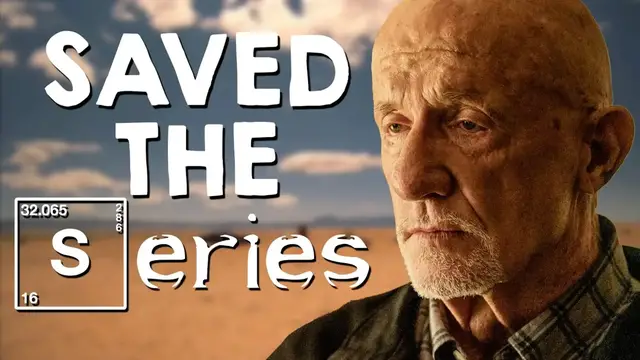
ABQ, we meet Saul's cleaner, Mike Ermentrout, played by Jonathan Banks. The trope of a cleaner
1:22
There is in and of itself not a new idea to the world of crime fiction
1:26
Often used to explain away DNA, deceased bodies, and other incriminating evidence
1:31
they're usually presented as cold and methodical. And that trope makes sense in the workmanlike nature of their business
1:37
While a dealer, hitman, or burglar performing a heist is often romantic
1:42
there's a monotony to the character that is just cleaning up the mess. But when done correctly, that character can be very compelling
1:48
And that is exactly what we got in Mike. When Jesse Pinkman wakes up to find his partner Jane deceased from asphyxiating on her own vomit
1:55
unknowingly due to Walter White not attempting to save her the night before as a means to regain
2:00
control of his partner, Saul Goodman is called. In his stead, Mike is sent to help clean up the
2:04
scene in order to keep the two out of trouble As Mike helps clean up the scene he coaches Jesse on what to say to the police Here your story You woke up You found her That all you know These three small fragmented sentences are a window into Mike himself
2:20
The barest amount of information, a lie wrapped in truth, and most importantly
2:24
an acceptance of the life you have now put yourself into. Season 2 was when Breaking Bad really started to show the consequences of White's arc
2:31
Instead of the direct conflicts and situations unto himself, we started to see how his actions rippled throughout the world, his family, his relationships
2:40
and his own psyche. Mike became a representation of the long-term effects of these ripples
2:45
The character was no longer a singular puddle, as much as he was a river. The coldness and
2:49
meticulousness of Mike is the result of decisions made earlier in his life. We'll learn later that
2:55
Mike, at one point, was a crooked police officer in Philadelphia. When his son, Mattie, also became
3:00
a cop, he was presented with the same offer as his father. Take some bribes, turn a blind eye
3:05
and survive. Only when Maddie takes too long to decide, partly due to seeking Mike's advice
3:10
he is killed by the officers. This moment, and then Mike ambushing and killing his son's murderers
3:15
are the beginning of what would establish Mike's understanding of how criminals work and the steps
3:20
you must take when working with or around them. While White quickly operated like the colloquial
3:25
bull in a china shop, our cleaner knew survival took more finesse. After being forced to work with
3:30
Gus, White immediately wants to murder the rising kingpin in an attempt to protect himself. When he
3:35
brings this up to Mike, the man only has one answer, a punch to the face. In this moment, we realize
3:41
that Mike has an understanding of patience and place. He knows that killing Gus would not only
3:46
be a betrayal of his loyalty, another aspect of the character reinforced episode after episode
3:51
but also just a flat-out bad idea. While Gus is a man on a mission of vengeance
3:56
leaving death in his wake, he is also a planner with fail-safes and contingency plan after
4:01
contingency plan. White is just a guy in over his head, flying by the seat of his pants. He is
4:06
reaction upon reaction to the moments that happen to him and because of him. Mike, however, has
4:11
formed a relationship with Gus because the two understand the importance of thinking ahead to
4:16
ensure any necessary reactions have been considered And Mike not wrong here When When White does kill Gus it leaves a void that threatens to swallow the high school chemistry teacher turned cook turned criminal desperately trying to just maintain until he forced to go on the run Throughout Breaking Bad and its prequel
4:31
Better Call Saul, we see that Mike isn't the stereotypical greedy criminal character, even in
4:36
a show full of greedy characters. From White's ever-growing want for respect and power, Gus's
4:41
personal vendetta, or even Jesse's want for approval, Mike always presented himself as more
4:47
of a head-down, nose-to-the-grindstone criminal. That subversion of expectations is not new territory for Gilligan
4:53
The creator, writer, and director initially cut his teeth on the X-Files in the late 90s
4:58
The show told the story of two FBI agents who investigate paranormal cases, one a skeptic
5:04
and the other a believer. But the stories there were never the typical silhouetted agents in black suits and unmarked cars
5:11
The episodes were often optimistic and nihilistic in the same breath. They managed to toe the line between conspiracy theories and faith
5:18
More often than not, they were also extremely playful. In the 12th episode of season 5, Gilligan, in his fifth writing credit, would pin an episode titled Bad Blood
5:27
a story about vampire attacks recapped by wildly different perspectives on the same events by Agents Mulder and Skuller
5:33
It's a sort of pitch-perfect way to let us inside a character's head as we see their indifferent interpretation of identical moments
5:40
In Breaking Bad and Better Call Saul, we see this same storytelling, but as how characters deal with moments
5:46
Going back to Mike's introduction with Jesse and Jane, we understand so much about the character by the way he interacts with the death in contrast to Jesse
5:53
While Jesse has a much more relatable freakout, terrified, and feeling guilty due to both of them engaging in the same illegal activity, this all seems like secondhand to Mike
6:03
Another body and another mess to clean up. Mike never wants any more details than what he needs to know in order to finish the task at hand
6:10
Because knowing any more draws him deeper into a whirlpool he has no interest in waiting
6:15
That may seem like a cold reaction, and in lesser hands, it might appear so
6:19
Luckily though, the actor playing Mike was Jonathan Banks. While obtaining his big brink in the 80s crime drama Wiseguy
6:26
Banks had already been acting in smaller roles throughout the 70s and early 80s A lot of those roles were in comedic films like Stir Crazy Gremlins and even the adventures of Buckaroo Banzai across the eighth dimension That pedigree of strange directors like W Richter classic dramatists like Sidney Poitier and legendary funnymen Richard Pryor and Gene Wilder meant that Banks had an enormous palette of influences to draw from
6:48
It's easy to look at a character like Mike and remember the quote-unquote badass moments, his stony glare, or gruff responses
6:55
We were just supposed to scare you, that's all. You try harder next time
6:59
But all of that would be for naught if it weren't for moments of heart and sincerity
7:03
Throughout Breaking Bad and Better Call Saul, we see very paternal moments with Mike
7:08
When Gus wants to drive a wedge between White and Jesse, he sends the younger cook out with
7:12
Mike on cartel jobs, where they begin to bond with each getting something in return
7:16
Jesse, the respect he wants, and Mike, the son he misses. In Better Call Saul, Mike forms a strong bond with Nacho Varga
7:23
When it's revealed that Nacho's life of crime revolves around supporting his father, Mike
7:27
is bound and determined to continue taking care of the father after Nacho's death. It's a level of
7:32
commitment to support and protect the families that Mike demonstrated throughout both series
7:36
There's an ingrained sense of loyalty beneath the cold cleaner that shows his heart and dedication
7:41
a love that, despite the dirty waters in which he swims in, is clear as day. While many of the
7:46
characters of Gilligan's Southwest Syndicate waver and flow, Mike never does. That's an attribute
7:51
that has endeared him to fans for years. He's one of a handful of characters that appeared in Breaking
7:56
Bad, Better Call Saul, and El Camino. He's remembered as not just an amazing character
8:01
but one who genuinely increased our love of the show. That kind of legacy stems from simple
8:06
happenstance and a core idea of practicality. Mike's a man who believes you shouldn't be here
8:11
but since you are, you must do everything possible to stay alive. Mike was never going to have an arc
8:17
in the same way as Jesse or Walter. Jesse's story was almost a coming of age, a boy looking for
8:22
respect who wavered between what kind of man he could be. Walter was always going to be a criminal
8:27
a harbinger of absolute power corrupting absolutely. But by the time we meet Mike, his arc is complete
8:33
He's learned his lessons through mistakes and ripples that have reverberated throughout his entire life
8:38
And we're lucky enough to have watched him share those lessons over hours of television, even if they often fell on deaf ears