Up next in 10



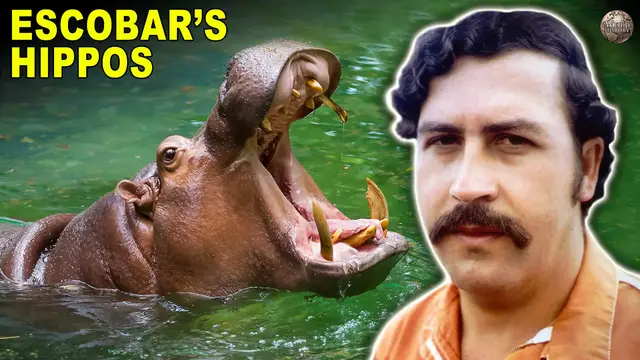
Pablo Escobar: kingpin and... animal lover? In the 1980s, Escobar's zoo at Hacienda Nápoles took shape, filled with exotic animals, including hippos. The zoo was only functional for about 10 years before the Colombian government claimed it, but during its heyday, Escobar allowed locals to explore it for free. He even bussed children to the zoo.
Show More Show Less View Video Transcript
0:00
In the 1980s, drug kingpin Pablo Escobar's zoo at Haciendanopolis was filled with exotic animals, including hippos
0:10
Today, however, the descendants of those hippos, which aren't native to South America, have made a home in Colombia
0:16
and not everyone is happy about it. So, today, we're examining how Pablo Escobar's pet hippos are still a huge problem decades later
0:25
Okay, time to push it to the limit. If Scarface taught us anything, it's that part of being an underworld kingpin is having a zoo filled with exotic animals
0:41
Pablo Escobar's zoo was only functional for about 10 years, but during its heyday, he allowed locals to explore it for free
0:47
He even paid to bus children to the zoo, as if to say, hey, I'm not such a bad guy
0:53
But after it was taken over by the government, officials moved all of the animals to other zoos
0:57
sort of like an animal witness relocation program. The hippos, however, were allowed to remain
1:04
It's not exactly clear why the hippos escaped relocation. One possible explanation is that they were just too difficult to move
1:10
Hippos are heavy and aggressive, so transporting them is kind of similar to relocating a delivery truck
1:17
that's mad at you, specifically. Another possibility is that someone decided to leave them
1:23
because they were well-suited to Colombia, where the shallow rivers easily accommodate their needs
1:28
In their native Africa, droughts naturally cull hippo populations. But the weather in Colombia actually helps them thrive
1:35
For instance, the agreeable climate has led to a kind of hippo baby boom
1:39
The hippos love Colombia so much that they're mating at least six years earlier than they do in Africa
1:45
Hippos in Africa begin this process at around age 8 and 10 for males and females, respectively
1:50
But Escobar's hippos, they get through their awkward middle school years much earlier
1:54
and start reproducing at age three. And because the females give birth each year
1:59
the population is growing pretty fast. Escobar kept exactly four hippos at his zoo
2:04
presumably so he could invite his fellow kingpins over to play a jumbo-sized version of Hungry Hungry Hippos
2:10
After the zoo was seized and the hippos were left to their own devices, the animals multiplied quickly
2:15
Today, the herd is growing at around 6% a year. Some have even moved at least 90 miles away from Hacienda Napolis
2:22
Which is understandable, because who wants to live close to their parents
2:26
Today there are reportedly as many as 130 hippos around the Antioquia province Experts predict that hippos descended from Escobar original dream team could total around 400 by the year 2031 By 2099
2:41
Colombia will presumably be in some kind of planet of the hippos situation
2:50
The good news is, while Escobar's hippos are potentially dangerous to humans in certain
2:55
situations, so far they haven't actually caused many problems for the people of Colombia. In fact
2:59
for many years there were no reports of any attacks, and only a few people had ever had
3:04
aggressive encounters. The hippos mostly kept to themselves, like goths at the beach. But while
3:09
these hippos haven't hurt anyone yet, their numbers continue to increase and their territory
3:13
continues to spread. So it's probably only a matter of time before one gets too close to humans for
3:19
comfort. In 2007, villagers began calling the Ministry of Environment in Bogota, saying they'd
3:25
seen a strange giant creature with small ears and a big mouth. It was either a series of Vin Diesel
3:30
sightings or the introduction of a new species. Officials dispatched veterinarian Carlos Valderrama
3:37
to check out the situation and discovered that the animal in question was, in fact, a hippo
3:43
According to Valderrama, a lot of Colombians are unfamiliar with the animals and don't realize how
3:48
potentially unsafe they can be around humans. Local newspapers even contain reports about children attempting to keep hippo calves as
3:55
pets, which is understandable because baby hippos are adorable. For the most part, however, the relationship between the Colombian people and their chonky
4:02
semi-aquatic neighbors is fairly quiet. The animals occasionally wander into town and stop traffic, but they're seen as more
4:09
of a nuisance than a real problem. They're even viewed by many as village pets, which is exactly how Pablo Escobar saw them
4:18
But things have not all been peaceful. In 2009, the Colombian government authorized the termination of Pepe
4:29
a descendant of Escobar's original hippos. Pepe had become quite the troublemaker
4:34
and he was repeatedly caught doing things like bulldozing through crops, knocking down fences, and slaying cows
4:41
A crack team of Colombian commandos in a battle to the death with a drug dealer's crazed hippopotamus
4:46
Sounds like a bananas action flick. Wait, not bananas. What do hippos eat
4:50
Whatever that is. But it didn't go down like that. In reality, some soldiers cornered Pepe
4:56
while two professional hunters punched his ticket. The image of the soldiers posing with Pepe body caused an outcry Protesters were furious that a country which already allows animal fighting was now supporting the termination of a protected species The government was also planning to put down Pepe mate and offspring but the uproar
5:13
forced them to call it off. The obvious solution to the hippo population boom is, of course, just to relocate them
5:19
But there are a few problems with that idea. For one, each hippo weighs up to three tons, roughly the same as two Saturn ions
5:27
This creates a host of logistical problems. But more practically, it means moving the hippos would be incredibly expensive
5:33
Another problem is where to move the hippos. Unfortunately, moving them back to their native Africa is out of the question
5:39
Having men in South America for generations, Escobar's hippos very possibly have diseases
5:44
to which African hippos have no immunity. Also, they'd have to cancel their gym memberships, and that's always a hassle
5:50
Luckily, there are some alternatives to Africa. In 2023, Colombia proposed using heavy-duty iron containers to fly 70 of the hippos to
5:59
sanctuaries and zoos in India and Mexico. The logistics of this operation would be complicated, but officials believe it's possible
6:06
Meanwhile, Ecuador, Botswana, and the Philippines have all expressed willingness to take on some
6:11
of the animals as well, apparently undeterred by the problems Colombia is experiencing
6:15
That being said, captivity is only really an option for the calves
6:19
Some hippo calves have been taken to zoos, but few zoos request the adults
6:24
Building a nature reserve for the hippos is also an option. But as always, there are other considerations
6:30
One of those considerations is that Colombia is a developing country, and building hippo-proof fences would be fairly expensive
6:37
Corralling some of the hippos into a reserve would also be difficult and costly
6:40
Although it is fun to imagine a team of cowboys driving a herd of hippos across the rolling plains
6:46
which would technically make them hippo boys. Finally, one biologist who works in the Amazon even suggested that the government slaughter
6:53
and eat some of the hippos to keep their numbers under control, which is a bit rough
6:57
But in addition to being gnarly, it's not a great idea. Hippos can carry leptospirosis, which can cause meningitis in humans
7:05
So it will probably be a while before any Colombian sizzlers add hippo steaks to the menu
7:11
Some of you may be wondering why the government doesn't take Bob Barker's perpetual advice
7:14
and get the hippos fixed to control their population. But neutering a giant, angry mouth with legs is extremely difficult, and it's equally risky
7:24
for the animal. It's hard for even experienced vets to tell male and female hippos apart
7:28
They can't be identified until they're sedated, as males have their reproductive organs in
7:33
their abdomens. And while we on the subject not even sedating a hippo is a straightforward procedure Nobody can tell how any given animal will react to anesthesia let alone one as large as a hippo
7:44
It's possible that a tranquilized hippo would just run back into the water before the drugs
7:48
fully took effect and drown. Despite the difficulties posed by sterilization, the Colombian government was pursuing a plan
7:55
to sterilize or euthanize the animals until a lawsuit resulted in a US federal court recognizing
8:00
the hippos as interested persons with legal protections. So, legally speaking, hippos are people too
8:12
Hippos are not native to South America, making them, according to one hippo researcher, the
8:17
largest invasive animal. And because hippos were never meant to live in Colombia, some are worried that they will
8:23
inevitably affect the ecosystem in unpredictable ways. For example, hippos eat a lot
8:29
Just look at this picture of one. He's not ordering from the dollar menu. And when a hippo eats a lot, it poops a lot
8:35
While some fish and bugs consume hippo waste, it can be a bad thing in massive quantities
8:40
For example, hippo dung can put too many nutrients into the water, which creates algae blooms
8:45
That algae harms fish by depriving them of oxygen. In a possibly ominous portent of things to come
8:51
numerous fish have been wiped out in the area near Escobar Zoo
8:55
No one is 100% sure why the fish died. Maybe the fish found some of Escobar's old product
9:00
and simply partied too hard. but ecologists suspect the hippos may be to blame
9:05
Either way, in 2022, the government declared the hippos a toxic invasive species
9:16
Despite the dangers they pose, hippos, particularly baby hippos, are entirely too cute
9:22
And therein lies the biggest obstacle to dealing with Escobar's hippos. People love them
9:28
And that makes it incredibly difficult for the Colombian government to do anything productive
9:32
to curb their population. The slaying of Pepe the hippo caused worldwide outrage
9:37
A researcher from the Colombian Environmental Agency, which manages the hippos, told National
9:42
Geographic that the hippos have become a tourist attraction. People love them
9:47
And while some experts argue that putting the hippos down is the best way to control
9:51
the situation, those experts aren't winning any friends in Colombia. At least one local environmental authority told the BBC he believes the Colombian government doesn't want to give the world a negative image by harming such a charismatic animal
10:04
That's hard to argue with. Come tour the hippo graveyards of Colombia
10:09
Doesn't exactly pop off a travel brochure