Up next in 10



Superheroes are supposed to save us.
So what happens when the most powerful hero in the world…simply doesn’t care? What happens when a superhero realizes he doesn't have to pretend anymore?
Show More Show Less View Video Transcript
0:00
Three assholes laying into one guy
0:02
whatever else watches. And you want to know what's wrong with me
0:06
I'd rather die. So bring it on! Movies and television are built around heroes
0:12
From the bright optimism of Superman to the grounded moral codes of modern prestige TV protagonists
0:18
the genre usually runs on the same emotional engine, someone powerful choosing to do the right thing
0:23
It reassures us that if extraordinary people existed, they would protect the rest of us
0:27
But what if The Extraordinary had no more interest in us than ants under their boots
0:32
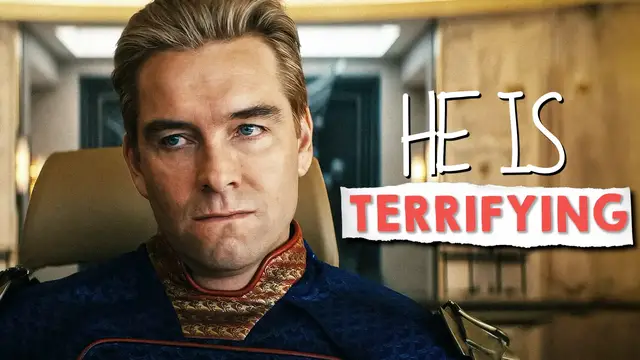
The answer to that is Homelander, a character who might be the most chilling villain television has produced in years
0:39
not because he hides in darkness, but because he truly believes himself to be the hero
0:44
Dad. Dad. What's he doing out here? Aren't you guys friends? The long and the short of The Boys is that it's a show based on the wildly successful comic book
0:58
from writer Garth Ennis and artist Derek Robertson. While Ennis is no stranger to
1:02
deconstructing superheroes and the tropes around them, The Boys might be his magnum opus on the
1:07
reality of what would happen if humans were gifted superpowers. To understand why Homelander
1:12
feels so uniquely disturbing, it helps to look at how the show constructs the world around him
1:16
Superheroes and the boys aren't lone guardians patrolling the night. They're corporate assets
1:21
Their missions are scheduled by product launches. Their rescues choreographed for maximum publicity
1:26
And their public personas are managed by teams of marketing executives and crisis consultants
1:31
Destiny knocks on the girl next door's door. And she answers to fight for truth and justice side by side with her hero
1:38
The system works because image matters more than reality. As long as the public believes the heroes are good, the details underneath don't really matter
1:45
Homelander is the ultimate expression of that logic. He isn't simply powerful, he's carefully manufactured to represent the ideal hero
1:52
The cape, the smile, the speeches about protecting the innocent, it's all part of the brand architecture built around him
1:59
But the show quickly reveals that Homelander's story is very different from the mythology the public believes
2:04
Unlike most superheroes, he doesn't have an origin story shaped by love, family, or sacrifice
2:10
He doesn come from a small town or a tragic accident that inspired him to do good His true origins begins in a laboratory Raised by scientists as part of experiments with Compound V Homelander was never given a normal childhood The people
2:23
around him didn't treat him like a person learning how to navigate the world. They treated him like
2:27
a prototype. Season 4's Wisdom of the Ages in particular paints a gruesome picture of carrying
2:32
trauma. The result is someone who grew up with unimaginable power but almost no emotional
2:37
foundation to understand it. He wasn't taught empathy or restraint. He was taught performance
2:42
and obedience at all cost. This upbringing creates the psychological contradiction that
2:47
defines the character. Homelander wants to be admired because admiration is the closest thing
2:52
he has ever experienced to love. But admiration isn't the same thing as love, and deep down he
2:58
knows it. Well, you can help me understand something, Deep, because I don't know, maybe I'm stupid
3:04
Am I stupid? That gap between validation and genuine connection becomes the core of Homelander's psychology
3:11
The show repeatedly frames him as someone who is emotionally incomplete, someone who learned how to mimic human warmth
3:17
without ever fully understanding it. In season one, when we're introduced to one of Homelander's
3:21
more YouTube-unfriendly kinks, there are layers to what could be seen as simply shocking
3:27
On the surface, there's the obvious shock value. Then there's the quick and easy take of Homelander's immaturity
3:33
Of course, there's the more kink-based line of thinking, but there's also the idea that Homelander is an all-American guy
3:39
Homelander is an archetype. He knows how to comfort people after disasters while posing for the cameras and waving to crowds
3:46
But these moments feel slightly off, because the performance is being delivered by someone who studied human behavior rather than lived it
3:53
A lot of that effect comes from the performance of Antony Starr
3:57
whose portrayal of Homelander is built on subtle tension rather than constant intimidation
4:02
Star doesn't play him like a traditional supervillain. There's no theatrical rage or grand declarations of evil
4:08
Instead, there's a carefully controlled calmness that feels almost too controlled. The smiles linger a moment longer than they should
4:16
while the pauses in conversation stretch just enough to become uncomfortable. It creates the sense that something unstable is always sitting just beneath the surface
4:24
and the show gradually proves that instinct right. One of the most fascinating aspects of Homelander as a villain is how small the triggers for his violence can be Traditional antagonists escalate conflict strategically They lash out when their goals are threatened or when the stakes demand it
4:40
Homelander escalates emotionally and recklessly. In season two, Homelander quickly kills a doppelganger, Soup
4:46
who tried to seduce him as both milk-bearing Madeline Stilwell and then Homelander himself
4:51
Instead of using this Soup's power to his advantage in some sort of brilliant plan
4:55
Homelander simply breaks his neck and he says, I don't need anyone
4:59
This is where the boys separate Homelander from many other villains in the superhero genre
5:04
He isn't trying to conquer the world. He already occupies the highest position in it
5:07
What he wants is something much less stable. Affirmation that he deserves that position
5:12
When that affirmation disappears, the consequences can be catastrophic. Homelander's effectiveness as a villain is how thoroughly he is embedded in the systems around him
5:21
He isn't operating outside society. He's at the center of it. He appears in movies produced by Vought
5:26
He stars in marketing campaigns. he is a cultural touchpoint, giving interviews and speeches that shape public opinion
5:32
The most dangerous man on the planet is also one of the most famous celebrities
5:36
Say it again, Cam. I may be a superhero, but I'm also just a man who fell in love with the wrong
5:41
woman. That celebrity status creates a strange kind of protection. People don't want to believe
5:46
their heroes are monsters, so even when cracks start appearing in Homelander's image, the public
5:51
instinctively looks for ways to explain them away. Homelander benefits from that protection for a
5:55
long time. As long as Vought's public relations machine can keep the narrative under control
6:00
his darker impulses remain hidden behind carefully crafted messaging. But the longer the series runs
6:05
the clearer it becomes that the system is losing its grip. That shift becomes even more apparent
6:10
when the broader world of the franchise expands through Gen V. The spinoff explores the next
6:14
generation of superheroes being trained within the same corporate infrastructure, and Homelander's
6:19
presence looms over that environment even when he isn't physically there. He represents the ultimate
6:24
outcome of the system. A hero who has started to realize that the people managing him don't
6:29
actually control him anymore. When we get to Homelander's brief appearance in Gen V's series
6:33
one finale, it's a heartbreaking affirmation that for all the good our characters had accomplished
6:38
it was being simply and matter-of-factly dismantled. For most of his life, Homelander's
6:43
handlers maintained influence by appealing to his needs for validation They flattered him reassured him and reminded him how much the public loved him There always been a fundamental flaw in that strategy Homelander is stronger than everyone around him Eventually
6:57
someone with that kind of power is going to notice. And once he does, the balance between
7:08
creator and creation begins to collapse. The character becomes even more compelling when
7:13
placed opposite Billy Butcher, the series' primary human antagonist for the superhero system
7:18
On the surface, the dynamic seems straightforward. Butcher represents the people trying to expose
7:22
corrupt superheroes, while Homelander represents the corrupt power structure they're fighting against. But the deeper the show explores these characters, the more complicated that distinction
7:31
becomes. Butcher is driven by grief and revenge, emotions that push him toward increasingly
7:36
ruthless decisions. The difference between Butcher and Homelander isn't moral purity, its scale. Homelander possesses the power to act on every destructive impulse he has. Butcher
7:47
spends most of the series trying to find a way to close that gap. That tension makes their rivalry
7:51
one of the central beats of the boys. Both characters believe they're justified. Both are
7:56
willing to cross lines to achieve their goals, but only one of them has the strength of a living
8:00
weapon. The television version of Homelander becomes even more complex when compared to the
8:05
original comic series. In the comics, Homelander is certainly frightening, but he's often portrayed
8:10
more directly as a sociopathic villain. The adaptation adds layers of emotional instability
8:15
and insecurity that make the character feel less like a caricature and more like a deeply damaged person
8:21
spiraling towards something worse. It's a shame that I've missed so much
8:28
I wish I could have raised you and taught you father to son
8:33
How do you do? Instead of simply watching a monster cause destruction, viewers are forced to watch a human being
8:39
gradually realize just how little anyone can do to stop him. And that realization might be the most
8:44
terrifying element of the entire character. Because the ultimate horror of Homelander isn't
8:49
just that he's violent, it's that he's starting to believe the rules no longer apply to him
8:53
In a world where that fiction inches closer and closer to reality, that idea becomes more
8:58
terrifying than milk kink laser-eyed monsters. The most chilling aspect of Homelander isn't
9:04
whether he's a hero or villain, it's his realization that it doesn't matter
9:08
at least not to him