Up next in 10



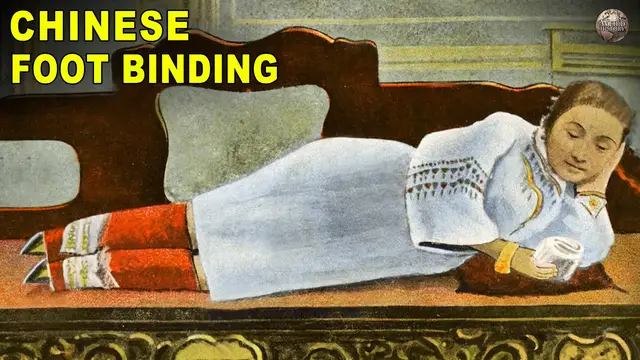
We should all be thankful the process of foot binding is finally over. But what is foot binding, exactly? Well, imagine bending (and occasionally, breaking) your feet to grotesque angles from the age of five - and that's just scratching the surface. So why would anyone want to mangle their own toes to look like a vacuum-sealed pack of cocktail sausage smokies?
Show More Show Less View Video Transcript
0:00
Imagine, if you will, a young girl who purposefully bends
0:04
and occasionally breaks her own feet at grotesque angles while simultaneously mangling her toes
0:11
from as early as the age of five. Why would anyone ever do such a thing
0:17
Well, in a word, the answer is fashion. Today, we're going to take a look at some crazy facts
0:24
about the history of Chinese foot binding. In a nutshell, foot binding was the process of breaking, then tightly wrapping, the feet of young girls
0:35
The process, which was meant to alter the shape and size of the foot, was, as you might imagine, both lengthy and excruciating
0:42
Moreover, foot binding severely limited the mobility of the women who underwent it, and often resulted in permanent disabilities
0:49
Generally practiced in China between the 10th and 19th centuries, the practice, which resulted
0:55
in a shape that became known as lotus feet, remained prevalent through five dynasties
1:00
A foot binding ceremony was usually performed on girls between the ages of four and six
1:04
At that age, the girls' bones are still composed of pre-bone cartilage and were easier to break
1:10
and mold. Foot binding usually started during the winter, when the feet were more likely to be numb
1:15
It began with the submerging of the feet in either warm water or a concoction of herbs and nuts or animal blood
1:21
All toes, except the largest, were then broken and tightly wrapped in a bundle of cotton bandages
1:27
nestling them under the sole of the foot and angling the ball downward to create the desired hoof-like shape
1:33
Every two days, the feet were unbound, meticulously cleaned, and manicured. While the feet were unwrapped, the girl's soles might be kneaded or beaten to soften them up and make the joints more flexible
1:43
Then the feet were re-wrapped, with the wrapping being pulled increasingly tighter each time
1:48
The details of the process could also vary widely depending on the era and geographical location
1:54
For example, the people of Sichuan practiced a modified form of the custom known as cucumber foot
1:59
This version of foot binding, which resulted in a long, slender foot, folded the toes under the foot but didn't affect the heel or ankle
2:07
Machuzo women did even less. They merely wrapped their feet tightly to give them a slender appearance, and then wore a particular kind of platform shoe known as a flower bowl to help simulate the walking gait of a woman with fully bound feet
2:20
And Kuchow women didn't bind their feet at all. Foot binding was also more common in the north than it was in the south, where it was mostly practiced by the gentry
2:28
Some women would keep their feet bound throughout their entire lives while others let the binding lapse after marriage While that might sound like a bit of a reprieve the truth is that reversing the process could be as painful as performing it in the first place
2:44
You're probably wondering, if foot binding was so painful and resulted in lifelong disabilities
2:50
why would anyone do it? First, since foot binding originated in the upper classes
2:55
it came to be considered a status symbol and an indication of nobility
2:59
This association remained even after it filtered down to the lower social classes
3:04
Second, small feet were idealized in ancient China. They were considered the pinnacle of female beauty and desirability
3:12
Amazingly, elements of that belief may remain with us to this very day
3:16
The story of Ye Xian, written circa 850 CE during the Tang Dynasty
3:21
tells the tale of a girl with bound feet who lost her shoe. The king eventually identifies her because her foot is the only one small enough to fit into it
3:29
The two of them fall in love and are married. This tale is believed to be an influence on the modern fairy tale of Cinderella
3:36
Perhaps equally important to their connotations about beauty, bound feet carried a connotation about a woman's sexual prowess
3:43
You see, the manner of walking that foot binding necessitated was comprised of minuscule mincing steps to avoid toppling over
3:50
a practice that ultimately tightened the pelvic muscles and inner thighs. This muscular training was believed to prepare women for ideal lovemaking
3:58
Thus, foot binding was upheld as a practice due to its perceived lurid implications
4:03
Finally, other sources suggest that foot binding, which was not limited to the elite for long
4:08
was also practiced by the working class in order to keep willful, playful young girls disciplined
4:13
Women's labor consisted mostly of handwork, such as weaving, which requires long periods of sitting rather than mobility
4:20
93-year-old Sun Choi Go-choo, who had her foot bound, stated that it wasn't a male presence enforcing the custom
4:27
Her mother was actually the one who encouraged her to bind. According to her, it was my mom that kept telling me that I have to have my feet bound
4:35
So, I had my feet bound. But now I kind of regret it because the bound feet actually cause a lot of pain
4:43
The earliest surviving written references to the practice of foot binding occur in several poems
4:48
written about 1100 CE. And the earliest archaeological evidence for the custom
4:53
comes from a couple of tombs dated from 1243 and 1275, respectively
4:58
That being said, no one knows exactly when the custom began. One legend claims the whole thing may be rooted in the story of a consort of the southern Qi emperor Xiao Bao Quan who ruled from 483 to 501 CE Her name was Pan Yu Ngo and she was famous for her delicate feet According to the tale
5:17
she once performed a dance on a floor that bore an image of a golden lotus
5:21
The emperor was so impressed by the dance, he remarked that a lotus springs from her every step
5:26
By this, he may have meant to compare her to the Buddhist deity Padma Vati
5:30
who is associated with lotus flowers. Although there is no indication that Pan Yu Ngo herself
5:35
ever bound her feet? The incident may have given rise to the term lotus feet that later became
5:40
synonymous with foot binding. Historians have generally dated the inception of the practice
5:44
itself to around the 10th century. Some accounts claim that Yao Nyang, a dancer for Emperor Li Yu
5:51
who reigned from 961 to 976 CE, bound her feet in a similar fashion in order to mimic the shape
5:57
of a new moon. Apparently, she did this at the request of the emperor, who had created an enormous
6:02
sculpture of a golden lotus decorated with pearls and precious stones and wanted her to dance upon
6:08
it. The story holds she was so graceful she inspired other women to bind their feet similarly
6:14
thus inspiring the cultural practice. Others believe that because the lotus flower was held
6:19
in such high regard at the time, female beauty could be elevated if a woman's foot shared a
6:24
similar shape. Constructed from silk or cotton, shoes worn by foot-bound women were designed to
6:32
imitate the shape of a lotus bud, typically wedge or sheath-shaped. The ideal lotus shoe
6:38
was three inches long, though many historical examples in Western collections are between
6:42
five and five and a half inches in length. But what if a woman's foot was too big to get into
6:47
a three to five inch lotus-shaped boot? Well, as always, there were some tricks she could employ
6:52
to achieve as small of a foot as possible. For example, women whose feet could not conform to the three-inch ideal
6:58
could allow the heel of their foot to protrude over the back of their shoe at times
7:03
The heel was then further bound with wrappings or could be cleverly hidden by clothing with the right kind of hemlines
7:09
Pretty sneaky. The binding itself sounds uncomfortable enough, but it was by no means always the end of the process
7:16
In order to achieve the desired lotus shape, Extreme measures were sometimes taken to discipline the shape of women's feet
7:23
For example, the flesh of the foot was lacerated in some cases. Sharp objects were inserted into the bandages, leaving various wounds
7:31
Both of these tactics were used to encourage extra flesh to rot away, thus shrinking the foot further
7:36
Though this type of mutilation was purposeful when performed a lack of proper maintenance could cause problems For example unclipped toenails could easily become ingrown This could injure the toes and in some cases have some pretty serious side effects including things like infection
7:51
To prevent this, some little girls had their toenails permanently removed, which carried its own risks
7:57
Another problem was that the tightness of the binding would restrict the blood flow in the feet
8:02
The lack of circulation meant that injuries would be slow to heal and, in severe cases
8:06
could lead to rotting flesh. Even worse, the infection could enter the bones, which would result in toes literally just falling off
8:14
You'd think that would be enough to convince people that foot binding was bad news
8:18
But amazingly, losing toes was considered a good thing because it allowed the feet to be wrapped even tighter
8:24
The infections that were a common result of the practice also sometimes had one other serious side effect, namely death
8:31
Foot binding could lead to septic shock. In fact, some estimate that somewhere around 10% of the girls who underwent the process eventually died from it
8:40
As for those who survived, life was no bowl of cherries. Unless your bowl of cherries was canned and then run over by Buick
8:46
The foot bones would repeatedly heal and re-break throughout their lifetimes. Not exactly something to look forward to
8:53
And while the harm foot binding could inflict directly on the feet is obvious, the damage didn't stop there
8:58
In fact, the rest of the body also suffered from the restrictions in several ways
9:03
Notably, women with bound feet were found to have 5.1% lower hip bone density and 4.7% lower spine bone density
9:10
Both of these factors contributed to these women's increased risk for hip or spine fractures
9:18
The damage caused by foot binding was never a secret. In the 13th century, the Chinese scholar Che Ruoshui criticized the custom and wondered why little girls of the age of 4 or 5 were being made to suffer unlimited pain
9:31
In 1668, Emperor Kangxi tried to end the practice by banning it
9:36
However, despite his best intentions, the public wasn't having it, and he eventually
9:41
repealed the restriction due to the widespread persistence of the practice. Chinese writers of the 18th century also opposed the practice, as did many of the leaders of
9:50
the Taiping Rebellion in the 19th century. Christian missionaries also did what they could to actively discourage it
9:56
Though it was officially outlawed in 1912 following the Nationalist Revolution in 1911
10:01
foot binding wouldn't truly end on a grand scale until 1949, with the creation of the People's
10:07
Republic of China. In 1999, the last shoe factory that manufactured Lotus shoes was permanently
10:14
closed. And by the year 2000, only a few very elderly women still had bound feet