Up next in 10



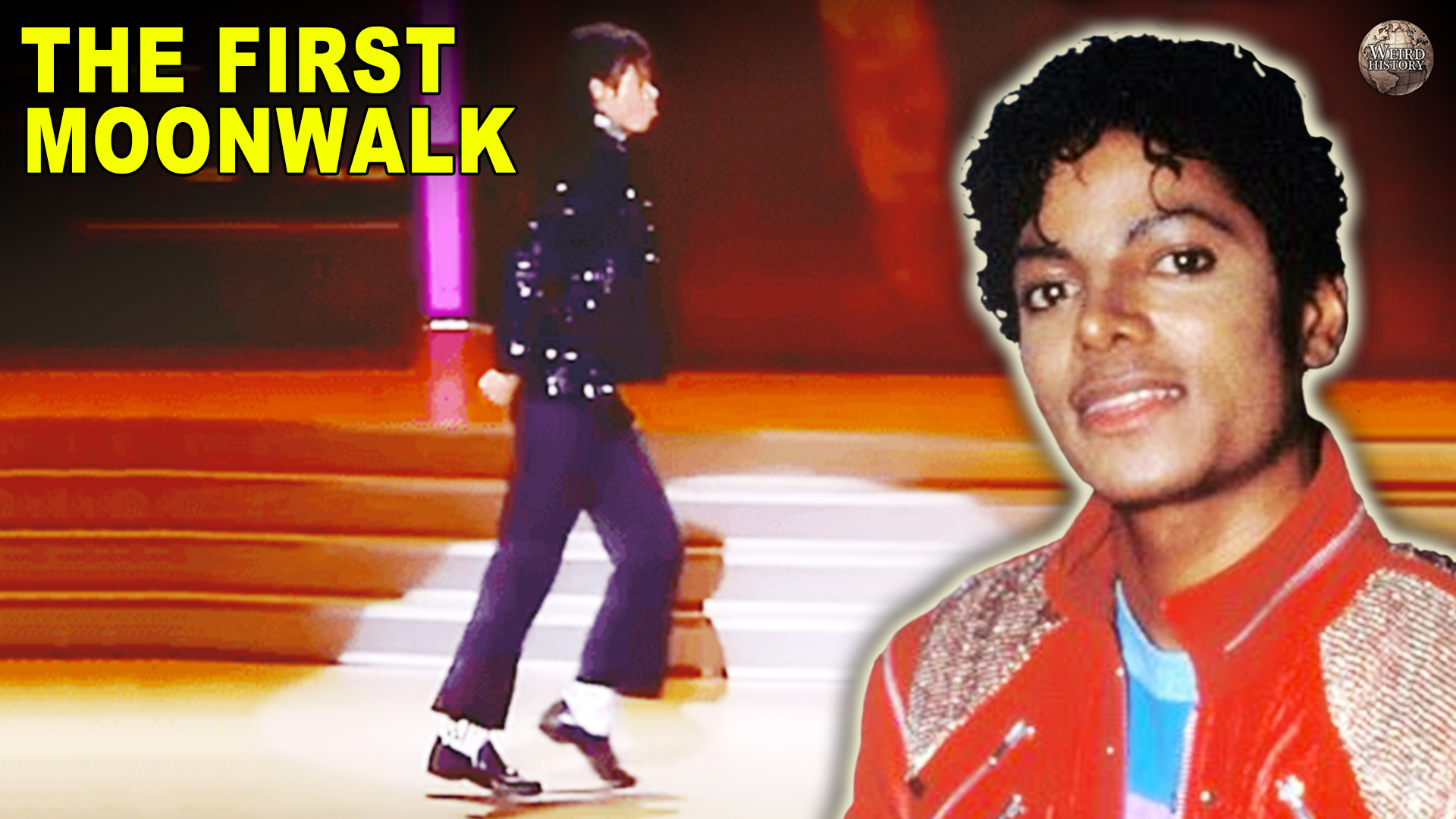
Motown 25: Yesterday, Today, Forever will always be remembered as the night of Michael Jackson's first moonwalk. The image of the King of Pop gliding across a stage is one of the most memorable moments in music history, and some may argue that the move changed the course of pop music. The 1983 performance wasn't merely the genesis of one of the most imitated '80s dance moves; it also showed MJ's gift for capturing the world's attention through meticulously crafted performances.
Show More Show Less View Video Transcript
0:00
Viewers in 1983 must have thought they were witnessing absolute magic
0:05
when they tuned in to the Motown 25 Yesterday Today Forever concert
0:08
and saw the king of pop, Michael Jackson, do his iconic moonwalk for the first time
0:15
It was the move that changed dancing forever. But how did MJ come up with such an iconic piece of choreography
0:21
Today, we're taking a look at the first time Michael Jackson moonwalked on stage
0:26
Okay, grab your white fedora and a single glove, because it's time to backslide into some weird history
0:37
The moonwalk is a move we're all still trying to teach ourselves almost a half century later
0:42
resulting in countless sprained ankles and ruined furniture. Devastation that wouldn't be matched until the psychic damage
0:48
inflicted by the Macarena Wars of the mid-1990s. But let's go back to the beginning
0:53
A lot of work went into the 1983 Motown 25 television special, which saw the reunion of some of Motown's biggest acts from the past several decades, including Smokey Robinson and the Miracles, The Temptations, The Four Tops, and Diana Ross and The Supremes
1:08
The goal of the show was to revitalize the fading Motown brand by reuniting some of its most famous superstars
1:14
Diana Ross and Skibby Wonder were just two of the big names booked for the 25-year anniversary benefit concert
1:20
Although it's unclear whether an invitation was extended to Wonder's talking book
1:24
Wait, was that title a metaphor? The Jackson Five were also invited to perform
1:29
with the group's breakout star, one Michael Joseph Jackson, set to do a solo act
1:33
If you're putting on a show to commemorate the best of Motown, it may seem like a no-brainer that you invite Jackson to perform
1:40
But surprisingly enough, we don't exactly know how MJ came to be invited to perform at the massive reunion show
1:46
Rolling Stone lists conflicting stories about the King of Pop's participation, Jackson had initially declined the invitation from Motown Records founder Barry Gordy
1:55
stating he'd rather enjoy the show as an audience member. It's hard to argue with that. Have you seen the lineup
2:01
Michael Jackson might even be there. Not only is the record unclear as to how Jackson came to be there that night
2:06
there are even more rumors that claim neither the Jackson 5 nor the breakout star Michael Jackson got an invitation to begin with
2:13
Either way, it wasn't until a liaison for Motown named Susie Akita called Jackson up
2:18
and asked him to come that he decided to even show up at all. For his solo performance, Jackson selected Billie Jean
2:24
from his recent hit record, Thriller. You've probably heard of it. During his rendition of Billie Jean
2:30
he introduced the world to his legendary Moonwalk, the dance move that would captivate a generation
2:36
and also inspire a Sega game And while several people were responsible for making sure the event was memorable for all Jackson meticulously planned each step of his own performance from top to bottom
2:48
The camera angles, the lighting cues, and the staging all came from the King of Pops' head
2:53
one year before that head would be set on fire in a Pepsi commercial. After the Jackson 5 had completed their medley, Jackson gave a short prepared speech
3:02
While the audience was distracted by the speech, Assistant Nelson P. Hayes placed Jackson's fedora on stage
3:08
making it seem as if the hat had appeared by magic. Hayes was later quoted as saying Jackson made him rehearse the spot 20 times
3:15
to make sure that the hat would be where it was supposed to be. Jackson's costume also took a lot of prep work
3:21
The sequined jacket, silver hat, and Jackson's single white glove, which contained more than 1,000 rhinestones
3:28
were designed to catch the light and make him shimmer on stage. The whole outfit, including the high cuffed pants, white socks, and loafers, was meant to conjure the image of Fred Astaire
3:37
You know, if Fred Astaire had gotten really into bedazzling. The iconic moonwalk
3:48
The dance that makes it look as if the performer is gliding across an air hockey table or getting lapped by a moving sidewalk
3:54
Fans were mesmerized upon first seeing the dance move during Motown's 1983 television special
4:00
This mesmerization was totally premeditated because nobody but Jackson had yet laid eyes
4:05
on the dance move. He didn't perform the show's stopping maneuver during any of the event's rehearsals
4:10
He kept it firmly in his glittery back pocket until the night of the show
4:14
The moonwalk Jackson performed on stage was the first time the other artists and producers
4:19
had ever witnessed the rhythmic dance move. Former Motown recording engineer Russ Tarana remarked that everyone on the crew was awestruck
4:27
upon seeing Jackson slide across the stage. and recalls hearing choruses of oohs and ahs
4:32
And is he wearing roller skates from the excited audience? The dance impressed everyone who saw it in person
4:38
and live on television, and it became an instant hit. While a lot of us grew up idolizing Michael Jackson
4:44
he never called most of us up after a night at the karaoke bar. But Jackson did get a call from his idol
4:50
after moonwalking into America's living rooms. The person Michael adored more than anyone was Fred Astaire
4:57
And when the legendary dancer phoned Jackson in the day after Motown 25 aired
5:01
it was a dream come true for the gloved one. How often do you get a call from a guy
5:05
who can tap dance on the ceiling? Jackson later wrote about the pair's friendship
5:09
in his book, Moonwalker, the storybook. Not to be confused with Moonwalker, the music disc
5:14
or Moonwalker, the 3D comic book. According to backup dancer Jeffrey Daniel a dance called the Moonwalk already existed Unlike Jackson version this moonwalk made it look as though the performer was dancing in low
5:31
gravity. But from Jackson's point of view, the appearance of the dancer's legs moving forward
5:36
and backward simultaneously was better suited for the name. And well, he's Michael Jackson
5:41
When he says, goes. And while Michael Jackson has the distinction of making the moonwalk a
5:46
household name, the move itself existed long before Motown 25. Numerous well-known performers
5:51
had done a version of the dance throughout the years. For example, as a boy, Jackson studied the
5:57
moves of James Brown, which greatly influenced his own dancing. There is also a recording of tap
6:02
dancer Bill Bailey doing the moonwalk way back in 1955 at the famed Apollo Theater. That was before
6:08
anyone had even walked on the moon. World-renowned mime Marcel Marceau had a signature routine called
6:14
Walking Against the Wind, that he famously performed in the Mel Brooks film, Silent Movie
6:19
According to Hollywood legend, Marceau taught the routine to Jackson himself. It's also possible that Jackson just had his own copy of Silent Movie that he studied like a science textbook
6:30
Other iconic performers, such as Cab Calloway and Sammy Davis Jr., are also credited with inspiring the move we now know as the moonwalk
6:37
But while MJ popularized the dance, West Coast breakdance crews were working with similar moves
6:43
well before he made it a worldwide sensation. Boogaloo Sam, a Los Angeles dancer
6:49
is credited with creating the dance style called popping as early as the late 70s
6:53
Many believe that the controlled flowing techniques used in popping were the building blocks for the moonwalk
6:59
Jackson himself was a known proponent of pop and lock dance techniques, which you can see integrated in his live performances
7:05
and music videos even before he debuted the moonwalk and Motown 25
7:09
and the moonwalk dance itself had existed long before the concert. Cap Calloway called his version the buzz in the 1930s
7:16
while other performers simply described it as the backslide. Additionally, the dance had already been performed live
7:22
by Bill Mr. Bojangles Robinson and even David Bowie before Michael had even slipped on a pair of dancing shoes
7:30
Maybe Bowie's version should be called the Mars Walk. Jackson reportedly learned the move from dancers who appeared on Soul Train in 1979
7:38
Casper Kennedy and Cooley Jackson were the dancing duo who showed Mikey the ropes when it came to the backslide
7:43
The pair made no attempts to hide the fact that the move was old school
7:47
and not an original creation. Though they'd never say anything directly to the king of pop
7:52
in the book MJ, The Genius of Michael Jackson, Cooley Jackson does air some grievances about proper attribution of the dance
7:59
saying, We kind of ended up being invisible but we never said anything about it Not only did Jackson steal the show at Motown 25 but the success of his performance coincided
8:14
with the recent release of his mega hit album Thriller, which skyrocketed him to superstardom
8:19
for the next decade. But had Jackson gotten his way, no one would have ever seen it. According
8:25
to Motown Records exec Suzanne DePass, Jackson had his attorneys formally request that the Billie
8:30
Jean performance be cut from the broadcast. The only ones who would ever lay eyes on that
8:35
history-making moment would be those who were there that night. That and anyone working on the
8:40
show who managed to make copies of the raw footage. The producers and Jackson's team
8:44
eventually reached a compromise by pre-recording the solo and leaving the final decision whether
8:49
or not to air it in Jackson's sequined hands. Luckily for the world, and arguably also himself
8:54
he ultimately decided to include the Billie Jean performance in the show
9:00
Not everyone was so thrilled, or is it thrilled, with Jackson's performance becoming a worldwide sensation
9:11
Because the whole point of the concert was to celebrate every one of Motown's artists
9:16
Some felt that Jackson had effectively stolen the spotlight for himself. Janice Gay, the wife of soul singing sensation Marvin Gaye, recounted a discussion the couple had after watching Motown 25
9:27
Marvin felt that MJ had overshadowed the other performances. and a night meant to honor all of Motown became a night about how cool Michael Jackson is
9:35
Kind of like whipping out an acoustic guitar while giving a speech at your sister's wedding. Come to think of it, Michael might have done that too
9:41
While Gay was aware of his importance to the evening and to Motown in general, he claimed that Jackson's flawlessly choreographed display made him feel upstaged
9:50
In other words, upon seeing the King of Pop's dazzling display, Gay asked
9:54
What's going on? Who would have thought that a kid from Gary, Indiana would go on to unite the East and West Coast breakdance crews
10:08
But that's exactly what happened after Jackson's Motown 25 performance. You see, the electric boogaloo crew of Fresno, California, had already utilized the moonwalk by the time Jackson revealed it to the world
10:19
The method of popping and locking was common amongst West Coast dance crews. But once everyone saw the king of pop showing off the moves, the dance style became a national sensation
10:28
Once the popping and locking of the West Coast mixed in with the breakdance moves popular in places like the Bronx
10:34
the style became a staple in dance crews around the world. Now, East and West Coast crews could finally relate to each other's dance routines
10:43
all thanks to a smooth-walking Midwesterner. Jackson probably should have won the Nobel Peace Prize
10:49
They gave that one to Nixon
#Performing Arts
#Dance