Up next in 10



In this episode of Weird History Presents: Graveyard Shift, we dive into the legend of the Loch Ness Monster, exploring its ancient origins, the most famous sightings, shocking investigations, alleged hoaxes, and the enduring mystery that continues to captivate millions around the world. Is Nessie a prehistoric creature lurking beneath the dark waters of the loch? Or one of history's greatest hoaxes?
Show More Show Less View Video Transcript
0:00
In a deep lake, in the heart of Scotland, a monster glides through the depths, inspiring awe and fear, and plenty of tales among those who claim to have seen her
0:11
Accounts of a massive beast living in the large freshwater lake known as Loch Ness date back 1500 years, and yet despite incredible efforts to uncover it, the Loch Ness monster remains elusive, part tall tale, part myth, and possibly an outright hoax
0:28
We're going to take a deep dive into the true story of the Loch Ness Monster
0:36
Loch Ness, located in the Scottish Highlands, has the largest volume of freshwater in all of Great Britain
0:42
It reaches a depth of nearly 800 feet and has a length of about 23 miles
0:47
But is it big enough and deep enough to hide an enormous secret
0:51
Scholars of the Loch Ness Monster think so and have found a dozen references to Nessie
0:56
the affectionate nickname for the alleged creature throughout Scottish history. The earliest of these dates back to around 500 AD, when local Picts, an ancient group of Celtic-speaking people
1:07
carved an image of a strange aquatic creature into standing stones near the shore of Loch Ness
1:12
The earliest written reference to a monster in Loch Ness is a 7th century biography of St. Columba
1:17
the Irish missionary who introduced Christianity to Scotland. In 565 AD, according to his biographer, St. Columba was on his way to visit the king of the northern Picts near Inverness when he stopped at Loch Ness to challenge a beast that had been slaying people in the lake
1:32
St. Columba is said to have come upon the extraordinary sight of the large beast about to attack another man, which caused the saint to invoke the name of God and command the creature to, quote, go back with all speed
1:44
Apparently, the lake monster complied and reportedly retreated to its watery lair
1:48
and was never again seen harming another man. The first modern-day sighting of the Loch Ness Monster took place in 1933
1:55
when a new road was completed along Loch Ness' shore. For the first time, this new path afforded drivers a clear view of the loch
2:02
So it's not surprising that on May 2, 1933, the Inverness Courier reported that a local couple claimed to have seen, quote
2:09
an enormous animal rolling and plunging on the surface. The story of the Loch Ness Monster immediately became a media phenomenon
2:16
with London newspapers sending correspondence to Scotland and a circus offering a £20,000 reward for whomever was able to capture the beast alive
2:28
After that 1933 sighting, interest in the creature continued to grow. Soon, another couple claimed to have actually seen the beast on land while it crossed the shore road
2:38
London's Daily Mail hired big game hunter Marmaduke Wetherill to capture the beast
2:43
After a few days searching the loch Wetherill reported finding footprints Of a large four animal In response the Daily Mail carried the dramatic headline Monster of Loch Ness is not legend but a fact This prompted droves of tourists to descend on
2:58
Loch Ness in hopes of seeing or even capturing the monster. These would-be hunters sat in boats
3:03
or deck chairs on the shoreline of the loch, waiting for the now-famous monster to appear
3:09
Plaster casts of the footprints found by the big-game hunter Wetherill were sent to the
3:13
British Natural History Museum. The museum did an ysis and reported that the tracks belonged
3:18
to a hippopotamus, likely the stuffed foot of a hippo. Wetherill's hoax temporarily quashed the
3:24
Loch Ness Monster craze, but it wasn't long before stories of news sightings rekindled public interest
3:29
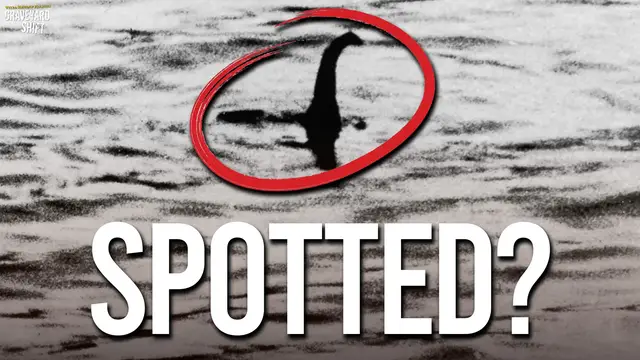
in the Loch Ness Monster. The following year, a photograph became perhaps the most famous evidence
3:34
of Nessie's existence. The now iconic 1934 photograph seemed to show a dinosaur-like
3:39
creature with a long, graceful neck emerging from the murky waters of Loch Ness. The photo
3:45
came to be known as the Surgeon's Photograph, after Colonel Wilson, a physician who offered
3:49
the picture to the Daily Mail newspaper, but for some reason refused to have his name associated
3:54
with it. The publication of this picture led to the still quite popular theory that Nessie
3:59
was the sole survivor of the long-extinct Plesiosaurs, an aquatic dinosaur thought to
4:04
have disappeared some 65 million years ago. So how could one or possibly more of these ancient
4:10
creatures have survived? For believers in the Loch Ness Monster, the answer came in the form
4:15
of geographical history, for it is known that Loch Ness was frozen solid during the more recent ice
4:20
ages. But in order for this theory to prove that Nessie was in fact a plesiosaur, it would still
4:26
need to be explained how the creature could have made its way up the river Ness from the ocean
4:29
sometime over the past 10,000 years. More importantly, it would also require an explanation of how a plesiosaur
4:36
which were believed to be cold-blooded, could have survived in the frigid waters of Loch Ness
4:41
There's another popular theory which doesn't subscribe to the Nessie as a plesiosaur narrative
4:46
This theory posits that the Loch Ness monster is a warm-blooded beast
4:50
namely an archocyte, an ancient form of whale with a serpentine neck
4:54
which is thought to have been extinct for 18 million years. Still others claim that what people were actually seeing in Loch Ness were in fact satias
5:02
or oscillations in the water surface caused by the inflow of cold river water into the slightly warmer loch
5:09
But such rational explanations rarely find root in the imagination of the public. Why believe what's being seen in Loch Ness was merely an everyday water surface disturbance
5:18
when you could believe it was something extraordinary? For example, a group of people are convinced that magician and occultist Alistair Crowley
5:25
inadvertently created the monster in the early 1900s while trying to conjure evil spirits at his home beside the Loch Ness
5:32
Later in the 20th century it would be science and technology not spirituality that would both elucidate and equivocate the truth of what may be lurking in the waters of Loch Ness Advances in camera technology fueled self Nessie hunter Tim Dinsdale quest to capture the creature on film as he went on 56 missions between the years of 1960 and 1987
5:57
But despite the advancements in film, the best evidence Dinsdale ever produced was in April 1960
6:02
and were hardly irrefutable proof of a monster. The brief piece of film made using a black and
6:07
white 16-millimeter camera showed a mysterious object in the waters of Loch Ness. What exactly
6:13
is seen in that grainy footage depends, of course, on what you want to believe
6:18
The Loch Ness Phenomena Investigation Bureau was established in 1962 under the auspices of
6:23
attempting to objectively uncover what exactly was or wasn't happening in the loch. Expeditions
6:29
were organized and led by conservative member of parliament David James, who led the group
6:33
which focused mostly on surface watches. These were achieved by mounting 35mm cameras with telephoto lenses on fixed platforms
6:40
as well as sometimes on vehicles driven around the lock. But even with these resources, the group failed to solve the mystery of the Loch Ness Monster
6:48
and disbanded in 1972. In 1975, Boston's Academy of Applied Science combined sonar and underwater photography
6:56
during an expedition to Loch Ness. The resulting photo, after some enhancement, appeared to show the giant flipper of a plesiosaur-like creature
7:05
But even with sonar expeditions in the 1980s and 1990s, which resulted in even more provocative findings, the answer to the Loch Ness question remained unanswered
7:14
Then in 1994, part of the legend of Nessie was answered. The iconic 1934 surgeon's photo of the beast, taken by physician Colonel Wilson, who, remember, never wanted credit for the photo, was now claimed to be a fake by one of his co-conspirators in a deathbed confession
7:31
After the death of Maurice Chambers in 1994, some of his personal papers revealed that the photograph had been an elaborate hoax by him and a group of conspirators
7:40
Colonel Wilson was merely the group's face, as his role as a physician was thought to have lent the photo's veracity some credence when presented to the Daily Mail
7:48
But according to Chambers' deathbed confession, the photo had actually been taken by Marmaduke Wetherill
7:54
the same big-game hunter hired by the Daily Mail the year previous to find the monster
7:58
and who, after faking his own sighting, was publicly humiliated by his employer
8:03
He now, allegedly, hatched this entire elaborate plan to get his revenge on the newspaper
8:08
This revenge plot was corroborated by Chris Sperling, Marmaduke Wetherill's son-in-law. Sperling says he was the one who used a Woolworths toy submarine with a sculpted wooden head attached to achieve the creature seen in that famous photo
8:21
But the fact that the famous photo is probably a fake hasn't hurt the legend of the Loch Ness Monster much, if at all
8:30
Part of this is because by the time the surgeon photo was revealed to be a hoax Nessie had already made a sizable impact on pop culture In fact Nessie first shot of fame in 1933 is probably due to the pop culture impact of another openly fictitious giant monster
8:47
The same year that the first modern Nessie sighting was reported was also the same year
8:51
that the movie King Kong was released. One of the film's most memorable scenes involves a giant
8:56
ape grappling with dinosaurs. King Kong was a worldwide phenomenon, and it's plausible that
9:02
People at the time had dinosaurs on the brain and were looking for a way to manifest living prehistoric beasts any way they could
9:10
Nessie would later become the subject of, or at least mentioned in, a number of different films over the years
9:15
The first to deal with the creature was Secret of the Lock from 1934, only a year after the first modern sighting
9:22
The English feature film utilized an iguana as a stand-in for the giant lake monster
9:27
While the appearance of Nessie in that film might be unintentionally humorous, numerous subsequent cinematic depictions or references to the beast have been decidedly funny
9:36
For example, in the film The Private Life of Sherlock Holmes from 1970, the monster is revealed to be nothing more than a miniature submarine in disguise
9:45
Or in 1984's Ghostbusters, where the Loch Ness Monster is listed among the various things Janine asks Winston if he believes in, in order to determine if he's sane or not
9:54
One of Nessie's better outings in theaters was the 1996 Ted Danson vehicle simply titled Loch Ness
10:01
The creature is handled with surprising dignity and reverence in a story revolving around an American scientist, played by Danson, who's trying to debunk the existence of the creature
10:10
The film concludes with Danson's character disproving his own evidence when he comes to realize that the monster is best left alone to survive by itself
10:19
Likewise, perhaps the best depiction of the Loch Ness Monster remains the family film
10:23
The Water Horse, Legend of the Deep, from 2007. Based on the novel by Dick King Smith, the film features a young boy discovering an egg
10:31
that belongs to the legendary Celtic creature and then taking care of the infant lake monster that hatches
10:37
The movie even includes a scene that suggests that the now infamous surgeon's photo was not so much a hoax
10:43
but a stage reenactment of a genuine sighting. Ultimately, it isn't entirely surprising to see so much effort to preserve the possibility of Nessie's existence in fiction or in real life
10:54
Because if the perseverance of the legend of the Loch Ness Monster has taught us anything, it's that people want to believe
11:01
Cynically, one could point to the fact that the myth of the Loch Ness Monster draws millions of people to the region around the lake each year
11:08
which in turn brings an estimated 25 million pounds to the local economy
11:12
But perhaps it runs a bit deeper than that. Perhaps the Loch Ness Monster, real or imagined, is a testament to our need to believe that
11:20
there's more to the world than what's on the surface. That deep down, below what can be seen, there remain secrets in this world, even when nearly
11:28
every inch of it has been explored and nothing found to prove otherwise