Up next in 10


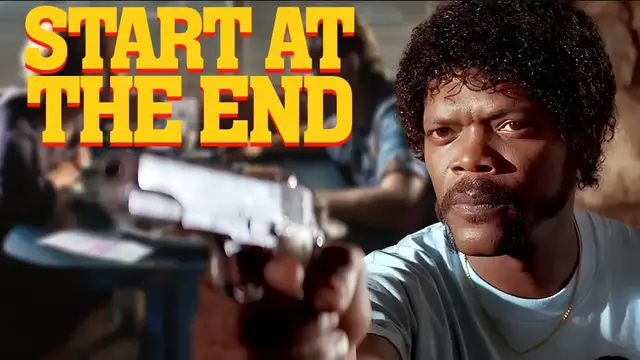
Starting a story at the end and working towards that moment is nothing new, especially in Hollywood. Films like Pulp Fiction, Fight Club, Memento, Forrest Gump, and Saving Private Ryan all opt for starting the story with how it ends. This can be a powerful tool in the right hands. Immersing the audience in the story immediately and having them along for the ride with the main characters.
Show More Show Less View Video Transcript
0:00
I love you, honey bunny
0:03
Everybody be cool, this is a robbery! This is the iconic opening scene from Quentin Tarantino's classic film, Pulp Fiction
0:09
Unbeknownst to us on first viewing, this scene is also the finale of the story
0:14
The art of opening a film with the end is a strange and mercurial one
0:18
It's a trope that serves as a defining element of many of cinema's hallmark achievements
0:22
However, it takes a true auteur to make this narrative device not just feel like a gimmick
0:27
but a truly exciting storytelling statement. Fight Club, Memento, Lawrence of Arabia
0:33
many of cinema's most acclaimed films employ the narrative mechanic of establishing an ending for
0:38
their characters at the beginning of the viewing experience. But why is this device used so
0:43
frequently? Simply put, this is an inventive way for storytellers to play with expectations of just
0:49
exactly what will happen to the characters we've been introduced to. It acts as a magic trick
0:54
almost. It gives the audience an expected ending without giving away what will happen exactly in the
1:00
final frames of the story. Realize that all of this, the gun, the bombs, the revolution
1:05
has got something to do with a girl named Marla Singer. This approach to storytelling is immediately
1:12
more interesting and engaging because you're dropping the audience into the most dramatic
1:16
and heightened scene in the film. It gives everything that happened before and after
1:20
an immediate hook. It also reframes how the rest of the movie works. You're no longer attempting
1:25
to second guess or predict how things will transpire. You know for a fact what will happen
1:31
so now you're attempting to reconcile how a movie should work with what is happening on screen
1:36
It subverts audience expectations and it fundamentally alters the movie watching experience. Tyler Durden shooting himself, the death of T.E. Lawrence, Teddy Shelby getting
1:45
revenge. In a standard film, each of these revelations would be saved for the climax of
1:50
the project. And yet, because the auteur directors and writers in question delivered them immediately, they've
1:55
helped propel the films in question into being more than just your average movie
1:59
They've become classics. She tell you have you known all along that you here to steal from me or that we are actually asleep
2:36
First act, we see our protagonist in their daily life. They're comfortable and safe
2:40
Then what is called an inciting incident happens. Some unforeseen circumstances arise and our main character is presented with an opportunity or journey
2:49
After initially refusing the call to adventure, they choose to undertake this task, mission, or existentially scary line of thought
2:56
From here, we enter the second act. Our character is presented with trials and problems that they must attempt to overcome
3:02
Inevitably, during the second act low point, it appears that our character is completely lost
3:07
They fail to accomplish the task at hand. There is no hope, but they choose to soldier on nonetheless
3:12
In the third act, they rise above the problems they are faced with, and during the third act climax, they make some sort of choice
3:18
which is the opposite of what their character would have done at the beginning of the film
3:22
This shows their growth and evolution over the course of the story
3:26
All of these structures are there in order to make a fulfilling experience for the audience
3:30
The notion of a three-act structure was not fully created for the film industry, obviously
3:35
It's been around for centuries. However, its pairing with the film industry codified and evolved these ideas into a near science
3:43
A fact which might not actually be a good thing. Due to the industrialization of the movie-making process
3:48
these loose roadmaps for stories can be taken and applied as dogma
3:52
How many times has Predictable been levied against a film as its biggest critique
3:56
This is the layman's way of expressing the fact that the film's structure did not feel surprising but inevitable
4:03
That's what a good story structure should yield you, a conclusion that feels natural yet is not paint by numbers
4:08
Which brings us back to the idea of opening with an ending. Many filmmakers have used this technique to enable them to tell stories where the audience inherently is aware of how things are going to end but allow them their own artistic license within that approach A perfect example of this being Orson Welles Citizen Kane which was released in 1941
4:27
The film is loosely based on the life and career of the most wealthy man in America at the time
4:32
William Randolph Hearst. The film Citizen Kane, which opens with the death of the protagonist
4:36
Charles Foster Kane, gives the audience, who at the time was obviously aware of the life and
4:41
trials of Hearst, a way into the story that promised it would be an exciting recontextualization
4:46
of this man's life. The opening tells us that the film is not just going to be a plotting
4:51
recounting of the true life events that everyone was aware of. Kane's script fully exploits a
4:57
non-chronological approach to showcasing three-act structure. Despite opening with his death and his
5:02
muttered last words, the film has all the central dramatic ups and downs that conform to a typical
5:08
three-act structure, only they are shown out of order. The body of the film revolves around a
5:13
newspaper journalist attempting to uncover the secret meaning of Kane's final word
5:18
This choice of how to showcase these events, as well as numerous technical innovations
5:22
is without a doubt why Citizen Kane is still commonly thought of as the greatest motion
5:26
picture ever created. It would be almost 50 years later that this same approach to chronology would make yet
5:32
another one of Hollywood's biggest names into a superstar. Tarantino told both Reservoir Dogs and Pulp Fiction out of order
5:39
The films might be genre exercises steeped in tropes, but the choices that he
5:43
making on how the information is presented to the audience is what made both of these films
5:48
truly revolutionary. Tarantino was originally writing Pulp Fiction with his friend and fellow
5:53
writer Roger Avery. Their plan was originally to shoot the project as an anthology project where
5:58
Tarantino and a few other filmmakers would make intertwining short films all based on the tropes
6:03
of classic Pulp Fiction crime novels. However, after living in Europe for a while and working
6:08
on the script, he decided he wanted to direct the whole film. This is the genesis point for
6:12
the various intertwining stories and non-chronological story structure. While this obviously makes for an engaging viewing experience overall thanks to Tarantino's
6:20
interesting dialogue, the fun characters, and the fresh take on the existing tropes
6:25
it truly is Tarantino choice to open and close the film with two petty criminals robbing a local coffee shop that sets the film apart Tarantino success with structuring things this way would lead to an army of imitators who would mimic his fast dialogue love of telling a story out of order and gritty criminal underworld
6:43
setting. Thankfully, we've moved past these ideas culturally, but it really felt like every movie
6:48
that got made about 15 years after the release of Tarantino's successes was either influenced by
6:54
or pushing back against his narrative choices. And that right there is what separates great films from bad ones
7:01
Choices. Movies are the byproduct of creative people making millions of choices
7:06
And the bigger the choice, the bigger the swing artistically. So it's no wonder when you look at iconic filmmakers
7:12
who all make bold, artistically adventurous choices, they're all bucking the trend of telling a story
7:18
in the conventional, chronological way. They're making choices about how they're presenting their characters
7:23
their world, and even the structure of their film. That being said, this stylistic choice doesn't always work
7:29
There are many films that attempt to employ similar techniques to the ones made in the previously cited examples
7:35
Lone Survivor, The Curious Case of Benjamin Button, and Crash all use variations of these exact techniques to varying degrees
7:42
which is why these three films have faded in cultural relevance significantly since their release
7:47
Lone Survivor, much like Citizen Kane, is a film inspired by real events, and it opens with a much-publicized conclusion of the story, and then attempts to use it as an emotional anchor point for the film
7:59
Only, it just doesn't have the same scope, technical innovation, or narrative ambition, and opening with the ending just feels cheap
8:07
The key to making these big structural choices work is that they have to be tasteful and classy
8:12
This is largely because these decisions are coming from a single person's perspective on the story
8:16
They should feel respectful and honorific. You don't want them to feel like a cash grab for a quick dollar
8:22
Starting with the ending, like many things in the world of artistic expression, seems
8:26
like it wouldn't work. It seems like an idea that would ruin the anticipation of experiencing a story, the
8:31
way it's meant to be told. However, when the magic of cinema and the brilliance of a committed creative team combine
8:37
they make something more. Something greater than some of the parts. They create something that has to be experienced