Up next in 10



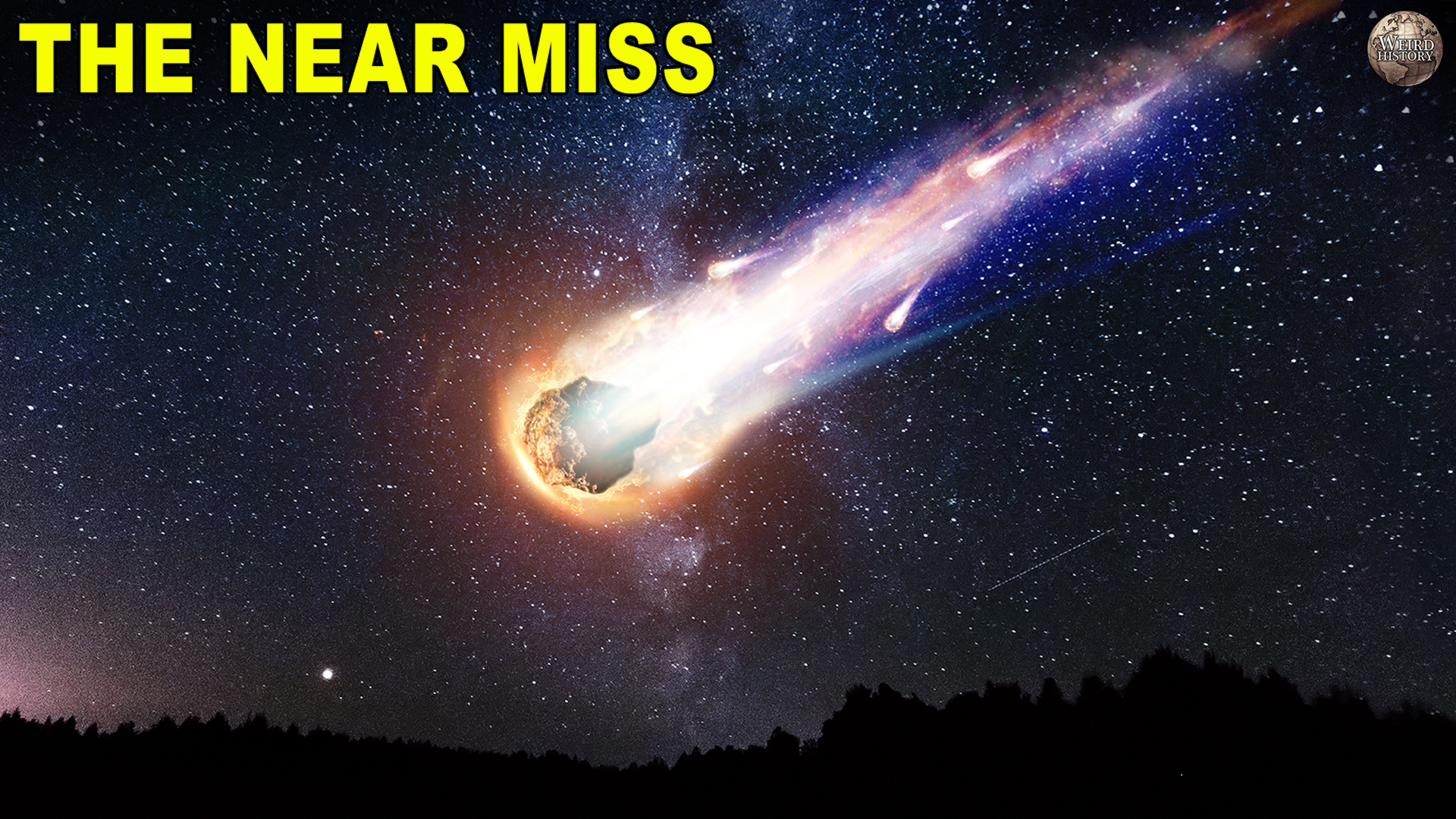
The explosion of the Chelyabinsk Meteor, which nearly hit Russia in 2013, was a viral event captured by dozens of dashcams in the notoriously driver-unfriendly nation. However, the surprise arrival of the extraterrestrial invader, and the city-quaking explosion that followed, was no laughing matter. The Chelyabinsk Meteor’s size, a paltry 20 meters in diameter, might make it sound relatively harmless, but it had a massive impact on the city, without even touching down. Had the entirety of the meteor, instead of just a few meteorite fragments, hit Earth, Chelyabinsk would have likely been decimated.
Show More Show Less View Video Transcript
0:00
The explosion of the Chelyabinsk meteor, which nearly hit Russia in 2013, was a viral event
0:06
captured by dozens of dash cams in the notoriously driver-unfriendly nation. However, the surprise arrival of the extraterrestrial invader and the explosion that followed was
0:18
no laughing matter. So today, we're going to take a look at a meteorite that narrowly missed Russia in 2013
0:26
Hold on to something because this one is going to be explosive. Just east of the Ural Mountains, running along the Mias River
0:38
is the city of Chelyabinsk. Known as the gateway to Siberia, Chelyabinsk
0:43
is an important industrial center with a population of over 1 million people and is the seventh largest city
0:49
in all of Russia. Those 1 million citizens received the shock of their life
0:53
both literally and figuratively, on the morning of February 15, 2013, when a meteor entered the
1:00
Earth's atmosphere and exploded above the city at approximately 9.30 a.m. Even those who didn't
1:06
witness the meteor entering the atmosphere found it impossible to ignore the space rock's arrival
1:12
The light, heat, and the sound of the extraterrestrial traveler caught everyone's attention
1:16
in the way that only an interstellar explosion can. For some, it was merely a rude wake-up call
1:22
But for others, it was a much more serious event. The Chelyabinsk meteor was a mere 20 meters in diameter
1:29
about one and a half Greyhound buses, which might make it sound less serious
1:34
depending on how you feel about buses. But size isn't everything, especially where missiles from space are concerned
1:41
In fact, despite its relatively small status, the meteor had a massive impact on the city
1:47
even though it never actually struck the Earth. Just how strong was the blast from the Chelyabinsk meteor
1:54
Well, the magnitude of its explosion was bigger than a weapon of mass destruction
1:58
at least 30 times more powerful than the blast from the atomic bomb dropped on Hiroshima at the conclusion of World War II
2:05
That is a big-ass explosion. Considering the damage caused by the attack on Hiroshima
2:11
one can only imagine what devastation would have been wrought if the meteor had actually landed in Chelyabinsk
2:17
In all likelihood, had the entirety of the meteor struck instead of just a few meteorite fragments
2:23
Chelyabinsk would have been erased from the globe, like a hastily photoshopped atlas
2:31
Although the Chelyabinsk meteor exploded before it could hit Earth, it was a nail-biting near miss
2:37
How near? Well, scientists believe the meteor exploded less than 20 miles above Chelyabinsk
2:43
raining down smaller meteorites across the area. That's not very far. That's the distance between two Walmart locations
2:51
In the realm of astrophysics where interstellar objects regularly travel many millions of miles during their cosmic journeys a difference of 20 miles is virtually insignificant
3:02
The Chelyabinsk meteor came about as close as possible without landing a direct hit, making it
3:07
an incredibly close call. It's lucky that the Chelyabinsk meteor detonated 20 miles
3:12
above the surface, because if it actually had struck the city, the results would have been extremely deadly
3:19
With the meteor's 20-meter diameter and speed of over 33,000 miles per hour
3:24
it would have all but destroyed Chelyabinsk. Based on a number of scientific models
3:29
researchers believe that the loss of life would have approached somewhere in the neighborhood of a million people or more
3:34
all gone in a literal flash. Movies like Michael Bay's Armageddon have given some people the idea
3:45
that if a meteor or asteroid were on a collision course with Earth, scientists would be able to see it coming
3:51
They would then dispatch Bruce Willis and Ben Affleck to blow it out of the sky before any real damage could be done
3:57
And we'd all celebrate by listening to Aerosmith. But as usual, the movies didn't really get it right
4:03
Scientists have long warned that meteorite impacts, or even those from larger asteroids
4:08
could happen pretty much anywhere at any time without much warning. That's not terribly comforting
4:13
And it's precisely what occurred in Chelyabinsk. In fact, the reason the arrival and explosion of the Chelyabinsk meteor was so surprising
4:21
to the residents of the city and the surrounding areas was specifically because it was virtually
4:26
impossible to see coming. Because of the meteor's orbit, it approached Earth from the direction of the sun
4:33
You can't even see the TV when the sun is in your eyes, let alone a celestial object
4:37
hundreds of thousands of miles away. Combined with the meteor's small size, there was no way astronomers could see it until
4:44
it was too late. The first thing the citizens of Chelyabinsk noticed about the meteor was its extreme brightness
4:54
Just before it exploded, the space rock lit up the morning sky with an enormous flash
5:00
like Motley Crue was about to take the stage. The meteor's fireball was approximately 30 times brighter than the sun
5:06
which, for reference, is really bright. So much so that it can actually damage your vision
5:12
Don't look at the sun. And that's not hypothetical. It actually happened
5:17
The flash caused temporary blindness in a number of observers, as well as inflicting both retinal and skin burns to those exposed
5:25
One woman even had skin burned off her face like a cosmic radiation chemical peel
5:30
from a meteor that detonated a full 20 miles above the ground
5:34
The explosion of the Chelyabinsk meteor was awe-inspiring, but what followed was downright frightening
5:40
The sonic wave caused by the blast hammered the city of Chelyabinsk, shattering countless
5:47
windows and causing serious structural damage in many buildings The meteor caused more than million worth of property damage One factory roof even collapsed from the blast
5:58
Thankfully, no deaths were reported, but over 1,000 people were injured in the incident
6:03
most from flying glass or falling debris. It was kind of like the end of a superhero movie
6:08
only it's not likely to become a ride at Disneyland anytime soon. The blast from the Chelyabinsk meteor's explosion
6:14
shattered windows and collapsed buildings, but that was just its local impact
6:19
For although the meteor may have missed Earth by 20 miles, people around the world felt its effects
6:25
In fact, the force from the blast was so powerful that it was registered by a nuclear monitoring system
6:31
as far away as Antarctica. The Chelyabinsk meteor was not Russia's first encounter
6:40
with a nearly deadly meteor. It was more like one of those sequels
6:44
that comes decades after the original movie. like the top gun maverick of celestial events
6:50
The first encounter occurred on the morning of June 30, 1908, when a powerful explosion struck near the Podkamanya Tunguska River
6:58
in the area that is now Krasnayarsky Kraj, Siberia. Scientists estimated that the blast was more powerful than 15 megatons of TNT
7:08
That's a lot of acme orders. The explosion flattened over 770 square miles of forest
7:15
The Tunguska event, as it's known in pop culture, is believed to be the largest impact event in recorded history
7:21
They even reference it in Ghostbusters. However, it is worth noting that despite being classified as an impact event
7:28
no impact crater has ever been discovered. Right now, the leading theory speculates that a meteor burst over the area
7:35
similar to what occurred in Chelyabinsk. The explosion would easily have been capable of destroying
7:41
a densely inhabited major metropolitan area. Luckily, thanks to Siberia's sparse population, no fatal injuries were ever reported
7:50
Interestingly, Chelyabinsk meteor wasn't even the Chelyabinsk region's first brush with meteors
7:55
That would be the Kunashok meteor shower of 1949, during which at least 20 meteorites
8:01
weighing a combined total of 200 kilograms rained down on the area
8:06
That event didn't do nearly as much damage as the 2013 event, but it was also accompanied
8:11
by a terrifying sonic boom. So you know the neighborhood dogs didn't stop barking for at least three hours
8:21
The Chelyabinsk meteor may not have been a household name in every part of the world
8:26
but it sure did get internet famous. Almost immediately after the event occurred
8:31
the meteor became a viral sensation. With dozens of videos popping up on YouTube and other social
8:37
media outlets shortly after the explosion occurred, you might say its rise to fame was
8:42
nothing short of meteoric The video showed a massive ball of fire streaking right across the sky followed several minutes later by an ear boom But why were so many Russians filming the sky that February morning
8:56
Were legions of Russians expecting a meteor to hit Chelyabinsk? Did somebody have rubles riding on it
9:02
No, they were actually paying attention to a much more earthbound situation
9:06
You see, Russia has a major issue with road rage and insurance fraud
9:12
which has led to the widespread proliferation of dashboard cameras in Russian vehicles
9:17
Because there were so many dash cams on the roads of Chelyabinsk during the explosion
9:22
the blast was captured from a number of angles. Those videos of the meteor were quickly uploaded
9:27
to YouTube, and the unique astronomical incident went viral around the world
9:32
Despite what ancient aliens would have you believe, the Earth is not exactly swimming
9:37
in extraterrestrial life or objects. So meteorites, which is what we call meteors or meteor fragments that actually make it to
9:45
the Earth's surface, offer a rare opportunity for scientists to conduct research on extraterrestrial objects
9:52
When the Chelyabinsk meteor exploded, it produced a cloud of dust and gas, as well as many smaller
9:58
meteorite fragments. These fragments drew the attention of several groups of meteorite hunters
10:04
They quickly descended on the city and its surrounding areas in the wake of the explosion, in an effort
10:09
to track down any and all meteorite fragments that may have made it to the Earth
10:14
Hopefully, they were all dressed like old-timey prospectors. It wasn't a competition, but the winners turned out
10:21
to be divers, who discovered the largest fragments more than 50 miles north of the city
10:26
beneath a frozen lake. The destructive capabilities of the Chelyabinsk meteor was a serious wake-up call to the world
10:37
For a number of reasons, its arrival proved to be an important moment in the way the scientific
10:42
community looks at meteorite strikes. After all, if a meteor exploding 20 miles above a city could
10:48
cause such damage, one that actually strikes Earth would obviously be infinitely more devastating
10:55
We now know that even a near miss, in which a meteor explodes after hitting the atmosphere
10:59
could have catastrophic consequences if the object were large enough. Suddenly, people became acutely aware of the multitude of unseen potential threats hurtling
11:08
through space, and of our readiness to deter such threats, which is pretty much non-existent
11:15
Nobody saw the Chelyabinsk meteor coming, so it stands to reason that we may not be aware of other
11:20
potentially deadly objects currently on a collision course with our planet. Now in truth
11:26
astronomers are typically able to detect threats like meteors, asteroids, and hopefully
11:31
alien invasions. But since the Chelyabinsk meteor explosion, developing the technology they need to
11:37
do the job right has become a major priority. After all, Bruce Willis and Ben Affleck won't
11:43
always be around to save us
#Astronomy
#Physics
#World News