Up next in 10



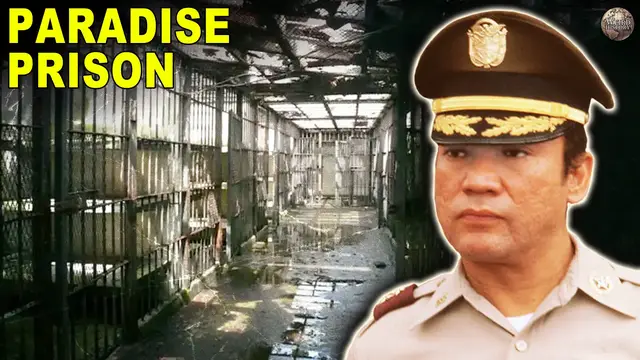
Sending criminals and political troublemakers to remote islands has been a pretty normal thing throughout history - just ask Australia or Napoleon. In Central America, the former penal colony on Coiba Island was once home to some of Panama's worst criminals and most threatening political enemies. The prisons on Coiba Island housed over 3,000 prisoners between 1919 and 2003, even after the island became part of Coiba National Park in 1991.
Show More Show Less View Video Transcript
0:00
Exiling prisoners and political rivals to remote islands is nothing new
0:04
Just ask Australia or Napoleon. But nothing holds a candle to the island that was home to Panama's most vilified criminals
0:12
and political prisoners for nearly 100 years. Today, we're setting sail for Coiba Island, the most dangerous prison colony in history
0:21
OK, get ready to do some hard time in paradise. The penal colony on Coiba Island first opened its doors to Panama's unluckiest criminals
0:38
and political prisoners back in 1919. Dubbed Panama's most severe prison, the lockup was home to Los Desaparecidos, also known
0:47
as the Disappeared, men who vanished from society after committing some kind of horrible
0:52
crime or getting on the bad side of a powerful figure, one of the two
0:56
You see, due process wasn't exactly a high priority at Coiba Island
1:01
In fact, it wasn't even on the list. Only a few of the prisoners housed on the island actually had a trial or any official
1:07
sentencing waiting for them. Basically, if you're on Coiba Island, you are probably going to be there for a long
1:13
long time. Or until you mysteriously vanished. Prisoners sent to Coiba Island started disappearing en masse during the dictatorships of Omar Torrijos
1:23
and Manuel Noriega. The prisoners weren't called Los Desaparacidos for nothing. After Noriega was given the boot in 1989, the secret culling of prisoners ceased
1:33
and Coiba Island went back to merely being a brutal penal colony. Forced residents of Coiba weren't simply just locked up
1:39
They were also subjected to horrible psychological and physical torture. A Human Rights Watch report from 1992 described the prisoners experiencing severe and systematic
1:49
abuse perpetrated by their jailers throughout 1991. The conditions at the prison were so extreme that two inmates who perished in July of that
1:58
year are believed to have succumbed to torture. That story was corroborated by about 170 fellow inmates who claimed that they had witnessed
2:05
and experienced the same kind of extreme abuse on the island. Former Army Ranger and war correspondent Chuck Holton visited the island in the 1980s, hearing
2:14
stories from the inmates about specific psychological torments that occurred. One particularly cruel mind game involved blindfolding inmates
2:21
walking them to the jungle, and staging mock firing squads. The guards would aim their guns at the terrified prisoners and count down 3 2 1 but would stop short of actually firing You know like a fun practical joke
2:39
At its peak, the colony was home to approximately 3,000 prisoners spread out through about 30 camps
2:46
Like something out of a Rambo movie, the guards at the Koiba Island penal colony spread themselves
2:51
throughout the island with small fortress-like buildings sitting at the north and south side
2:55
of the island. With the guards up in their towers, the prisoners on the ground were forced to fend for themselves
3:00
For some prisoners, this meant constructing small, crude shelters made entirely from natural materials
3:06
The others were left in small cells with no windows, furniture, or bathrooms
3:10
So it was basically like living in an overpriced apartment in New York, if you had to split it
3:14
with slightly less roommates. And your landlord regularly threatened to shoot you
3:18
The accommodations on Koiba Island were uniquely terrible, which is not unsurprising for a notorious penal colony
3:24
It wasn't fire-fest bad, but things were pretty rough all the same
3:29
The cells were small and barren, so much so that the prisoners incarcerated there would
3:34
often totally lose their minds. During the late 1980s, visitors discovered a prisoner who had been stuck in a cell for
3:40
a grueling seven months. The only contact he'd had with other human beings was being passed a tray of food through
3:46
a small hole in the door, and he was essentially forced to live every waking moment within inches
3:52
of his own excrement. The conditions of his confinement were so extreme that when he was finally released
3:58
he screamed to be let back into his cell because the sun hurt him
4:02
In other words, Koiba Island was so intense, it transformed at least one prisoner into an actual vampire
4:09
If you weren't rotting away in solitary confinement on Koiba Island, you were probably busting your back doing manual labor
4:16
Prisoners on the island could often be found with jobs ranging from farming and landscaping to animal care and breeding
4:22
These workers would have to clear their own land to do their jobs, but received no compensation for their work
4:27
Sort of like that job you had that didn't offer money but paid in experience
4:31
If a prisoner had a particular skill or craft that could make them useful, they might be offered a small sum
4:37
And by small, we mean infinitesimal. As bad as it was to have to live on the Koiba Island penal colony
4:48
dying there was somehow almost worse. The luckiest deceased prisoners were tossed into unmarked graves
4:56
spread throughout several cemeteries across the island But if the guards didn particularly feel like getting their shovels out that day they did the next best thing They cut the remains into chewable pieces and threw them to the sharks
5:09
In addition to saving valuable grave digging time, the sharks acted as an additional level of security
5:16
Despite the extreme abuse they endured, most prisoners did not dare attempt
5:20
to swim their way to freedom. Though it didn't happen often, guards
5:24
would usually let escaped prisoners go without pursuit. The logic being that either the rough waters or the sharks who patrolled them would finish the job
5:32
Explorations of Coiba Island have been slow, and as a result, we don't know much about the island's history before its tenure as a brutal penal colony
5:40
We know almost 80% of the island is made up of untouched forest. In the 1990s, Panama sent a team of explorers to the island, where they stumbled across a recent mass grave
5:49
After studying the site, the team came to the conclusion that the guards had been hunting the prisoners for sport and throwing the remains into a pit
5:56
Apparently, feeding them to sharks was getting boring. When an island is as isolated as Koiba Island is
6:07
it begins to develop its own ecosystem. Like that dirty dish you left under your bed for six months
6:13
In 2008, scientists set up cameras on the island to determine just what kind of life had been developing there
6:18
They discovered an impressive 17 different kinds of crocodiles, 15 types of snakes, 30 species of bats, and 70 types of ants
6:28
And that's just on land. The waters surrounding Koiba Island are chock-a-block with unique sea creatures
6:34
including sharks, whales, and a thriving coral reef. And that's not counting all the mutants
6:39
The penal colony on Koiba Island was closed down in 2004. When the last prisoners finally left, they abandoned the livestock they had tended to
6:47
for years, because it's not like they were going to take the animals with them
6:51
No longer bound by fences or the whims of man, the animals were free to sow their wild oats
6:56
wherever they wanted. This resulted in farm animals breeding with various indigenous mammals
7:01
creating genetically unique hybrid creatures. Visitors to the island have reported seeing mice
7:06
the size of watermelons, deer with adorably short legs doing their best corgi impressions
7:12
and strange lizards who look like they're waiting to be recruited by the shredder
7:16
There are also reports of gigantic bats patrolling the sky, just in case you were
7:20
considering taking a trip to the former island prison. Many of these species are Koiba Island exclusives
7:26
not found anywhere else in the world. This is both a good and bad thing On the one hand Koiba animals have been allowed to evolve without outside interference which is both good for the environment and an exciting research opportunity for scientists
7:40
On the other hand, it means everything on the island has no fear of humans
7:44
According to one visitor, everything on that island wants to bite you. Everything is poisonous
7:49
But it's not just the animals that are poisonous. During his many visits to the island
7:54
Chuck Holton has described some unique perils that sound right out of a fantasy novel
7:59
According to him, there are trees that produce an acid when it rains that can burn your skin
8:04
if you stand underneath them, which you might be doing if you're trying to hide from those
8:07
giant bats. If the giant bats and the poison rain don't kill you, don't worry
8:12
There's still over 100,000 acres of unexplored territory on the island, populated by over
8:18
1,400 different species still waiting to be discovered. Wait, how do they know there's 1,400 species if we haven't discovered them
8:26
If you know there's 1,400, it seems like we've discovered them. If any former island penal colony deserves to be haunted, it's Koiba Island. Visitors
8:38
former prisoners, and guards alike have shared stories of paranormal activity they've witnessed
8:43
in the island's lush forests. In fact, one former prisoner attempted to escape not because of any
8:49
harsh treatment, but because he claimed he was being terrorized by spirits. And one guard recounted
8:54
a story in which he believed he was chasing a prisoner, only to discover it was some odd
8:59
not of this world creature. The experience shook the guard so badly that he later took his own life
9:04
Several other bone-chilling stories from the island include ghostly apparitions, blood-curdling streams, and other noises emanating from the abandoned prison
9:13
When you add phantoms to the list of physical and mental abuse, you can really understand why some prisoners chose to take their chances with the sharks
9:24
Panama has shown interest in opening up Coiba Island for tourism. But for now, it's maintained by a skeleton crew with minimal funding
9:32
And if you want a visit, you need to get permission from the government and probably sign a few dozen waivers
9:38
Aside from the ever-present threat of poisonous mutant animals and vengeful ghosts
9:42
they have recently faced other external threats. Poachers have been hunting the sharks around the island
9:47
illegally killing them for their fins. And drug runners routinely use the island as a stop-off point
9:53
while trafficking drugs throughout the region. Between the untouched wilderness, the unique but hostile wildlife, the poachers, the drug dealers, and the lonesome poltergeists, it might be time to leave Koiba Island the hell alone