Up next in 10



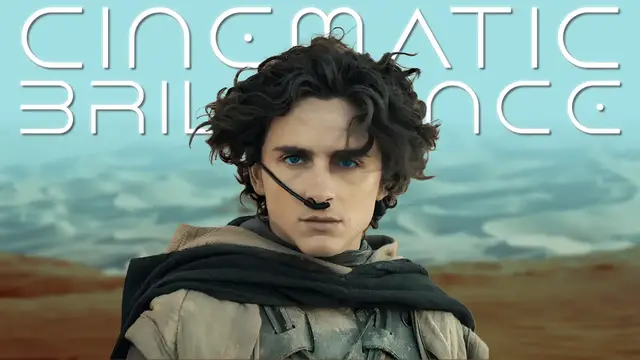
Theres no question, when it comes to Dune and Dune Part 2, something just feels different. The cinematic experience you feel, especially in 70mm IMAX, is unlike anything else in today's cinema landscape. Denis Villeneuve achieved something special with Dune. A novel once thought to be unadaptable, has become the biggest movie in Hollywood. But what exactly makes Dune and Dune Part 2 stand out above the rest of the sci-fi offerings in Hollywood?
Show More Show Less View Video Transcript
0:00
The test is simple
0:01
Remove your hand from the box and you die. What's in the box
0:08
Pain. Denis Villeneuve did the unimaginable when he brought Frank Herbert's epic novel Dune to the big screen
0:14
Sure, there's been other adaptations of the classic series, but with Villeneuve's gargantuan two-part adaptation
0:20
wrangling the story of Dune was just the beginning of this impossible task
0:25
Here on Caledon, we've ruled by air power and sea power. On Arrakis, we need to cultivate desert power
0:33
Both Dune Part 1 and Dune Part 2 feel different than any contemporary blockbuster
0:38
They have a sense of scope and scale unlike anything else in Cineplexes
0:42
They have an aesthetic and an ethos that instantly transports the viewer into a distant future
0:48
consisting of feudal houses, secret societies, and most importantly, giant worms. The fact that Dune stands so starkly apart from everything else being produced
1:05
is deeply ironic considering the frequency with which Marvel, Star Wars, and a myriad of large-scale blockbusters are being pumped out by the studio system
1:13
So why is it that Dune feels so different? None of those other projects have Denis Villeneuve
1:19
The director of such films as Blade Runner 2049, Arrival, and Sicario
1:23
has talked before about how much the story of Dune meant to him as a child
1:27
how he read it when he was 14, and how he's been dreaming of adapting it to film ever since
1:33
But plenty of directors fall in love with their story. The real guiding light behind why these two films feel so drastically different from everything else
1:40
is that they have a true creative ethos behind their construction. Grounded realism
1:46
In lesser hands, this idea of making everything realistic would feel overly grim and gritty
1:51
or it would manifest in a less theatrical science fiction world But Villeneuve takes the opposite approach He treats every outlandish idea in Dune as if it were real and strives to capture it on film for real
2:04
He wants to shoot as much of the project in camera as possible. This is the approach that has propelled these two films
2:10
into being mentioned on the level of epic films like Dr. Zhivago, Lawrence of Arabia, and The Lord of the Rings
2:15
It would have been exceedingly easy to film Dune almost entirely on soundstages or even the volume
2:21
to photograph actors on set and allow everyone the comfort of living in hotels and air conditioning
2:26
But that's not what they did. They went to the ends of the earth to film Dune
2:31
Almost literally. The iconic deserts of the planet Arrakis were shot in the far reaches of Jordan and Abu Dhabi
2:37
And it's this dedication to going the extra mile that really breathed life into these films
2:42
Because we didn't use any artificial light in the desert shooting part two like we did in part one
2:48
It's like it brings a level of eye realism and a feeling of a strong tactile sensation
2:56
that you feel with the nature that I was looking for. On the surface, capturing light doesn't seem like that difficult of a task
3:02
However, when the logistics of shooting deep in the Jordanian or Abu Dhabian desert needs
3:07
to be navigated, it shows you just how dedicated they were to getting it right
3:11
The production had to construct over 18 miles of roads to get to the desert to shoot
3:16
The crew for this film sometimes pushed over 800 individuals, largely because not only did they need to have a crew of filmmakers and actors
3:23
but due to the extreme heat, they needed people whose entire job revolved around taking care of the shooting crew
3:29
In fact, on multiple occasions, the temperatures were so hot, filming had to be stopped for fear of unsafe working conditions
3:36
But when you see the way IMAX cameras captured the natural light out in the deep expanse of desert, there's just no replacement for it
3:43
It's this desire to capture natural light that led the production to veer away
3:47
from standard ways of creating comps and green screened in elements and instead pioneered sandscreens How is a sand screen different from a typical green or blue screen The idea is that normally you can shoot various
3:59
live action elements against a blue or green screen, and then key them out in post-production
4:04
and replace them with a photoreal digital background or set extension. However, the issue
4:08
for Dune was that screens made from either blue or green would have created a reflection light
4:13
bounce onto the actors or sets or the sand itself because so much of the film was being shot in the
4:19
brutal desert sunlight. The Dune production team came up with the idea of building massive sand
4:23
colored screens and laying them around sets and locations to act as an easy means for the
4:28
production to key out those elements in order to facilitate what a normal green or blue screen would
4:33
do. Many sequences in the two films were shot using intricate combinations of sand screens
4:39
physical assets, and digital components. Chief among them might be the ornithopter rescue sequence in Dune Part 1
4:46
It was made using two 12-ton prop ornithopter bodies and a sand-colored crescent moon-shaped element with a gimbal in the middle
4:54
nicknamed the dog collar. This approach allowed for a perfect blending of the two production methodologies we've been discussing
5:00
The physicality of shooting in the real desert with a real physical body of an ornithopter
5:05
the real light bouncing off the structures and actors and creating the raw materials for Villeneuve
5:10
and his special effects team to take and create starkly unique and arresting imagery
5:15
However, many of the sequences in the film were not shot in this half-digital, half-practical way
5:21
Many sequences were actually shot for real. For example, the impressive Paul riding his first worm sequence in Dune Part 2
5:27
was created by just building a literal sand dune deep in the desert
5:31
and then destroying it while a stuntman dressed as Paul sprinted along its perimeter
5:35
Yeah, that's right. They had to artificially create their own gargantuan sand dune
5:40
Why? Because of the way the wind patterns in Abu Dhabi form, the dunes exist perpendicular to the sun rising and setting as opposed to parallel like Villeneuve needed for the shot I madly in love with a shot like that When I was drawing storyboards sometime with Samudicci we were just doing a line with a tiny dot
5:58
Even the way Villeneuve talks about composition underscores how he wanted the humans to be the least important element of the film
6:04
This inherently ups the stakes and contributes to the epic feel of the two films
6:09
The fact that Villeneuve embraced the difficulty of the task at hand and not only attempted to prove that this was the only way to depict Dune
6:17
but obviously reveled in the complexity and difficulty of it, shows his dedication to the craft
6:22
Even a simple scene from Dune 2 is laced with complexity. The scene with Johnny and Paul kissing on top of the Dune, that one scene took four days to shoot
6:31
They would only have brief windows of time where the sun was in the right position to capture the light correctly
6:36
And if they didn't get exactly what they needed, they had to wait until the next day to try again
6:40
Does water really fall from the sky? Oh, yes. Sometimes it rains for weeks
6:46
I'm Kaladin. When you see sand here, imagine water. Dune Part 1 and Part 2 are both meticulously crafted stories
6:54
They take a sprawling landscape of narrative ideas and then boil all those ideas down to their essential components
7:00
But it's that inherent difficulty that propels Dune Part 1 and Dune Part 2
7:05
into greatness. From Villeneuve's approach to visuals to his uncompromising intentions around capturing natural light
7:12
these two films have already carved their names on the annals of film history
7:17
Even if Dune Part 3 is never produced, these two pictures, which together tell one story
7:22
showcase just how important it is to go the extra mile and create something real
7:27
They are a testament to the willpower of the artists and creators to literally battle the elements
7:32
in order to capture the creative vision lurking in the pages of a screenplay
7:36
Most artists struggle to have the conviction, resources, and time to manifest something
7:42
truly awe-inspiring once, let alone the willpower to do it twice
Movies
Science Fiction & Fantasy Films