Up next in 10



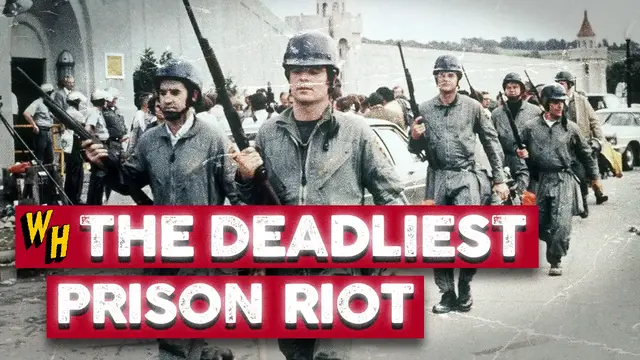
For four days in September 1971, a maximum-security prison in upstate New York stopped functioning as a prison and turned into a battleground. What followed was a tense standoff that ended in one of the deadliest single-day massacres in America since the Civil War.
Show More Show Less View Video Transcript
0:00
For four days in September of 1971, a maximum security prison near the Canadian border in New York ceased to function as a prison at all
0:10
Instead, it became the site of a tense standoff that culminated in one of the bloodiest single-day massacres between Americans since the Civil War
0:19
So, today, we're taking a look at how the Attica Prison Riot became the worst prison riot in U.S. history
0:30
Attica Correctional Facility was built in 1931 as a direct response to riots that had torn through other New York prisons just two years earlier
0:38
The solution, as the state saw it, wasn't reform. It was fortification
0:43
The facility was designed to hold roughly 1,600 inmates, though by the late 1960s and early 70s, it regularly held well over 2,200 men
0:52
Sew blocks were stacked and compressed, with narrow corridors and poor ventilation
0:57
and even though the cells were so small that two grown men could barely move inside them
1:02
double bunking was common due to overcrowding. By the time of the riot, Attica had become a warehouse for New York City's poorest residents
1:11
Roughly two-thirds of the prison population was black or Hispanic, while nearly all of the guards were white
1:17
many drawn from rural upstate communities that openly despised the men they were tasked with overseeing
1:23
and life inside Attica was punishing by design. Food was minimal and often spoiled
1:30
Medical care was infamously inadequate. Inmates regularly described untreated infections, denied medications
1:37
and doctors who functioned more as gatekeepers than caregivers. Mail was censored while reading materials were restricted
1:45
Visits were conducted through thick mesh screens and guards were under-trained. Frequently abusive and empowered by a disciplinary system
1:53
that encouraged humiliation as much as control. In other words, Attica wasn't really a place meant to rehabilitate
2:02
It was a place meant to break people, and it did, slowly, methodically, and constantly
2:12
On September 8th, 1971, a fight broke out between two inmates in a unit known as Five Company
2:20
Guards intervened and broke it up, which should have been the end of it
2:23
But even though one inmate had already left, the officer, Lieutenant Richard Maroney
2:28
was struck when he demanded the other inmate return to his cell. The altercation escalated, with other inmates and guards getting involved
2:37
resulting in Maroney being struck again. Another lieutenant, Robert Curtis, managed to break the small fight apart with the inmates
2:44
all being sent to their respective cells and general population. but warden Vincent Mancusi wanted the first two offending inmates
2:52
Leroy Dewar and Ray Lamoire put into solitary confinement When guards arrived to remove Dewar and Lamoire however the situation became hostile One inmate William Ortiz hit one of the officers with a soup can
3:06
As a result, Ortiz was immediately confined to his cell. By the morning of September 9th, tensions were already high
3:13
and the officers in charge refused to let the inmates know what happened to Ortiz when he was taken away
3:19
During breakfast, several inmates from Five Company managed to sneak Ortiz out of his cell and bring him to the mess hall with them
3:27
When guards realized what had happened, they panicked. Prisoners were rushed back to their cells
3:33
And that's when something went wrong. Due to a miscommunication, the yard doors were locked down
3:39
before all the guards had been informed what was happening. And many of them found themselves locked in along with the inmates
3:46
In fear they'd soon be facing the retaliatory punishment that had become standard at the prison
3:51
The inmates lashed out. What followed wasn't a planned uprising. It was fear metastasizing, the end result of the brutality and intimidation Attica's guards thrived on
4:05
Some inmates attacked officers, while others ran. Still some tried to hide or barricade themselves away from the chaos
4:12
The confusion spread faster than any order could contain it. And within hours, Attica was no longer under the control of the state
4:20
By noon, 1,281 of Attica's 2,200 inmates controlled nearly half the facility
4:28
taking over and maintaining the D-yard and the control center. 42 correctional officers and civilian employees were taken hostage
4:36
and several guards were badly injured. One, Officer William Quinn, would die two days later from his wounds
4:43
The other half of the prison was occupied by the guards and police
4:48
Things were about to get bad. While the state was placing snipers in the guard towers surrounding the yard
4:59
the prisoners began to organize, electing representatives and establishing roles. They also assigned roles, not just for defense, but for negotiation, sanitation, and medical care
5:10
Frank Big Black Smith, a large, soft-spoken man serving time for robbery, was appointed head of security
5:17
Prior to the riot, Smith was head of the laundry department and coach of the prison's football team
5:22
During the riot, however, his job was to protect the hostages and ensure no inmate harmed them
5:28
And Smith took the role seriously, often physically placing himself and many of his former football players between angry prisoners and terrified guards
5:37
Elliot James L.D. Barkley emerged as an unofficial spokesman. Charismatic, articulate, and politically aware
5:44
Barkley understood that this moment, however fragile, was the only leverage the inmates would ever have. Barkley had been on parole for cashing a forged money
5:54
order when he was picked up for driving without a license Somehow that simple violation of parole for a non charge ended up with a prison sentence in Attica Despite being just days away from release when the riot
6:08
began, Barclay stood with his fellow inmates and happily took on the role of speaking with the
6:13
guards and press. Several black Muslim inmates also played a crucial role, forming protective
6:19
rings around hostages and enforcing discipline. They understood, perhaps better than anyone
6:24
that the state was waiting for an excuse to annihilate them. Conditions inside the yard were grim, but controlled
6:31
Inmates shared food and tended to the wounded. They tried to maintain order, despite the fear that an assault was inevitable
6:38
Outside the walls, the state prepared its response. Negotiations began once Commissioner of Correctional Services Russell Oswald arrived
6:52
Inmates presented a list of demands, not radical ones, just humane ones
6:57
They wanted adequate medical care and the same religious freedom and access to education other prisons provided
7:04
They didn't want to be treated like animals or as a stepping rung on a political ladder
7:09
Oswald agreed to most of the demands, but there was one demand he refused outright
7:14
Amnesty for actions taken during the riot. For the inmates, this was non-negotiable
7:20
Without amnesty, any surrender would mean years of retaliation, fabricated charges, and silent retribution
7:27
They had seen how the system worked. They knew promises evaporated the moment the gates closed
7:33
Oswald warned them that if the hostages were not released, the state would retake the prison by force
7:39
The inmates, however, did not believe he would actually do it because of the danger
7:44
Not just to the inmates, but to the hostages as well. These are small spaces, and the New York state government had already brought in an army of multiple police forces and the National Guard
7:56
The prisoners assumed an assault with fully automatic weapons would be an impossibility
8:01
They were wrong. As negotiations stalled, the inmates knew some sort of assault would be coming, and they attempted to defend themselves as best as possible
8:14
They dug shallow defensive trenches in the yard and electrified the metal gates with scavenged wiring
8:20
In a grim attempt at leverage, eight correctional officers were brought to the catwalk above the command center
8:26
surrounded by armed inmates. It was a message to the state, you kill us, they die too
8:31
But this wasn't a threat born of cruelty, it was desperation. On September 13, 1971, Governor Nelson Rockefeller refused to come to the prison himself or to continue negotiations
8:43
Instead, he gave the order to retake Attica by force, an order that everyone involved knew would end in violence
8:51
Finally at 9 a state troopers corrections officers and National Guard members launched their assault Tear gas flooded the yard blinding and suffocating everyone below hostages and inmates alike
9:07
Visibility dropped to near zero just as the shooting began. Troopers fired indiscriminately into the smoke
9:14
Shotguns, rifles, pistols. More than 2,000 rounds were discharged in less than 15 minutes
9:21
against the handmade knives and clubs of the inmates. Some men screamed and begged, while others tried to run or plead with the encroaching soldiers
9:30
Meanwhile, the hostages, tied and lying on the ground, were being hit by stray bullets
9:35
When it was over, the yard was littered with the dead and dying. 29 inmates were dead, 10 hostages were dead, and roughly 129 people were shot in an assault that lasted less than 30 minutes
9:49
But it's important to note, the inmates killed no one. Every single person killed during the assault died from shots fired by a government employee
10:03
Several inmates would later testify that riot leaders were executed after surrendering
10:09
L.D. Barkley, for example, was shot in the back and killed after a soldier searched him out specifically
10:15
Meanwhile, state officials went on television and lied, telling the press that inmates had slit the throats of the dead hostages
10:23
They showed graphic images to reinforce the claim. And the narrative stuck briefly
10:28
24 hours later, autopsies revealed the truth. The hostages had all been killed by gunfire from the assault
10:35
It eventually came out that the repercussions for the assault were cruel and inhumane
10:40
Inmates were stripped naked and forced to run what the guards called a gauntlet
10:45
where the guards were lined up on either side, shouting slurs and beating the inmates as they ran by
10:51
There were also claims of sexual abuse and degradation. Public opinion shifted sharply
10:57
Americans watched footage of blood-soaked prisoners and heard testimony about Attica's conditions
11:03
They saw men who had tried, however imperfectly, to assert their humanity, only to be annihilated for it
11:11
John Lennon and Yoko Ono wrote a song that refused to let the riot fall out of the public eye
11:17
Activists rallied, and lawsuits followed. Years later, the state of New York would pay millions in settlements to survivors and families of the dead
11:26
without ever formally admitting wrongdoing. Some reforms followed, and oversight slightly improved
11:33
Conditions changed, slowly and unevenly. But the lesson of Attica lingered. When a system is built on cruelty, it will face resistance
11:43
And when power responds to resistance with overwhelming violence, it reveals something far more damning than disorder
11:51
It reveals the system is more scared than it is righteous. And on that, we yield the floor to the great Al Pacino