Up next in 10



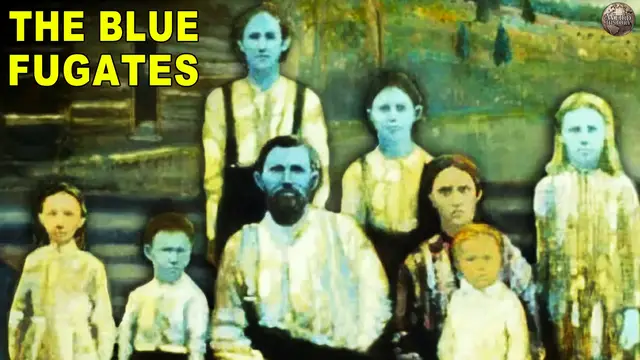
People come in all colors - to an extent. Still, you wouldn't expect to see a human with naturally blue skin, but that's the case for the Blue Fugates. Who are the Blue Fugates? The title refers to members of the Fugate family of eastern Kentucky, particularly those who lived in the early- to mid-20th century. And according to firsthand accounts, the title is no exaggeration.
Show More Show Less View Video Transcript
0:00
In the world of fiction, there are dozens of well-known characters with blue skin
0:05
X-Men's Mystique, Watchmen's Dr. Manhattan, the Navi from Avatar, and many more
0:11
But real people don't come in blue. Or do they? Well, according to first-hand accounts, the Fugate family of eastern Kentucky
0:19
particularly those who lived in the early to mid-20th century, had naturally blue skin
0:24
So, today we're going to take a look at some facts and stories about the blue Fugates
0:30
Okay, we recommend you turn on some Miles Davis with this one because it is going to get kind of blue
0:41
The story of the Fugates started in 1820 when the family first settled in Kentucky
0:46
Martin Fugate and his wife, Elizabeth Smith, came to Troublesome Creek, an out-of-the-way region of Appalachia
0:52
According to family stories, Martin Fugate, who started life as a French orphan, was blue himself
0:59
This remains unconfirmed, but even if it wasn't true, his offspring certainly ended up with an
1:05
unusual appearance. His son Zachariah was born with blue skin, and so were three more of their
1:10
seven children. Due to the isolated nature of the community, the Fugate's neighbors knew about the
1:16
blue people, but few outsiders did. So where did that blue color come from? Well, according to
1:22
later research, the Fugates had an incredibly rare genetic defect that resulted in a condition
1:27
called methemoglobinemia. This meant that their blood didn't carry as much oxygen around the body
1:32
as the blood of an ordinary person does. That, in turn, makes the blood much darker, which then
1:38
causes the skin of Caucasians to appear blue and their lips to look purple. In addition, arterial
1:43
blood looks chocolate brown rather than red. People with methemoglobinemia also have higher
1:49
levels of methemoglobin in their blood. They may have 10% to 20% versus the average person's less
1:54
than 1%. All that is to say, the Fugate's very blood was different from that of their neighbors
2:01
That's an easier way to say it than methemoglobinemia. Newsflash? Inbreeding is never really a good thing. In fact, Weird History viewers who saw
2:14
our video about Charles II of Spain, might even recall inbreeding was ultimately responsible for
2:19
ending the Habsburg dynasty and plunging Europe into a war of succession. And it was inbreeding
2:25
that was also responsible for the Smurf-like appearance of the Fugates of Kentucky. Yes
2:30
Martin Fugate and his bride, Elizabeth Smith, both carried the same recessive gene that causes
2:36
methemoglobidemia It wouldn have affected future generations of Fugates if they hadn married within the family The Fugates however lived in an isolated area that had no railroads and barely any regular roads at all This geographical situation greatly limited their options
2:52
and resulted in a situation where most family members had little choice but to marry cousins who lived nearby
2:58
Some of the other family branches were the Stacys, the Ritchies, the Smiths, and the Combs
3:03
So, for example, Zachariah Fugate, one of the first known blue Fugates, married his aunt
3:09
One of their sons married a close cousin. In turn, one of their children married another cousin
3:14
In the end, it made for a collection of blue individuals united by one of the most confusing
3:19
family trees in history. As one of the family members, Alva Stacey, once quipped to a researcher
3:24
I'm kin to myself. At the end of the 19th century, a man named John Stacey attended church one Sunday
3:36
in eastern Kentucky. He spotted a young woman and apparently liked what he saw
3:42
The two courted, got married, and had 13 children. That woman was Luna Fugate
3:47
And according to lore, she was the bluest blue Fugate of them all
3:51
According to a local nurse, the bluest Fugates I ever saw was Luna and her kin
3:56
Luna was bluish all over. Her lips were as dark as a bruise. The nurse, who lived far too early to have seen Nebula
4:02
in James Gunn's 2014 film Guardians of the Galaxy, added, She was as blue a woman as I ever saw
4:09
Interestingly enough, Stacy himself refused to say whether his beloved wife was blue
4:13
Medhemoglobinemia can cause developmental delay and seizures, but the fugates seem to
4:18
get lucky in this respect. Despite the intense appearance of their blue skin and purple lips, none of the family members
4:25
suffered poor health or lived in pain. The condition had only a cosmetic effect, though the family did endure a good deal of
4:32
psychological pain due to their outsider status. Many of the family lived to a ripe old age, with Luna Stacy bearing 13 children before passing away at 84
4:48
In the early 1960s, the case of the Blue Fugates was brought to the attention of Dr. Madison Kawane
4:54
a hematologist at a University of Kentucky medical clinic. Intrigued by what he heard, Kawane began tromping around the hills looking for blue people
5:02
eager to learn more about the Fugates. During his search for the family, he ran into a nurse named Ruth Pendergrass, who had some
5:09
first-hand experience with the blue people. According to Pendergrass, she had once been
5:13
working at the county health department when a blue woman came in asking for a blood test
5:17
Pendergrass, who believed the woman was having a heart attack, was terrified by what she saw
5:22
I just knew that patient was going to die right there in the health department The blue woman on the other hand wasn scared at all She simply told Pendergrass that her family was the blue Combses who lived up on Ball Creek She was a sister to one of the Fugate women
5:36
Pendergrass joined Cowane in his hunt. And before too long, they met two of the Fugates
5:40
as well as some blue members of the Combs and Ritchie families. After interviewing the Fugates, Cowane concluded
5:46
their blood must be missing a crucial enzyme. To trigger the blood's natural processes
5:51
the doctor decided to inject the affected family members with methylene blue, a dye
5:56
Injecting blue people with blue dye to try and normalize their appearance
6:00
might seem counterintuitive, but it worked. In fact, the cosmetic results were nearly instant
6:06
Talking about the experience years later, Cowain said the treated family members
6:10
were thrilled to see the blue fade from their skin. For the first time in their lives, they were pink
6:16
The solution really was that easy. The effects of the dye were temporary
6:20
but Cowain supplied the Fugates with methylene blue tablets to take every day
6:24
The Fugate's blue skin was more than just startling. It was also a clear sign the family had practiced intermarriage
6:31
As time went on and people began to discover more about the harmful effects of inbreeding
6:35
that blue skin became even more of a stigma. Given many people's tendency to be, you know, jerks, their neighbors were not always kind
6:43
to the Fugates. In response, the family, understandably, withdrew even more from their tiny community
6:50
By the time Dr. Madison Cowan contacted the family in the 1960s, it was clear they were all too used to being outcasts
6:58
They wouldn't come into the waiting room. You could tell how much it bothered them to be blue
7:07
The Fugates continued to have large families over the years, with some children still born in varying shades of blue
7:14
Coal mining and the railroads brought new people to Kentucky, and the available gene pools started to expand
7:19
In a move that turned out to be best for everyone involved, the Fugates eventually began marrying
7:24
outside of their family. After some time, the recessive gene receded. The last known blue
7:30
Fugate was born in 1975. Benji Stacey looked almost purple at birth. The bizarre sight alarmed
7:37
his doctor so much they immediately had him rush to the University of Kentucky Medical Center for
7:41
a blood transfusion. But his grandmother shared the story of her family's unusual lineage
7:46
and the medical staff concluded he had simply inherited the fugates' rare condition
7:51
The blue faded from Stacy's skin over the next few weeks, though his lips and nails continued to turn purple when he got cold or angry
7:58
So you're probably wondering whether more blue fugates could ever be born in the future
8:03
Well, the answer is a firm maybe. The decline of inbreeding certainly makes it less likely that the recessive gene
8:09
causing the condition would crop up again However it still exists in many members of the family That means there a non chance that future generations of the Fugates could have blue skin That being said the likelihood of it happening again is very small
8:29
As you might imagine, the Fugate family isn't exactly in a rush to discuss their history of
8:34
inbreeding and the bizarre genetic legacy it created for them. ABC News did publish a story
8:40
on the blue fugates in 2012, but when they tried to follow up with the surviving family members
8:45
they reported being unable to reach anyone. At least one fugate descendant is believed to still
8:50
live in the Appalachia area, and various other families with the condition are scattered
8:54
throughout the region. But the gene pool that created the situation is significantly dispersed
8:59
over the years. You almost never see a patient with methemoglobinemia, admits a hematologist
9:04
from the Mayo Clinic, Dr. Ayalu Teferi. The Blue Men of Lurgan, not to be confused
9:09
with the intermittently popular Las Vegas Act, the Blue Man Group, were Irish brothers who, in 1942
9:15
were treated with ascorbic acid and sodium bicarbonate by Dr. James Dini
9:20
The procedure worked, at least temporarily, as the brothers' skin began changing to a normal shade
9:25
over the course of 12 days. They would be Ireland's last case of blue people
9:30
In his autobiography, Dr. Dini also mentions a decent countrywoman living in the middle of County Tiran
9:36
who had a family with some blue children. According to Dini, the woman noticed that when she fed the children cabbage
9:42
they became nice and pink. When she stopped, they became blue again
9:46
So they got plenty of cabbage to eat. Now, we suspect there may be a portion of our audience
9:56
who thinks it would be pretty sweet to have blue skin. And why not
10:00
Some beloved pop culture icons have been Blue, Cookie Monster from Sesame Street
10:05
Sully from Monsters, Inc., and Genie from Aladdin, just to name a few
10:10
Well, we've got some good-ish news for those viewers. Though the Fugates ended up passing down a recessive gene through generations
10:17
ensuring the continuation of blue-tinged skin and oxygen-deficient blood for generations, there is a way to acquire methemoglobinemia without the gene
10:26
When protective enzymes that exist in healthy red blood cells are exposed to oxidizing drugs
10:32
nitrates, or other chemicals, they can infiltrate the enzymes and increase methemoglobin levels
10:38
Certain foods can cause this in infants, but exposure to chemicals like benzocaine and
10:42
dapsone generally triggers the condition. Of course, there are some downsides. This same
10:48
exposure typically leads to physical symptoms like shortness of breath, headache, dizziness
10:52
and loss of consciousness. A small price to pay to look like Sonic the Hedgehog
10:58
or maybe not
#Genetic Disorders
#Genetics