Up next in 10



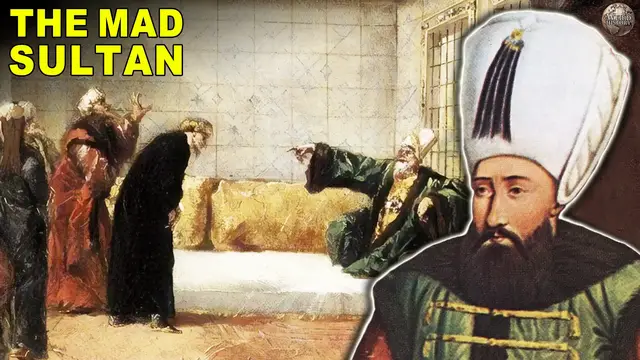
In Ottoman history, Sultan Ibrahim I is known as one of the most extravagant rulers. Though he only ruled for a period of roughly eight years, his reign was defined by decadence, nepotism, sensuality, and, according to some, outbursts. Like many of the most captivating historical figures and celebrities, Ibrahim's life was tragic and curious.
Show More Show Less View Video Transcript
0:00
One of the most extravagant rulers in Ottoman history
0:04
Ibrahim I is legendary for all the wrong reasons. His eight-year reign was defined by cruelty and decadence
0:11
and his legacy is at once unique, intriguing, and downright strange. Oh, and he spent the first part of his life living in a cage
0:18
Today, we're talking about Ibrahim I, the mad sultan of the Ottoman Empire
0:23
OK, time for a tale of royal excess that would make Caligula blush
0:30
The son of Sultan Ahmed I and Kawasim Sultan, young Ibrahim I, didn't get to enjoy the palace
0:38
life long. It all began when his brother Murad IV ascended the throne in 1623. Murad was convinced
0:45
his brothers would conspire against him for the crown, so he immediately threw them all into the
0:50
Ottoman kafis, including eight-year-old Ibrahim. So no chance to start a power-pop trio like Hansen
0:56
or the Jonas Brothers. Should have called him Murad the Shortsighted. Literally translated as cage, the Kaffa was basically a jail for royal competition
1:04
Throughout his life in the Kaffas, Ibrahim saw Murad execute four of their brothers
1:10
and he lived in fear of being the next. But Murad decided to spare Ibrahim, leaving the young prince to spend his entire early
1:17
life locked in a cage. Like many hard-partying dudes throughout history, Murad IV succumbed to cirrhosis in 1640
1:25
bringing his reign to an end. Upon Murad's death, Ibrahim became the new sultan. But it wasn't quite
1:31
that simple. Ibrahim lived with the specter of death influencing his every move, believing his
1:37
life was almost always in danger. Who can blame him? Murad whacked four of his siblings and locked
1:41
him in a cage when he was eight, and not as a prank like most older brothers. Furthermore
1:46
Murad suspected Ibrahim was unstable after spending years in isolation. On his deathbed
1:51
the sultan ordered Ibrahim's execution. But he didn't count on his mother, Kawasim Sultan
1:57
stepping in and preventing his final orders from being carried out. Even then, Ibrahim approached the throne with some skepticism
2:04
Part of him still believed Murad might be testing him, or that Murad was luring him into a trap
2:09
He demanded to see his brother's remains to confirm he was dead. It's the palace intrigue equivalent of picks or it didn't happen
2:16
Eventually, the grand vizier and his mother convinced Ibrahim that his older brother was compost
2:21
And if you think the relief of Murad's death was enough to quiet Ibrahim's paranoid mind
2:26
you've clearly never seen this show before. Traditionally sultans wore caftans an inner robe and a type of pants called a shalvar But Ibrahim came through dripping He preferred to dress in colorful fabrics and instead of the traditional imperial turban he liked to wear flowers in his hair His confused subjects criticized his wardrobe
2:52
But it did nothing to stop him from wearing precious stones as buttons, donning sable furs, and according to some accounts
2:59
even hanging diamonds from his beard. Just like his brother before him
3:03
Ibrahim liked to throw on a disguise and check out the markets, reporting back to his grand vizier on what he found
3:09
However, his interest in seeing his empire and its people didn't last, as he began to show signs
3:14
of the madness for which he is known. He regularly flew into rages, once threatening to stuff that
3:20
same grand vizier with straw. Another time, he threw his infant son, Mehmed, into a pool to
3:26
punish the baby's mother. He also tried to stab his young son for making a joke. That's a tough
3:32
crowd. One story from 1647 claims the emperor was riding through Istanbul when the road was suddenly
3:38
blocked by a massive carriage. His reaction was to demand his Grand Vizier ban all carriages
3:43
from the city. We could use an Ibrahim to deal with all these scooters. The ban did not instantly cure congestion and traffic
3:50
so the Sultan took out his anger on the Grand Vizier. After screaming at him for doing a poor job
3:55
he dismissed the Grand Vizier on the spot, then offed him shortly thereafter
4:00
That's a harsh exit interview. The story is likely an oversimplification of the true political reality of the time
4:06
But the chain of events is accurate. Ibrahim did whack his grand vizier, and he replaced him with a yes man that would eventually
4:12
help bring about his downfall. In fact, he gave important jobs to his unqualified buddies kind of a lot
4:24
All told, his regime appointed 23 chiefs of finance and 18 grand admirals, and at least
4:30
a few grand viziers. Ibrahim's court was a revolving door of people he favored
4:34
That is, until he didn't favor them. One such case came with Yusuf Aga, one of the sultan's favorites
4:41
Ibrahim promoted him from Aga to Pasha, the highest official title in the Ottoman Empire
4:47
and made him Grand Admiral of the Ottoman Fleet in 1645. But when Yusuf eventually disagreed with the sultan about leading another campaign in Crete
4:55
Ibrahim had him executed. Seems like a simple, we're moving in a different direction, would have sufficed
5:03
But you do you, Ibrahim. Anxiety and paranoia surged through every fiber of his being
5:09
a side effect of growing up in a cage surrounded by murder. He also suffered from chronic illnesses throughout his adult life
5:16
Beset by fatigue, headaches, and irritability, his poor mental and physical health drastically affected his reign
5:22
For instance these bouts of illnesses led to his first grand vizier to make vital political decisions for him Ibrahim also had a spiritual advisor Jinja Hoja who convinced him to attack Venetian Crete in 1645
5:36
Jinja had considerable influence over Ibrahim, mostly because he claimed to be able to cure
5:41
the sultan's health problems. Ibrahim was enthralled with him, appointing him the
5:45
Khadi of Galata in 1643. A year later, Jinji was made Khazasker, or Chief Military Judge
5:54
Ibrahim wasn't concerning himself much with matters of state. Instead, he preferred spending all his time with his harem
6:06
He would spend days at a time with his concubines, lavishing them with expensive clothes, fine silks, and wealth
6:12
Some of the women of the harem had great power and influence over the sultan. Eight of them gained the title of royal consort
6:19
along with the wealth and land that came with it. Never missing an opportunity to make more enemies
6:23
Ibrahim took that land from his sisters, further dividing his family. But he wasn't always satisfied with the women he had
6:30
On one occasion, he kidnapped the daughter of a prominent religious leader, the Grand
6:35
Mufti, and held her in his harem for several days. Because being sultan means you can treat people like Pokemon
6:41
On another occasion, Ibrahim had his artisans make a golden cast of the backside of a cow
6:46
he noticed. While that's not an entirely unbelievable thing for an eccentric rich guy to do, it
6:52
gets even weirder. According to historian Dimitri Cantemer, Ibrahim liked the cow's shape
6:58
He wrote, he sent the shape of them in gold all over the empire with orders to make inquiries
7:03
whether a woman made in just that manner could be found for his lust
7:07
In other words, Ibrahim had a golden cow ass sent around the empire like Cinderella's
7:11
glass slipper to find new women for his harem. And they found someone who captured his attention in an Armenian woman called Seker Para
7:19
Parah quickly became Ibrahim's favorite concubine, and he appointed her the governor general of Damascus
7:25
But she wasn't popular in the harem. Parah reported everything she saw and heard to Ibrahim
7:31
She also started a vicious rumor that one of the women had slept with someone outside
7:35
of the harem. That is a fireable offense. And by now, you should be familiar with Ibrahim's preferred method of firing people
7:42
Upon hearing the rumor, he utterly flipped his wig. He organized an inquisition to discover the identity of the alleged outsider
7:49
but failed to torture a name out of his concubines. So as the story goes, Ibrahim drowned his entire harem
7:56
of 278 women in the Bosphorus strait. Only three survived, one of which was
8:01
able to wrangle out of the weighted sack she was bound in and was rescued by a French ship
8:06
Turhan Hadis the mother of Ibrahim son Mehmed also escaped this cruel fate And one woman was spared completely Ibrahim favorite snitch Sekir Parah But she eventually met her fate at the hands of Ibrahim mother
8:19
who strangled her at a dinner after deciding she held too much influence over Ibrahim
8:23
When Ibrahim learned of her death, his mother told him Parah had died
8:27
suddenly of a powerful illness. What powerful illness? These hands. So Ibrahim found solace in his expensive tastes
8:39
Ibrahim's decadent reputation is fairly well-known, but his expensive taste contributed to the
8:47
downfall of the Ottoman Empire's economy. For instance, he liked to mix a small amount of amber in with his coffee
8:52
We prefer cream and sugar, but hey, whatever foams your cappuccino. He was also a big fan of perfumes, especially ambergris, often dousing himself in magnificent fragrances
9:03
But it was Ibrahim's love of sable furs that really broke the bank
9:07
Buying mass quantities of luxury items like furs, velvets, perfume, and amber made them
9:12
even more scarce, which drove up their cost considerably. He drove up the price of sable 10 times because he wanted to surround himself with it
9:20
He had sable fur carpets installed in his harem, and he even shaved his cats, replacing
9:25
their fur with sable capes. Cats with capes. The man was far ahead of his YouTube time
9:31
Ibrahim eventually started taxing his ministers and governors in order to pay for everything
9:35
With his habits spiraling out of control, some of Istanbul's political community began to turn on Ibrahim
9:42
But the end came from a place much closer to him than expected
9:50
Ibrahim's mother, Kawasim Sultan, guarded her son throughout his troubled life. At the start of his reign, she began amassing unofficial power
9:59
While Ibrahim busied himself with his harem, she secretly ran the empire
10:03
When the sultan began elevating women from his harem to high positions of government
10:08
Kawasim could see her power dwindling before her eyes. So in 1647, she hatched a plot to overthrow Ibrahim, after which she was briefly exiled
10:17
One year later, she threw her support behind another plot to take down her son
10:21
on the condition that he remained alive. A rebellion led by the Janissaries, benefiting from Kawasim's sultan's support
10:27
took down the mad sultan once and for all. And so Ibrahim, who'd spent much of his early life in a cage
10:33
was imprisoned once again to spend the rest of his days in a dungeon. But as it turns out, those days were extremely numbered
10:41
After just 10 days of being locked up, Ibrahim the Mad was unceremoniously strangled
10:46
The throne then passed to his 7-year-old son, Mehmed, the baby he tossed into a pool to win an argument
10:51
kicking off an entirely new chapter in the history of the Ottoman Empire
10:55
But that's a story for another time