Up next in 10



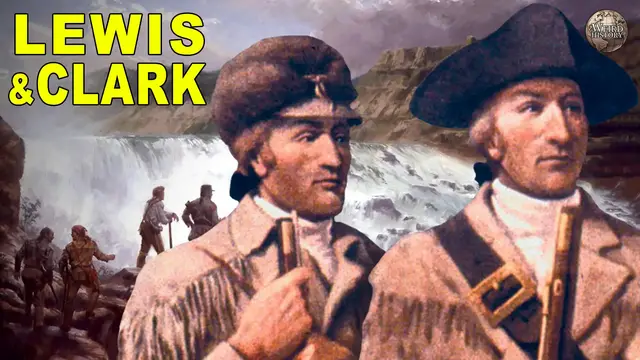
American history is full of wild tales of adventure, genuinely ludicrous achievements, and no small amount of super depressing things. Caught in this tawdry tangle of sometimes violent and horrific, sometimes glorious and heroic history are Meriwether Lewis and William Clark, whose 19th century US Army unit Corps of Discovery embarked on the Lewis and Clark Expedition, which stands as a singular triumph of the American spirit and will.
Show More Show Less View Video Transcript
0:00
In 1803, Thomas Jefferson bought 828,000 square miles of land from Napoleon's France
0:07
Known as the Louisiana Purchase, the transaction drastically increased the size of the United States
0:13
The general public had mixed emotions about the deal. So to help win support, Jefferson ordered an expedition through the territory, all the way to the Pacific Ocean
0:22
That expedition would be led by Meriwether Lewis and William Clark. Today we're going to tell you a whole lot of cool facts about the Lewis and Clark Expedition
0:31
What the hell are we sitting around yammering for? Let's go on an expedition
0:39
The laws of the United States gave certain kinds of people certain rights and denied them to others
0:44
But once the Lewis and Clark Expedition left official U.S. territory, they were free to do things as they pleased
0:50
As such, they decided that every member of the Corps would have an equal vote on every activity and decision
0:57
This was particularly important for the man called York, who was the only African American of the group
1:02
In the United States, he was Clark's slave, but once the Corps was free of U.S. law, York was a free man and was treated as one
1:09
He quickly became a highly valued member of the team. Saka Jouia, their famous Native American guide, also got a vote and was allowed to make her own decisions
1:18
She was their expert on the terrain, and she saved the lives and property of various Corps members on more than one occasion
1:24
She was highly respected and was considered a leader among the team. The Corps was governed by kindness and respect, and no one was limited by their origin, status, or ethnicity
1:34
something that would not have been possible within the jurisdiction of the United States. Since medieval times, Europeans had sought a shortcut that would allow for easy transportation of people and goods from the East to the West
1:48
But until the creation of the Panama C in 1914, no such route existed
1:53
Sailing around Africa was slow and dangerous, and the land route across Europe and Asia was even worse
1:59
By the 19th century, nothing had changed, and Thomas Jefferson held out hope that such a passage
2:04
might be found on the west side of America. Ascertaining whether the American continent possessed
2:09
a water route that led all the way to the east was high among Jefferson's priorities
2:14
when he dispatched the Corps of Discovery. It's known that Jefferson was highly disappointed when he learned no such passage existed
2:21
As a consolation prize, he did enjoy many of the exotic items brought back from the journey
2:25
and he actually used many of them to decorate his home. Other than Lewis and Clark themselves, the Corps' most famous member is definitely the Native American guide, Sacagawea
2:39
In fact there are more statues of Sacagawea than any other woman from American history Her reputation was well and her guidance was absolutely key to the expedition success While her job was technically
2:51
to be the Corps' guide, Sacagawea did so much more. She also helped identify edible and medicinal
2:57
plants, as well as landmarks that made it possible to measure the distance the group was covering
3:02
But that's not all. She was also a bit of an action hero. The Corps traveled by boat as often
3:08
as possible, and some of those nautical trips were incredibly dangerous. On one occasion
3:13
a boat was overturned, and important items were thrown into the river. With the river raging
3:18
around her, Sacagawea leaned over the side of the boat with her free hand and rescued many of those
3:22
lost items from the water. And if that's not impressive enough, she did all that while holding
3:27
her own baby in her other arm. One of the items she saved that day is the famous journal of the
3:33
expedition that was kept by Lewis. Sacagawea's mere presence was an aid to the Corps in ways they
3:38
didn't even understand at the time. Many Native American cultures did not include women in war
3:43
parties, so they believed the presence of Sacagawea indicated that the Corps were peaceful travelers
3:49
Moreover, many tribal warriors would not attack the group because they traveled with a pregnant
3:54
woman and later a mother and child. Though well provisioned at the start of their journey
4:00
the expedition found themselves running out of supplies by the time they reached the Bitterroot Range of the Rocky Mountains
4:07
Since it was the dead of winter, there was no way to supplement their supplies by hunting and fishing
4:12
The team became so desperate at one point, they were actually reduced to eating tallow candles
4:17
The combination of the weather and the lack of food nearly killed them all, but that was actually the least of their worries
4:24
The group had no way of knowing it, but they were being watched by Nez Perce tribal scouts and warriors
4:29
who were eager to finish them off and take any belongings that might be valuable or useful
4:34
Nez Perce oral tradition holds that a woman named Wakuwais persuaded the tribe to help the strangers instead
4:41
Why? Shortly before the incident, she had been kidnapped by a rival tribe
4:45
and then rescued and returned home by white men. It is said she demanded the others, do them no hurt
4:50
The Lewis and Clark expedition set off into unknown territories filled with unimaginable risks and dangers
5:02
So it's pretty remarkable that by the time all was said and done, only one single member of the team died on the journey
5:09
Three months into the trip, Sergeant Charles Floyd became ill, complaining of nausea and severe abdominal pains
5:15
He had been the first to apply for the Corps, so he was particularly well-liked by both Lewis and Clark
5:21
He was also better educated than most of the others and was in better shape
5:25
This being the case everyone was surprised when he was the first to falter Out on the frontier there was little the team could do and no one else to turn to Floyd condition grew progressively worse Clark stayed by his side for a whole night trying to
5:38
help him, and Lewis did indeed record that on August 15th, Floyd seemed to recover a little
5:43
bit. However, shortly after that, he became even more ill and finally passed away on that same day
5:49
According to Lewis, Floyd met his end with composure. Though no one knows for sure
5:54
it's believed Floyd likely died of a burst appendix. Floyd was buried on a bluff overlooking the Missouri River
6:01
A red cedar marker bearing his name, title, and life dates was placed at his grave
6:06
The location was marked on one map drawn by Lewis as Floyd Bluff
6:13
Despite being only about 16 years old, Sacagawea was married to a French fur trader
6:18
and was already pregnant with her first child. She was doted on by the whole corps
6:23
who thought of her as family and had nicknamed her Janie, a name she is known to have approved of
6:28
Her labor, which occurred at a stop in North Dakota, was long and difficult
6:32
and the entire corps waited on her like nervous fathers. Luckily, the young woman made it through and gave birth to a healthy baby boy
6:39
who she named Jean-Baptiste or John the Baptist. The child quickly acquired the name Pompey in honor of the Roman general
6:46
and was soon known just as Pomp. The men of the expedition took turns babysitting Pomp and fashioning toys to entertain him
6:53
Jean-Baptiste took the whole trip with the rest of the Corps, and when the expedition ended, Sacagawea and her husband left him with Clark
7:00
while they traveled to visit various native villages in North Dakota. They were all so close, Clark himself raised the child and paid for his education
7:11
In August of 1806, a wagon filled with findings from the first leg of the expedition arrived in Washington, D.C
7:18
It was the first and only thing that had ever been heard from the Corps since they departed
7:22
leading many to assume they had perished. Some newspapers even printed articles suggesting the team had been killed by wild animals
7:28
Native American tribes, or the elements. The Lewis and Clark expedition left its mark on American history
7:34
but it didn't leave much of a physical mark on America itself. While the members of the expedition did enjoy carving their names into trees along the way
7:42
all of those trees are now gone. This includes a famous grove near the Pacific Ocean
7:46
where every member of the Corps of Discovery was known to have left their mark
7:50
In fact, the only remaining trace of the journey is an inscription carved by Clark
7:54
into what is known as Pompey's Pillar. The pillar is a large rock formation located in Montana
8:00
which was named after, you guessed it, Sacagawea's son. While preparing for the expedition, Lewis purchased a Newfoundland puppy
8:11
whose name was unclear to scholars for over a century. How that happen Well the name only appears a single time in Lewis journal and at some point it got smudged Historians eventually decided the name read Scanon but it was an unusual name and no one could figure out its meaning
8:26
Today, it's known that Lewis's dog was actually called Seaman, likely because his breed is known for being great swimmers and were often trained to rescue people who were drowning
8:36
Lewis records several occasions on which Seaman saved corps members from a watery grave, and at least one occasion where Lewis himself saved Seaman
8:44
Seaman was beloved by the Corps, and he was very protective of them, often acting as a watchdog
8:50
In fact, when the expedition encountered its first grizzly bear, Seaman tried to attack it
8:55
On another occasion, he chased a buffalo away from their campsite. Many of the natives encountered along the trail found the large, shaggy dog very impressive
9:03
and at least one tried to buy him. On a different occasion, a group of tribal teenagers stole the dog under cover of darkness
9:10
Lewis was so enraged, he tracked the thieves back to their village and threatened to burn the whole thing to the ground if he didn't get his dog back
9:18
Very little is known about what happened to Seaman after the expedition. However, a book published claims that a well-known teacher had visited a museum
9:26
where he saw a large dog collar bearing the inscription, The greatest traveler of my species
9:32
My name is Seaman, the dog of Captain Meriwether Lewis, whom I accompanied to the Pacific Ocean through the interior of the continent of North America
9:43
Lewis wasn't just a keeper of detailed journals. He was also a gifted artist. His sketches of the
9:49
plants, flowers, and animals discovered by the Corps were rendered in stunning detail and described
9:54
meticulously. The journals, which thanks to Sacagawea and a long line of preservationists
9:59
still exist today, are incredibly precise and extremely neat. The caretaken is obvious and
10:05
indicates Lewis never sketched while exhausted, or being swarmed by mosquitoes, or bounced along
10:10
in the back of a wagon. Today, these journals have been bound in leather and are kept at the
10:14
American Philosophical Society in Philadelphia, where they can be viewed by appointment
10:22
A journey that lasts for two years is bound to make even the most seasoned frontiersman miss his
10:27
family. And though most of the men were young and unmarried, many had sweethearts back home
10:31
One of the many ways the expedition members coped with being away from their loved ones
10:36
was to name geographic sites along the trails after the very people they missed
10:40
Lewis carefully recorded all of these names in the maps he drew in his journals
10:45
The tradition began with the Bluff and River named for aforementioned Sergeant Charles Floyd
10:49
after his death and continued throughout the journey. In one particularly romantic instance
10:55
William Clark is believed to have named the Judith River after his own sweetheart
10:58
a woman named Julia Hancock. After the expedition, he proposed, and she accepted
11:04
They were married January 5, 1808