Up next in 10



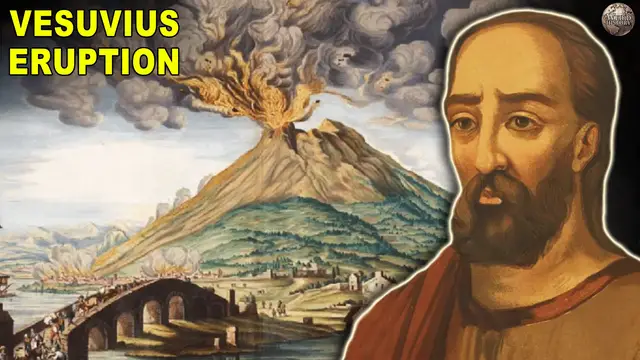
Late in the year 79 CE, the citizens of Pompeii and Herculaneum would have found this question extremely pressing. When the nearby stratovolcano Mount Vesuvius erupted, it set off a cycle of chaos that wiped out both towns and their citizens.
Show More Show Less View Video Transcript
0:00
Late in the year 79 CE, the stratovolcano known as Mount
0:04
Vesuvius erupted, setting off a cycle of chaos that wiped out the town of Pompeii and Herculaneum and large
0:11
numbers of their citizens. There have been many devastating volcanic eruptions throughout history, but the catastrophe at Pompeii
0:18
holds a singular grip on the public imagination. So today, we're going to take a look
0:24
at the timeline of Pompeii's life, destruction, and afterlife. Relatively speaking, an eruption from Mount Vesuvius isn't terribly hard to predict
0:38
In fact, within a given geological time frame, Mount Vesuvius erupts fairly regularly
0:44
According to sediment ysis, it has actually happened more than 50 times since its formation
0:49
But humans being humans, despite this clear danger, settlements were built around the
0:54
mountain. Greeks built the city in the 8th century BC, and when it came under Roman control
0:59
it became a large and commercially successful resort town. It was frequented by wealthy tourists
1:05
and the artisans who catered to them and had a bustling economy and was home to around 20,000 people
1:16
In 79 CE, most of the long-term residents of Pompeii could still remember the quake of 62
1:24
Caused by the same seismic activity that led to the eruption, a series of shallow earthquakes rocked the area over the course of several days
1:31
They disrupted the city's water supply by displacing the fragile pipes running from a nearby spring
1:36
Since there were only 17 years between this event and Vesuvius' burst
1:40
excavators have actually found repairs from the earlier earthquake in the ruins left by Vesuvius' flow
1:47
One of the reasons this particular eruption is so well remembered is due to the writings of a survivor
1:59
The morning of the eruption, Pliny the Younger was studying at his uncle's estate
2:03
when his mother pointed out what looked like a strange and enormous cloud
2:07
Pliny wrote, Its general appearance can best be expressed as being like an umbrella pine
2:12
for it rose to a great height on a sort of trunk and then split off into branches
2:17
In places, it looked white, elsewhere blotched and dirty, according to the amount of soil and ashes it carried with it
2:23
What Pliny was seeing was the initial eruption when the only visible sign was a strange cloud
2:28
hanging in the sky. At this early stage, Pompeians still had time to flee
2:41
and some did. However, many remained in their homes, unsure of what was happening
2:46
Those who stayed experienced a surreal sight, ash falling on the streets like snow
2:52
It blanketed buildings in thick waves and was accompanied by steadily climbing temperatures reaching around 300 degrees Celsius or 572 degrees Fahrenheit Historians and scientists are divided on how most Pompeians perished
3:07
Some believe they were smothered over time by volcanic ash, while newer theories claim they passed instantly
3:13
in the enormous heat wave. Either way, it doesn't really sound fun
3:17
In his letters, Pliny the Younger describes his uncle's attempts to save others from Vesuvius
3:28
His uncle, Pliny the Elder, was in command of a fleet of ships in the Mediterranean
3:32
and he ordered them to assist in missions to towns all along the coast
3:37
Fearlessly or recklessly, depending on your point of view, Pliny the Elder got closer and
3:41
closer to the mountain itself. But he quickly found that stones were raining down on the ships
3:46
and pumice stones were filling the water around them. The younger wrote, they were in danger too
3:52
not only of being aground by the sudden retreat of the sea, but also from the vast fragments which rolled down from the mountain
3:58
and obstructed all the shore. Current estimates say the detritus fell at a rate of 6 inches per hour
4:11
That may not seem like much, but at that rate, it wouldn't take long before the ash and stone made it impossible to escape
4:17
After the gentle fall of ash, chunks of white pumice started falling down on Pompeii
4:22
As the volcano started throwing out deeper layers of earth, the pumice turned gray and was accompanied by limestone and lava
4:29
The threat of large falling stones was enough to keep many indoors
4:33
The larger chunks of pumice, limestone, and lava rock landed on others as they tried to escape
4:43
Scientists have reconstructed the final moments of one family's harrowing attempt to survive
4:50
Between 1 and 7 p.m., the front of the family's house fell and forced them to retreat into their
4:56
rear rooms. Pumice and larger objects were falling along with ash. The scary set sound
5:02
being struck by the falling detritus, was the least of their worries. The sheer weight of it
5:06
caused houses to fall on many Pompeians, as evidenced by the fractures in the skulls found
5:12
among the remains of those who stayed in their homes. Ash covered every surface, cinders fell from the sky
5:25
and large chunks of rock dropped into buildings, trapping people in their homes
5:30
Residents likely heard the screams of their neighbors as they suffered in their homes. It probably seemed like the end of the world
5:36
Pliny the Younger certainly thought it was. He wrote, Many besought the aid of the gods
5:41
but still more imagined there were no gods left, and that the universe was plunged into eternal
5:46
darkness forevermore. And if you think that's bleak, he continued on to say
5:51
I admit that I derived some poor consolation in my mortal lot from the belief that the whole world was perishing with me and I with it As for the Pompeians they were left to defend themselves in a devastated landscape forced to decide whether it would be safer in the houses
6:06
with their caving and roofs, or out in the fields with the falling detritus
6:10
One group determined to go out into the fields, protecting themselves as best they could
6:15
They went out then, Pliny wrote, having pillows tied upon their heads
6:19
with napkins, and this was their whole defense against the storm of stones that fell around them
6:24
As silly as that might sound, it was a smart move, because what awaited those who stayed behind was infinitely worse
6:39
The citizens of Pompeii and Herculaneum, who had not fled or perished by evening, had to contend with the most perilous effect of the volcano, the pyroclastic flow
6:48
This type of flow is a concentration of superheated ash and gas that moves around 62 miles an hour
6:55
These surges can reach temperatures high enough to literally strip flesh in seconds
7:00
The first flow struck around midnight and instantly wiped out anyone left in Herculaneum or Pompeii
7:05
Pompeii. Many citizens of Herculaneum had long perished or escaped by the time the final flow
7:18
swept through the area. Pompeii, a little farther away, may have had survivors after the first flow
7:24
but they couldn't have made it through the final ones. Encased in their homes
7:28
they likely coughed on ash or gases if the superheated air didn't overcome them
7:33
Though many perished, the majority managed to escape. Without homes, the survivors spread out
7:38
across the Roman Empire and settled where they could. Records have shown many refugees of the
7:43
circumstances married each other and relocated to other cities. Emperor Titus provided financial
7:49
support to cities that took in the refugees to develop new infrastructure. But no Roman
7:54
settlement ever existed in Pompeii again. Probably a smart move. Contrary to popular belief, Pompeii was not untouched before it was rediscovered
8:08
Shortly after the events, Romans sacked the ruins and took what they could. Even though the site had already been picked over, it remained a goldmine for archaeologists
8:17
Work began on the site in 1748, but much of the early work was dedicated to finding and
8:21
removing treasures for King Charles III of Spain. For many years, excavations were reckless and
8:27
greedy. Excavators tore frescoes from the walls and irreparably damaged the site in search of
8:33
precious artifacts. After years of mismanagement, the site was taken over by an archaeologist named
8:43
Giuseppe Fiorelli in 1863. Fiorelli improved the methodology of the excavations in a number of
8:50
important ways. One of his innovations was to excavate buildings from the top down to preserve
8:56
of artifacts and affect the site as little as possible Fiorelli is also responsible for some of the most haunting images of Pompeii He was the one who decided to use plaster casts to create models of those who had perished
9:07
Their bodies left holes in the wall of ash, and Fiorelli filled those holes with plaster
9:12
creating eerily perfect models of Pompeians during their final moments. During the Second World War, the Allied Air Force installed a base near Vesuvius as part
9:28
of an ongoing campaign to disrupt Axis air control in the north of Italy
9:33
German raids were already troubling the area, but they were nothing compared to Mount Vesuvius
9:38
A new eruption began on March 18, 1944. Just like in 79 CE, a massive ash column went up into the sky
9:47
Detritus and ash rained down on Pompeii again. Pyroclastic flows rolled down the mountain and torched the airfield
9:54
Golf ball-sized chunks of lava reportedly fell 10 miles away. While not as cataclysmic as the events that ended Pompeii, it was bad news for the Allies
10:03
They lost 88 aircraft and an entire airfield in one day. On November 23, 1980, an earthquake rocked Pompeii
10:18
and excavation efforts were halted. This marked a change in attitude at Pompeii
10:22
After the quake, archaeologists focused more on the documentation of existing ruins than the excavation of new ones
10:29
Experts generally marked the event as the moment things changed in the excavation
10:33
One expert said it shook the whole site up, and a lot of things started crumbling at that point
10:38
The really marked change was the earthquake, and it's still a problem. In 2010, numerous excavated buildings fell apart due to a combination
10:52
of underfunding and poor weather. The Skola Armaturarum, a training facility for gladiators
10:59
went under along with an important section of Pompeii's perimeter wall. Pompeii archaeologist
11:04
Alex Barbet, said, the situation is critical. In 2011, there were only five skilled conservators
11:11
taking care of Pompeii. Drainage had become an issue, and there was an enormous backlog
11:15
of necessary maintenance. Today, there is no new excavation allowed at Pompeii
11:26
with rare exceptions. Most of the work is devoted to conservation, in part because archaeologists
11:32
don't know when the next seismic event will strike. Presently, Mount Vesuvius is constantly monitored
11:38
An observatory on the mountain checks gas emissions and seismic activity for any signs of an eruption
11:43
They do this for good reason. Vesuvius is an active volcano and will eventually erupt again
11:49
The results of such an event could be cataclysmic, and 3 million people live within the danger zone of the volcano
11:54
A major eruption could be devastating to those people and create a refugee crisis