Up next in 10



When most people think of the Spanish Inquisition, they typically think of torture (or Monty Python), and for good reason. Between 1478 and 1834, Catholic monarchs in Spain and Spanish territories used the tribunal to combat heretics, torturing and executing thousands. While modern historians say the Spanish Inquisition's reputation as a torture-fest is a bit exaggerated, the facts are clear: Some pretty gnarly stuff definitely went down.
Show More Show Less View Video Transcript
0:00
The Spanish Inquisition spent over 350 years spreading paranoia, punishing heretics, and
0:07
executing their enemies. It defined one of the darkest periods of European history
0:12
so we can't help but wonder, what was it like to work there? So, today we're going to take a look
0:20
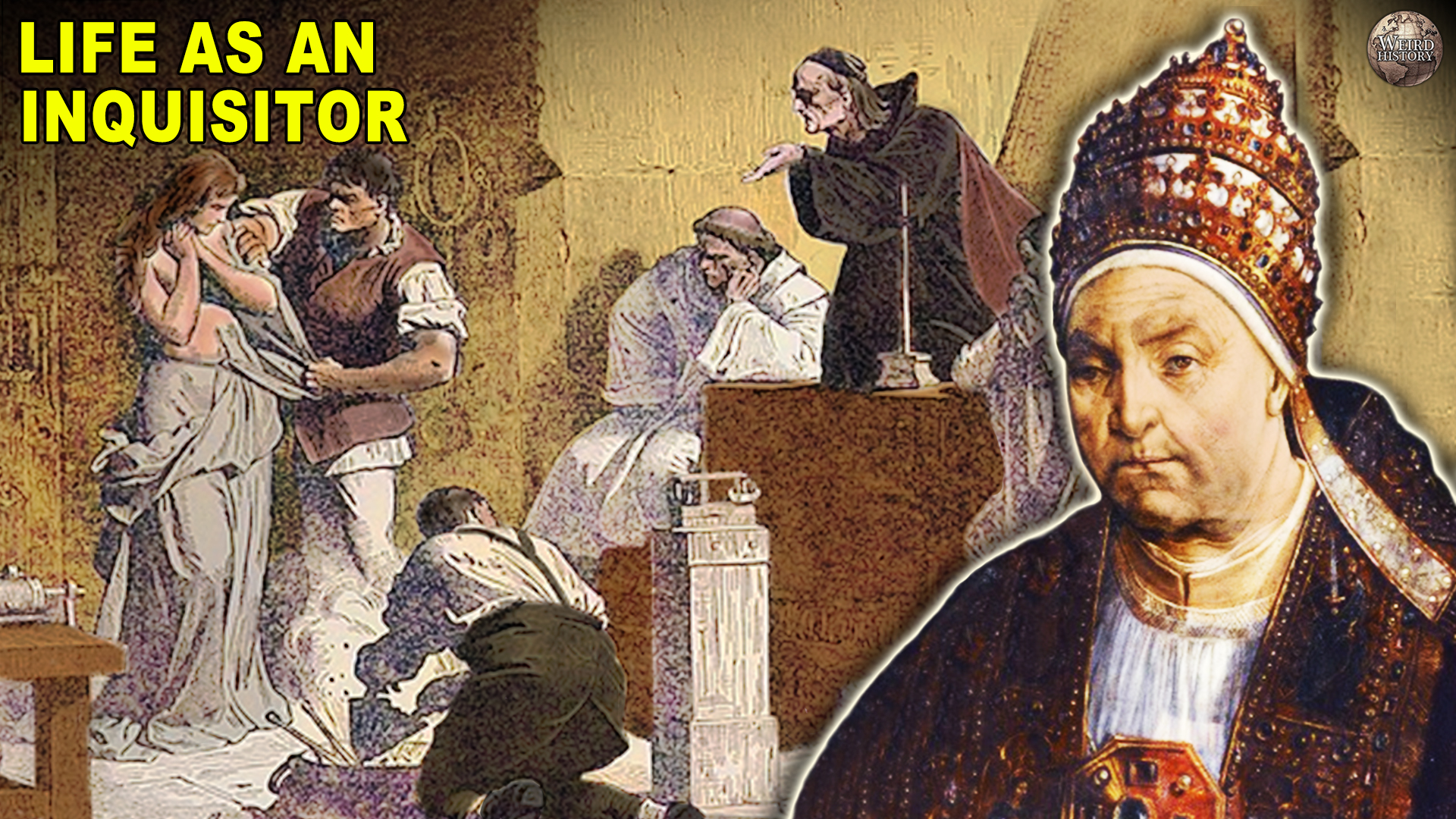
at a day in the life of a Spanish Inquisitor. Time to get inquisitive
0:24
Queen Isabella I of Castile and King Ferdinand II of Aragon were married on October 19, 1469
0:37
Their marriage would loosely unite their respective kingdoms and sow the seeds of what would
0:42
eventually become the present-day nation of Spain. In 1478, Ferdinand and Isabella initiated
0:48
the Spanish Inquisition to maintain Catholic orthodoxy in their kingdoms. The Inquisition
0:54
was a tribunal dealing with religious heresy that had jurisdiction over baptized Christians
0:59
However, considering that freedom of religion didn't really exist in the kingdom, that meant
1:03
the Inquisition was pretty much the boss of all royal subjects. And while it's true that nobody
1:09
expects the Spanish Inquisition, back in 1478, they maybe should have, because it wasn't the
1:15
first Inquisition the region had seen. In fact, there had been two previous Inquisitions, one in
1:20
Isabella's home of Castile, and the other in Ferdinand's home of Aragon. That's the secret
1:26
to a good relationship, a common interest in inquisitions. But the 1478 Inquisition was the
1:32
first one that was under the direct control of the Spanish monarchy. What specifically motivated
1:38
Ferdinand and Isabella to start the Inquisition has been lost to the ages, but the historians do
1:43
have a whole bunch of theories. Some believe the point was to establish religious and political
1:48
unity. The Inquisition gave the monarchy power to monkey around in religious affairs without
1:53
having to deal with the Pope, who was apparently something of a pain in the ass. Just look at him
1:58
wearing those fancy robes and that big hat of his. It also helped the monarchy centralize their
2:03
authority and build up the machinery of the state. Others believe the point was to eliminate or
2:08
weaken a powerful minority known as the Conversos. Conversos were Jews who had converted to
2:14
Christianity in the face of growing anti-Semitism in Europe, which had grown so severe that Jews
2:19
who didn't renounce their faith were expelled from Spain or killed. Those who did were allowed
2:25
to live and remain in Spain, but they weren't particularly popular with Christians or Jews
2:31
The fact that many of the influential families prosecuted by the Inquisition were conversos
2:36
seems to support this theory. Another possibility is that the Inquisition was essentially just a
2:41
cash grab, since those tried by the Inquisition typically forfeited their property to the state
2:47
And it's entirely possible it could have been a combination of all those things
2:52
Power, money, and getting rid of people we don't like are classic motivators for violence
2:56
historically speaking. Whatever the cause the Inquisition would keep doing their thing for centuries and it wouldn be definitively abolished until 1834
3:09
The Inquisition's mission was to identify and punish heretics, who, officially speaking
3:14
were baptized members of the Church who held opinions contrary to the Catholic faith
3:18
However, in practice, it mostly referred to the aforementioned conversos. Since the Inquisition only had jurisdiction over Christians
3:26
Jews who never converted could not be prosecuted. However, they could be turned over to the king
3:32
and since all the Jews had been expelled from Spain in 1492, well, you can imagine how that might have gone
3:39
The Inquisition was so focused on Jews that people began to take advantage of the situation
3:44
For example, if you had an argument with a neighbor or acquaintance, you could always report them as being secretly Jewish
3:51
and watch them be hauled off to face the Inquisition. It worked so well
3:55
false accusations of Judaism became common for a time. Like any organization of a certain size
4:06
the Spanish Inquisition required a pretty large staff, like a big box superstore, only slightly more terrifying
4:13
At the top of the hierarchy was the Grand Inquisitor. His job was to oversee the Inquisition
4:19
preside over the Council of the Supreme and General Inquisition, and generally encouraged the expansion of the Inquisition throughout Spain and beyond
4:27
You would presumably also be responsible for organizing team-building activities, such as happy hours and Taco Tuesdays. Beneath the Grand Inquisitor were the rank-and-file
4:37
Inquisitors. Their job was to collect evidence against those accused of heresy and deliberate
4:43
verdicts. Inquisitors didn't necessarily have any theological training, but were generally well-versed
4:49
in law. Essential to the tribunals were the calificadores and the alguaciles. Calificadores
4:55
were the people who would weigh the merits of cases brought before the tribunal. They would
5:00
listen to the evidence, decide whether an offense had been committed, and then issue an arrest warrant
5:05
if they were convinced. Alguaciles were responsible for arresting and jailing suspects, as well as
5:11
taking possession of their goods. They were the repo men of the Inquisition. And of course, there
5:16
were the Fiskals. Fiskals were the prosecutors who would present accusations, investigate rumors
5:22
and get the truth out of witnesses. Their job was to get to the heart of the matter
5:27
whether by questions or enhanced interrogation. Lower level positions included notaries of
5:33
property who were responsible for registering the goods of the accused upon their detention
5:38
notaries of the secret who would recover the testimony of accused and witnesses
5:42
and familiars who were honored laypeople who acted as servants of the Inquisition
5:47
so basically interns. You didn't expect Inquisitors to get their own coffee, did you
5:56
The Inquisitorial Court wasn't in any one particular place. Inquisitors actually traveled around staging tribunals sort of like a circus but really violent The trials themselves were conducted by a judge or panel of two judges
6:11
The proceedings usually started with a Catholic mass, followed by an edict of grace
6:16
The Inquisitor would then explain what constituted heresy and give any heretics in the congregation a chance to confess
6:23
Anyone who confessed was spared the pain of torture, but they would likely be called on to testify
6:28
against other heretics. You know what they say, you can catch more snitches with honey than vinegar
6:34
That is what they say, right? As for the accused, they were totally on their own
6:39
They weren't permitted a lawyer or representative of any kind. They also weren't always informed of what the charges against them were
6:47
which made staging a defense kind of tricky. The accused had to take the stand during the trial
6:52
and there were no Fifth Amendment-style protections. So refusal to testify was considered an admission of guilt
6:59
Anyone was permitted to testify against them. This included friends, enemies, relatives, other heretics, total strangers, presumably
7:06
the family dog, etc., etc., etc. And rarely did anyone ever testify on behalf of the accused, because to do so was to risk
7:15
being accused of heresy themselves. For the Inquisitors, heresy could be proved if an accused was caught in the act
7:27
but the real gold standard was to extract a confession, and they were pretty great at their work
7:33
They were almost always better educated than the accused, and they were usually far more familiar with the Bible
7:39
Inquisitors were also trained to ask confusing or complicated questions. The whole process was designed to trip people up during an interrogation
7:47
If they got so confused they couldn't satisfactorily establish their innocence, then they must be a heretic
7:53
If the Inquisitor couldn't extract a confession through questioning, well, there were other ways
7:58
An accused could be placed in prison indefinitely until they confessed. And thanks to a papal edict from 1252
8:05
if all other methods of extracting a confession failed, the use of torture was fully authorized
8:12
Inquisitors did occasionally participate in working over the accused, but more often than not
8:17
the job was farmed out to local authorities. This was so the inquisitors didn't have
8:22
to get their own hands dirty, both figuratively and literally. Eesh, what a mess
8:27
The methods used to extract a confession could take several forms. For example, an accused might be starved for a long period of time
8:35
forced to consume and hold large quantities of water, or have burning hot coals piled onto various body parts
8:41
like a day spa with Jason Voorhees. And if that didn't do the trick, there was always strapado
8:47
in which the hands of the accused were tied behind their back and the rope looped over a brace in the ceiling
8:52
so that the subject could be raised until they were hanging from their arms
8:56
This alone could pull the accused arms from their sockets, and that's before the interrogators
9:01
started jerking the rope around like a pinata or tying weights around the accused ankles There was always the famous rack where the accused would be bound at the wrists and ankles and then stretched like taffy Some reports hold that merely seeing a prisoner stretched on the rack
9:16
was enough to make some people confess. They would presumably have a similar reaction to seeing the Judas Cradle
9:23
a sharp-pointed pyramid upon which the accused would be forced to sit
9:27
with ropes attached to their limbs which the Inquisitors could then pull on
9:31
Other torture devices included the head crusher and the knee splitter. I'm going to let you guess at what those two did
9:37
And the Spanish tickler, which was basically a spiked roller that would be used to tickle the limbs of the accused
9:44
You can't say the Spanish Inquisition did not have a sense of irony. Inquisitors had a number of other grisly tools at their disposal
9:51
Because while mutilation was technically forbidden, the Pope kindly gave Inquisitors the power to clear each other from any wrongdoing committed in the course of securing a confession
10:01
so the band didn't have much weight. Confessed heretics would be sentenced at a public event called the Autodafé
10:12
Although these ceremonies did not initially have any special solemnity, over time they grew into elaborate and popular spectacles that drew large audiences
10:20
because, well, it's not like anyone could rent videos back then. To ensure they made the widest possible impression on the public
10:27
They were generally conducted in enormous public spaces and often on holidays
10:32
And that strategy worked. One auto de fe held in Valladolid in 1559 was reportedly attended by 200,000 spectators
10:41
as well as several members of the royal family. Auto de fe's eventually came to be marked by processions, oaths of obedience to the
10:48
Inquisition, and sermons. Sentences were read out and public abjuration or reconciliation would take place
10:56
After it was all over, the condemned would be turned over to secular authorities who would carry out punishments
11:01
like whippings and burnings at the stake, at a later ceremony. For the Spanish Inquisition, the beginning of the end
11:11
came in 1808, when Napoleon conquered Spain and ordered the Inquisition to be abolished
11:17
When you are too extreme for Napoleon, perhaps things have gone too far
11:22
After Napoleon's defeat, Ferdinand VII tried to get the old Inquisition cranking again
11:28
But the French government, which had helped Ferdinand overcome a fierce rebellion, put the kibosh on that idea
11:33
Part of Ferdinand's agreement with the French required him to dismantle the Inquisition
11:38
and he honored that agreement. On July 26, 1826, a schoolmaster named Cayetano Ripoll
11:45
became the last person executed by the Inquisition, as well as the last person executed for heresy
11:51
under sentence from a church authority. The whole Inquisition would be totally defunct by 1834
11:57
Modern historians estimate that the Inquisition claimed the lives of 3,000 to 5,000 people
12:03
But after almost three and a half centuries, the Spanish Inquisition's work to secure the
12:08
power of the Catholic Church in Spain was over