Up next in 10



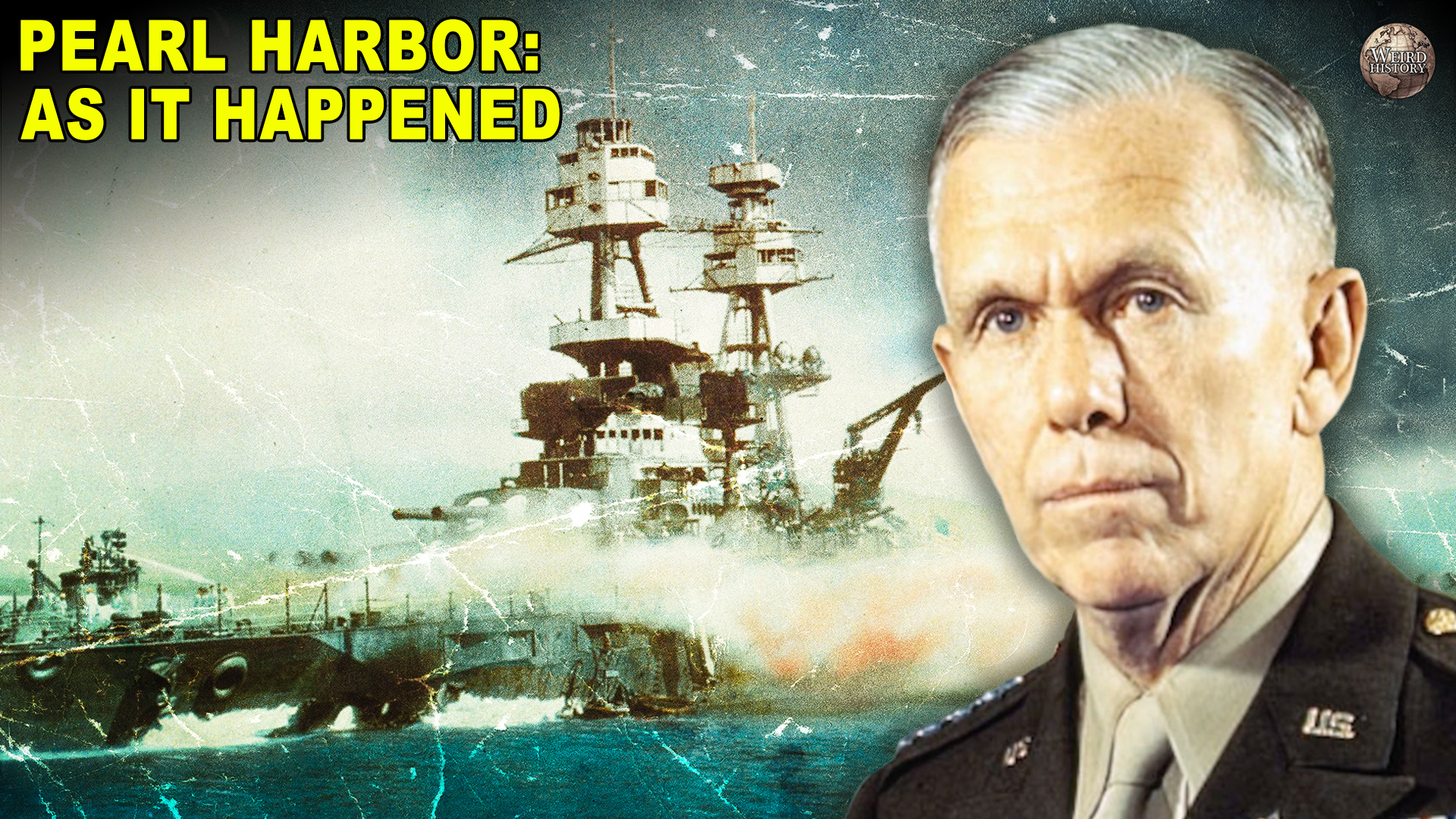
Those who woke up in Oahu, Hawaii on December 7th, 1941, had no idea they were about to experience one of the darkest days in modern military history. Over 2,400 Americans perished in the attack where air raid sirens blared, Japanese bombers filled the sky, and every second counted.
Show More Show Less View Video Transcript
0:00
Those who woke up in Oahu, Hawaii on December 7, 1941
0:04
had no idea they were about to experience one of the darkest days in modern military history
0:09
Over 2,400 Americans perished in the attack where air raid sirens blared
0:14
Japanese bombers filled the sky, and every second counted. So, today, we're going over a beat-by-beat breakdown of the attack on Pearl Harbor
0:24
All right, let's do a better job of telling the story than Michael Bay
0:30
At 6 a.m. on the morning of Wednesday, November 26, 1941, a massive Japanese carrier fleet left Hidokapu Bay and set off on a top-secret mission
0:44
They charted a route toward Hawaii through the empty northern Pacific Ocean
0:48
which took them through near-freezing temperatures. For the next 12 days, the fleet would enforce strict radio silence
0:55
so no one could possibly figure out that the attack was coming. Cold bunks and no radio are the prices you pay for secrecy
1:02
At nearly the same time, American Secretary of State Cordell Hull presented the Japanese
1:07
government with a diplomatic request to withdraw troops, which became known as the Hull Note
1:12
Japanese Prime Minister Tojo Hideki responded to the note by telling his cabinet
1:16
This is an ultimatum. At 3.42 a.m. on December 7th, just hours before the strike, the American ship the USS Condor
1:31
spotted a Japanese submarine near Pearl Harbor. The Condor, which was a minesweeper
1:36
directly observed the sub and even spotted its periscope, which was quickly reported to a
1:41
destroyer, the USS Ward. The world wouldn't know the full story for some time to come
1:46
But the Japanese actually spent months planning the Pearl Harbor strike. And on the morning of December 7, the fleet took its final position 275 miles north of its target
1:57
Then at 6 a.m., the first wave of Japanese planes took off
2:01
The air attackers included fighter aircraft, dive bombers, and torpedo bombers. The first wave was led by Commander Mitsuo Fujita, who later recalled that it took his
2:10
squadron an hour and 40 minutes after leaving the carriers to reach the first site of land
2:15
Then suddenly, a long white line of breaking surf appeared directly beneath his plane
2:20
He had spotted the northern shore of Oahu. It was at 6.45 a.m., while the first Japanese bombers were still on their way toward Pearl Harbor
2:34
that the USS Ward finally located and sank the Japanese submarine that had been spotted by the USS Condor a few hours earlier
2:41
It marked the first casualties of the strike, and it likely felt like a win for the American forces
2:46
Spotting and sinking an enemy submarine would be a huge ego boost on any other day
2:51
But the crew of the ward still had no idea about the full extent of what was coming
2:56
or the devastation that was about to unfold Now you may not know that the Japanese attack was almost completely foiled by Mother Nature
3:09
Choppy water nearly doomed the entire strike. It's hard to believe, but according to pilot Tokuji Izuka
3:15
the carriers were rolling considerably, pitching and yawing. Under such conditions, it was very difficult
3:21
to carry out takeoff operations. In other words, it would be tough to play checkers
3:26
in those conditions, let alone fly a plane off a ship. Izuka himself left the Imperial Japanese Navy aircraft carrier
3:32
Akagi around 7 a.m., along with a second wave of planes. It took two hours for the attackers to fly to Oahu
3:39
and by the time they arrived, the attack was already in progress
3:48
Just after 7 a.m., American forces finally spotted the planes from the Opana Mobile radar station
3:54
Run by the Army, the radar station on Oahu served as an early warning system
3:59
You would think that when the Army's early warning radar station calls to issue an early
4:03
warning, the necessary people would immediately jump into action. Yet, when the radar operators called the United States Army Pacific's headquarters in Fort
4:11
Shafter, Honolulu, to report the unusual reading, they were told to honor the military's regimented
4:16
chain of command and to wait for a return phone call from a commanding officer before acting
4:24
20 minutes later, at 7.20 a.m., an officer at Fort Shafter finally responded to the radar sighting of Japanese planes
4:34
Tragically, the officer dismissed the blip as an incoming group of U.S. B-17 bombers flying in from California
4:40
because the Flying Fortress bombers were indeed scheduled to arrive that morning. So the lieutenant who called back the Opana operator told him not to worry about the reading
4:48
a decision he would come to regret mere minutes later. Only minutes before the first bombs dropped, at 7.33 a.m., U.S. intelligence forces deciphered a critical Japanese code
5:05
Codebreakers learned that the Japanese negotiators were told to stop all talks with the U.S
5:10
And when the military officers saw the deciphered message, they quickly concluded the Japanese might soon strike
5:16
Army General George C. Marshall immediately contacted the forces in Hawaii. He was desperate to warn the troops, believing this code-breaking report showed clear evidence
5:25
that the Japanese were moving toward war. But due to atmospheric conditions, Marshall made the decision to send the information
5:32
via commercial telegraph, specifically through Western Union's undersea cable. It arrived too late, and by the time anyone saw it, the attack was already underway
5:41
Minutes before 8 a.m., Commander Fuchida gave the order for the first wave of planes to strike
5:53
their targets In his own words it was 0749 when I ordered my radio man to send the command attack and he immediately began tapping out the prearranged code signal In an attempt to prevent a U response the first targets included the airfields on Oahu
6:12
but the bombs also fell on the U.S. fleet moored in the harbor, and the results would be devastating
6:22
Only minutes before the first bombs dropped, Japanese Commander Fuchida signaled, to his ship. The signal communicated the success of the strike so far. It meant that the planes
6:33
had arrived at Oahu without being spotted, and the strike would commence as a total surprise to the
6:38
Americans. At 7.55 a.m., from his position on Ford Island, Naval Commander Logan C. Ramsey
6:50
saw a low-flying plane. At first, the commander thought he had spotted a drill being conducted
6:55
by American forces, but then he spotted the plane dropping a bomb. Ramsey transmitted a
7:00
telegraph message that read, Air Raid on Pearl Harbor. This is not a drill. It was sent at the
7:07
exact same moment that the first bomb struck their targets, and America quickly endured its
7:12
first casualties. On the USS West Virginia, Naval Lieutenant James W. Downing watched fellow sailors
7:19
blowing off the ship, coming out of the water and igniting due to the oil on their bodies
7:23
In his words, they just became human torches. A few minutes after 8 a.m., the Japanese fighters dropped the first bomb on the USS Arizona
7:38
The incendiary device hit the rear of the ship, bouncing off one of the gun turrets before exploding through three decks
7:44
A second bomb struck close to the anti-aircraft deck. A third hit on the port side
7:49
Then at least three bombs fell harmlessly in the water. But the fourth hit on the Arizona detonated the powder stores, causing a massive explosion
8:02
Naval Admiral and Commander-in-Chief of the United States Pacific Fleet, husband E. Kimmel, walked out of his home and to his yard at 7.55 a.m
8:11
There, with little else he could do, he just watched as Japanese aircraft targeted the U.S. fleet
8:17
Kimmel's next-door neighbor said the admiral's face was, as white as the uniform he wore
8:22
Minutes later, at 8.12 a.m., Kimmel addressed the fleet over the radio
8:26
telling them hostilities with Japan had commenced due to an air raid on Pearl Harbor
8:30
He then called in his offshore fleet and reported the strike to the Navy
8:39
On the deck of the Arizona, the American sailors did their best to man the anti-aircraft guns
8:44
while the Japanese bombers strafed the deck with bullets. Crewman John Anderson later recalled thinking that they just couldn't sit there and wait for the ship to go down
8:52
He believed they had to do something, but he didn't have time to figure out what that was
8:57
At 8.19 a.m., a bomb struck the powder stores and split the ship's hull
9:01
beginning the Arizona sinking causing 1 American casualties It was over an hour into the Pearl Harbor strike at 9 a when the second wave of Japanese
9:17
fighters descended. The dive bombers in the second wave targeted the ships still floating in the
9:22
harbor, while larger planes carrying torpedoes and bombs targeted the air bases. And as the dive
9:27
bombers circled the ships, the rest of the planes dropped high-altitude bombs onto the bases
9:38
Between the first bombs at 8 a.m. and the final ones at 9.55 a.m., the attack on Pearl Harbor
9:43
damaged all eight U.S. battleships in the harbor. Multiple ships sank, taking sailors with them
9:49
The strike also wiped out 170 planes and inflicted more than 3,500 American casualties
9:55
As the Japanese planes withdrew and ships continued to burn in the harbor, the focus quickly shifted to recovering from one of the most devastating military attacks in history
10:05
That included a year-long salvage operation led by Naval Commander Homer N. Wallen, which rebuilt what boats they could and turned the shipwreck of the USS Arizona into a war memorial
10:16
The battleship remains there to this day. President Franklin D. Roosevelt learned of the Pearl Harbor attack in the early afternoon of
10:28
December 7th. The next day at 7.30 a.m., he gave a six-minute speech to Congress in which he
10:34
famously declared December 7th, 1941 to be a date which will live in infamy. He ended his speech
10:40
with an open plea to declare war. No matter how long it may take us to overcome this premeditated
10:46
invasion, the American people, in their righteous might, will win through to absolute victory
10:54
I ask that the Congress declare that since the unprovoked and dastardly attack by Japan
11:01
on Sunday, December 7, 1941, a state of war has existed between the United States and the Japanese
11:09
Empire. Later that day, the United States Congress followed their president's impassioned advice
11:20
and officially declared war on Japan. They really couldn't say no after that speech
11:25
In the Senate, the declaration received a unanimous vote, but one member of the House
11:30
of Representatives voted no. That member was Congresswoman Jeanette Rankin, who was the first
11:35
woman elected to Congress and used this fact to explain her vote, saying
11:39
As a woman, I can't go to war, and I refuse to send anyone else
11:48
On December 11, 1941, four days after the bombing of Pearl Harbor, the U.S. earned
11:54
unanimous votes in Congress to declare war against Germany and Italy, entering World War II
11:59
and ending America's long-standing isolationist policies. That's where our video ends. But 80-year-old spoiler alert, the good guys won