Up next in 10



https://www.proshaper.com/metal-shaping-coachbuilding-class-options/
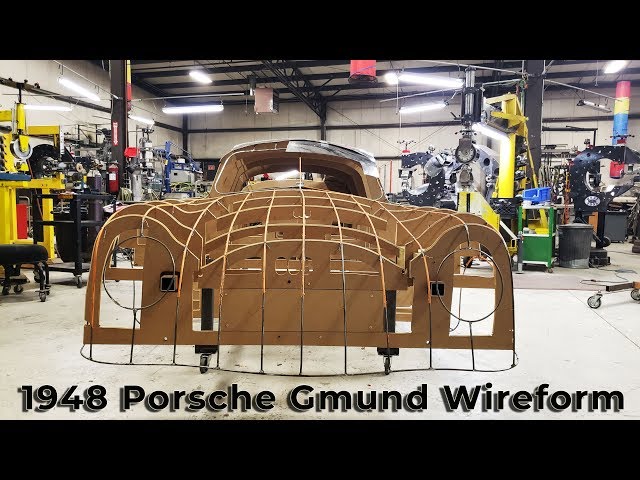
Extended learning student who took my February class became enamored by the wire form buck. When he went back home he purchased plans for a 1948 Porsche Gmund SL Coupe. After tweaking a few things in adobe illustrator and Rhino he took his file and cnc cut mdf sections and connected them with square stock mounted on a rolling frame he created.
Using the MDF as a guide for the 1/4" hot rolled wire he cut out little reliefs for the wire to fit. This ensured he had the correct flow for the Porsche and some clamping capability for the panels he created. He still has some work left to do so we will keep you updated with his progress.
Email: [email protected]
Website: https://www.proshaper.com
Facebook: https://www.facebook.com/ProShaper/
Instagram: https://www.instagram.com/proshaper/
Twitter: https://twitter.com/ProshaperM
Linkedin: https://www.linkedin.com/company/proshaper/
Show More Show Less View Video Transcript
0:01
[Music]
0:09
hi it's ray from pro Schaefer in
0:12
Charlton Massachusetts and what you're
0:14
looking at here is a 1948 Porsche Goo
0:18
mooned SL coupe its course not the car
0:23
but it's the shape of the car and it was
0:26
made by a student of mine who took my
0:28
class in the last February and he was
0:31
inspired by the class and decided he was
0:34
a Porsche mechanic early on in his life
0:36
and I have another student extended
0:40
learning student Ken who's building the
0:42
same car in Porsche one of the first 67
0:46
Porsches ever made and Ken's taken a
0:49
different tack he's building the chassis
0:51
which is all made with 18 gauge sheet
0:53
metal all bent up and Spencer wanted to
0:56
make the body first you can do it either
0:58
way so Spencer's approach was he at the
1:02
class he saw the advantages and
1:04
disadvantages of maybe a wire form and
1:08
the disadvantage is is how do you make
1:11
the wire form that's one of the big
1:13
problems that everybody wrestles with is
1:17
okay I understand the wire form but how
1:20
do you bend the wires to make it look
1:22
like a Porsche so he was a little
1:23
intimidated by that and he was more into
1:28
the technology the CAD files and and
1:30
maybe even scanning well you can't scan
1:34
a Porsche given Porsche because there's
1:37
so few of them available so you have to
1:39
rely on photographs to gather
1:43
information to be reproduced that shape
1:45
or in his case there's a CAD file
1:49
distributor out of Ukraine
1:53
I believe it's Ukraine it's called
1:55
humpstor 3d and they've been in business
1:57
for quite a while and they have quite a
1:59
library of various cars and it just so
2:03
happened that they had what Spencer was
2:07
looking for bought the file they're
2:09
pretty inexpensive they will do the
2:12
slicing of the
2:13
- so it's a 3d CAD route comes in a
2:16
whole bunch of different formats
2:18
Spencer was knowledgeable in Adobe
2:23
Illustrator which will export a DXF file
2:27
is what you need to do use a CNC router
2:30
and he also knew a little bit of Rhino
2:33
so between the Rhino and the dhobi
2:37
illustrator
2:38
he took the file that he bought from
2:39
humpstor 3d he massaged it in a few
2:42
places sometimes when you buy these
2:44
files online they might not be perfect
2:47
but to be able to scan a car and to get
2:51
that perfect and everything this can be
2:53
a super expensive proposition so this
2:56
looks really good it can be off every
3:00
one of these files that you buy
3:02
generally going to be off a certain
3:04
percentage somewhere even the original
3:07
cars you might have a half an inch
3:09
difference between the left and right
3:10
because they were handmade and they were
3:14
made in a hurried fashion not like you
3:17
do today today this could be a two to
3:19
five year project to make this car and
3:22
you can't buy this car it's super
3:25
prohibitively expensive if you wanted
3:28
one and the people that own them don't
3:30
want to sell them anyways so if you want
3:32
a good one Porsche you have to make it
3:34
now the original one would have 18 gauge
3:37
sheet metal chassis Spencer's opted to
3:41
do a tube frame and this with probably
3:43
updated suspension bits and he hasn't
3:46
decided which motor he's going to put in
3:48
it yet but you got a multitude of
3:50
Volkswagen and Porsche motors you can
3:52
use you can even make it electric if you
3:55
wanted it's all your your potential so
3:58
he bought the file he massaged the file
4:01
a little bit he tuned it observed all
4:04
these pitches and he came up with the
4:07
idea of putting it together it's a good
4:11
pretty much a common idea where you have
4:14
to have a link for all of these stations
4:17
so he has a 2x2 square hole or two and a
4:22
half by two and a half square hole here
4:24
where the tubing will go in and unites
4:27
all the different MDF segments used MDF
4:31
and you ask why MDF well MDF is very
4:36
inexpensive it's really flat readily
4:39
available and it cuts on a road or very
4:42
very nicely where he lives in Maryland
4:45
there was one of those makers split
4:47
pasted places I guess they call them
4:49
where you can go in for a certain fee
4:52
for a month and you can use all the
4:54
equipment they have you didn't really
4:55
have some machining equipment and some
4:57
woodworking equipment they had a CNC
4:59
router it's not that big a deal to learn
5:02
how to run a CNC router so he routed
5:05
this all out himself now at my class he
5:10
heard me speak of the advantages of a
5:13
wire form which is the viewability and
5:15
clamp ability over a traditional station
5:20
buck a wood station buck which has very
5:23
little clamp ability unless you make it
5:25
and that's what he attempted to do here
5:27
by cutting out all these reliefs and
5:32
without those reliefs you have very
5:34
little to the ability to clamp it and
5:36
that's one of the big problems that
5:40
beginners face if they they think they
5:43
need a wood buck and and they get this
5:45
station buck with these really closely
5:47
spaced stations and then you're trying
5:50
to fit to it you can't clamp to it you
5:52
can't see it and that increases the
5:55
mystery of why is this so difficult to
5:57
learn a wire form allows you to easily
6:00
clamp and easily view and it's a lot
6:04
easier to fit panels to it but the
6:07
problem with the wire form is I
6:09
reiterate here is it's hot to generate
6:12
the shape properly I have a method and
6:16
I'm going to show that on my packaged
6:19
wire form and Spencer opted to do this
6:24
MDF which gives him the shape really
6:27
quick because he bought the file he
6:29
routed it put it together with this
6:30
common uniting piece of steel tubing the
6:34
unites all the sections and now he has
6:37
an instant demoon Porsche well
6:41
in the process of making the file or
6:44
adjusting the file he also made these
6:45
little reliefs that he could incorporate
6:48
wires and it's who he saw the advantage
6:50
of the Y is it fills in a lot of the
6:53
spots that a station but doesn't include
6:56
so that gave him a whole nother layer of
6:59
information such as where the headlights
7:02
are and everything else and the
7:05
windshield detail and he'd probably he
7:08
didn't fully detail this all out which
7:11
is what he's gonna do now is he's going
7:12
to add a lot more wire detail to the
7:15
buck to make it a lot more user-friendly
7:18
but this is a really valid way
7:22
especially if somebody's doing it the
7:24
first time to buy a file find one of
7:27
those makers place with a router if you
7:30
can get somebody to help you with the
7:32
creating the DXF files or learning adobe
7:36
illustrator and doing yourself or
7:38
whatever then you could generate this
7:42
shape whatever it wants whatever you
7:44
want to make whatever is available
7:47
online of these pre-made scans and and
7:51
files for these CAD models so that
7:55
eliminates the possibility other or the
7:59
difficulty rather of creating the shape
8:03
so he has the shape he's added these
8:07
wires he's come back to my class to make
8:10
a bunch of panels we started on the back
8:13
and in the process of making the panels
8:16
he saw the deficiencies that he has is
8:19
still more detail that needs to be put
8:21
in and the detail is like all the
8:24
landing areas for the glass and it needs
8:28
to be reinforced this isn't strong
8:30
enough
8:30
I'll contrast this with with my my wire
8:34
forms that we did on the packet so this
8:39
is a good method for anybody that wants
8:42
to learn by the file make the wire form
8:45
and even better because this restricted
8:49
our viewing of how to fit the panels get
8:54
the wire form all
8:55
all strengthened up really strong and
8:57
then you can design these pieces to
9:00
either be unbolted so you design them so
9:03
you can collapse them and take them out
9:05
later if you wanted to or jigsaw arm and
9:08
take them right out of the way and then
9:10
you end up with a very strong wire form
9:12
with no restriction of the MDF in the
9:16
way which proved to be a problem when
9:18
Spencer was fitting the panels even
9:22
though he made innumerable cutouts here
9:24
it was difficult to clamp to and it was
9:27
difficult still to be able to view to
9:30
see how those panels were fitting and
9:32
it's very fragile now because you cut it
9:35
away so much the MDF is a really good
9:40
material to use to generate the shape
9:43
fast and also if you're going to cut it
9:46
out it's easy to cut out so after you've
9:49
made the wire form so I think this is a
9:53
really good method and on the back here
9:56
you can see the beauty of this shape and
10:04
Spencers been here at the class and he's
10:08
been strengthening a lot of this wire
10:10
for me put in a lot of these
10:11
strengthening elements which now he's
10:13
going back to his home shop and he's
10:16
going to continue strengthen this and
10:19
he's going to end up with a really
10:20
really nice buck it'll be a beautiful
10:23
wire form and if he wants to he can cut
10:26
these out and that's going to increase
10:28
the user friendliness of the piece so
10:32
he's still got a lot of work cut out
10:35
like for instance the back engine lid it
10:41
will have to fold in the panel's going
10:44
up to where the gap is they have to fold
10:47
in so that hasn't been defined yet so
10:49
that has to all be defined with wires
10:52
very easy to do with why it's very
10:54
difficult to do with the MDF or from the
10:57
file that's going to have to be done
11:00
mostly from pictures a little bit from
11:02
the file and he'll have to do the seat
11:06
for the windows you'll have to do
11:09
all the openings for the doors and when
11:12
he gets it done right you put these
11:14
little loops in and you'll be able to
11:16
put the panel on with the flange in a
11:19
fits right tight right the way it's
11:21
supposed to be and you'll have this
11:22
perfect flowing surface so overall I
11:27
recommend this is a really good way for
11:29
beginners to develop a shape and I'm
11:32
going to contrast it with the pakad
11:35
experience with the wire form we made on
11:38
the packet which is probably the most
11:40
complicated one we've done so I just
11:44
want to say that Spencer did a great job
11:45
he's coming back again he's going to do
11:48
a few more panels and it was great
11:52
having them up here and I invite anybody
11:54
that wants to do a car like that to take
11:56
advantage of the opportunity and sign up
12:00
for a class at pro shaper
12:05
[Music]
Autos & Vehicles