live_tv
Livestream Starting Soon
00
Hours
:
00
Minutes
:
00
Seconds
Up next in 10


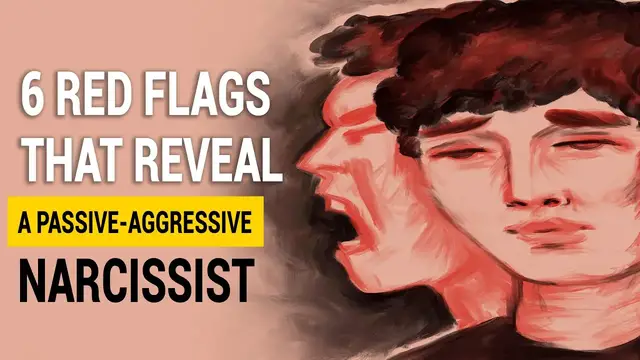
It can be tough to figure out if someone is behaving in a concerning or harmful way with all that indirectness. That’s why it’s wise to learn to spot the warning signs before you’re in too deep!
Show More Show Less View Video Transcript
0:00
Narcissists are rarely ever direct. Many of their tactics involve using disguised forms
0:06
of various types of hostility. This cruelty allows someone, especially a passive-aggressive
0:12
narcissist, to gain plausible deniability for their actions and avoid taking accountability
0:18
It can be tough to figure out if someone is behaving in a concerning or harmful way with
0:23
all that indirectness. That's why it's wise to learn to spot the warning signs before
0:29
you're in too deep. Here are 6 red flags that reveal a passive-aggressive narcissist
0:35
1. A passive-aggressive narcissist displays social hostility. Social or relational hostility involves treating others in a way that ostracizes them or invokes
0:47
social punishment. The trick with a passive-aggressive narcissist is doing this in disguised ways
0:52
to avoid direct aggression. This sort of toxicity is a complex topic. Most human beings
0:59
develop natural social awareness to some degree to dissect the nuances of various interactions
1:06
This action means that even subtle acts of hostility in a relational context can feel
1:10
very powerful. There's no need for direct attacks when a narcissist can get their message
1:16
across with various social forms of communication. For example, a passive-aggressive narcissist
1:22
may socially exclude others. Have you ever been trying to fit in well in a group, only
1:27
to have that group seem to close into a circle and leave you standing outside? Passive-aggressive
1:33
narcissists love to find ways to do that to those they resent. They'll expertly orchestrate
1:39
social situations to exclude you purposefully. 2. Give silent treatment. A narcissist isn't going to tell you when they're upset directly. Instead, they'll
1:49
ignore you or act like you're not there to make communication impossible. Silence is
1:53
a prevalent tactic of narcissists, says studies. This is because it avoids direct conflict
1:59
and instead serves as a way to goad you into initiating hostility. The silent treatment
2:04
and avoidance send an unequivocal relational message that gets on anyone's nerves
2:09
3. Accidentally humiliate. A passive-aggressive narcissist knows how to hit you where it hurts, but they don't want to be the bad guy of a situation, so
2:18
they find ways to indirectly talk about things that'll hurt you, usually in calm and innocent-sounding
2:24
ways in front of others. This is a form of covert punishment designed to isolate you
2:29
from social interaction. 2. Non-communication of resentment and the desires of a passive-aggressive narcissist. If a passive-aggressive narcissist has a problem
2:40
with you, they're not going to tell you the way that an average person would. If they
2:44
want something, they'll keep it to themselves and hope you figure it out. This is because
2:49
their passiveness involves non-communication. They want you to get the message, but they
2:54
don't want to tell you that message. It's an unreasonable expectation and, left unchecked
2:59
becomes extremely tiring and toxic. This non-communication can happen by sulking. When a narcissist is
3:06
upset, they'll make it evident by being grumpy, sulky, sour, and irritable. They'll create
3:11
challenging levels of tension while insisting that everything is okay. Hint dropping. A narcissist who wants something doesn't want to ask for it directly. They're
3:21
too worried that you will see it as something they have to owe you for. As such, they try
3:25
to drop hints so you pick up on their desires and fulfill them without them needing to own
3:30
that truth. Wishful wishing. This is the closest that passive-aggressive narcissists get to direct communication and it's incredibly annoying
3:40
They'll wish out loud for what they want, but then dump that wish out quickly. This
3:45
employs guilt-tripping mechanisms and allows them to pretend that the idea they're expressing
3:49
isn't theirs. For example, it would be so nice if someone would get me some coffee too
3:55
but I guess that'll never happen, so never mind. 3. Direct or underhanded sabotage goes along with a passive-aggressive narcissist
4:04
If a narcissist doesn't want you to succeed, they'll try to sabotage you. They'll get in
4:09
your way, mismanage various tasks, break agreements, and turn others against you or
4:14
against each other. Direct sabotage can be easy to spot, however. As such, a passive-aggressive
4:21
narcissist will often opt for subtler approaches to undermining you and adding to your difficulties
4:27
They may do this in the following ways. Procrastination. A passive-aggressive narcissist
4:32
may stall for time to sabotage your efforts. This is especially true if they need to complete
4:37
a task for things to go smoothly. Research shows that this is a surprisingly common narcissistic
4:43
tactic. Poor performance. If they want to sabotage your progress, a narcissist who needs to work with you may intentionally underperform. They'll
4:52
do lousy work or forget to do various tasks, then shift the blame away from themselves
4:57
and act innocent. Worse still, they may leave things wholly undone. Stalling. Passive-aggressive people find ways other than procrastination to stall you
5:08
They may set up unnecessary red tape and obstruct attempts at communication and progress. They
5:13
might run late for all your meetings or try to slow you down in other ways. They'll use
5:18
stubbornness as a tool against you. A passive-aggressive narcissist excels at passing around blame. Those with high levels of narcissism always refuse to take responsibility
5:30
for their actions. They don't want to be held accountable for anything, so they'll find
5:35
ways to pass around blame. They may do this by blaming others for what they've done, insisting
5:40
that you should have done more or known better. For example, I only forgot because you didn't
5:46
remind me. Playing the victim by acting like they're being persecuted unfairly. For example
5:52
there's no way for me to explain myself here because you've already decided I'm wrong
5:57
Guilt-tripping others so that they're able to get away with their actions scot-free
6:01
For example, you know I've been having such a hard time with my family lately, I can't
6:05
believe you're being so harsh on me. Gaslighting others so they think their perception is wrong
6:11
For example, I wasn't being unfair to you, you're probably just feeling exhausted so
6:16
you took me the wrong way. Deflecting the topic to distract from the
6:20
issue at hand. For example, but you didn't help me when I wanted your help last month
6:26
Not all of these methods are necessarily passive, but they're often used as a means
6:30
of quickly getting out of trouble. A passive-aggressive narcissist won't want to admit to their faults
6:35
actively so this is their next best option. 5. A passive-aggressive narcissist uses disguised
6:42
forms of verbal hostility. Verbal hostility, such as insults and verbal attacks, is directly
6:49
aggressive. But that doesn't mean that a narcissist won't find ways to be more passive
6:53
All they need to do is disguise that hostility. They'll do this with
6:57
A passive-aggressive narcissist gives backhanded compliments. When a toxic person compliments you, they're rarely doing it genuinely. It's typically
7:06
a backhanded way to insult you while making themselves look innocent. They might say things
7:12
like, wow, great dress, I used to dress like that in high school. Or perhaps they'll
7:16
look you up and down and say they admire your confidence for going out dressing as you did
7:21
That sounds nice, but it's not and you can tell it isn't
7:25
Brutal honesty. There's a difference between being honest and just being cruel. A passive-aggressive
7:32
narcissist is the latter, but they look like the former. They'll insist that they want
7:36
the best for you, but their words are unreasonably hurtful and disrespectful
7:42
Humor and the passive-aggressive narcissist. A passive-aggressive narcissist will often make use of hostile humor. They'll make digs at various aspects of you but insist they
7:51
were joking. This lets them express their true thoughts while painting you to look like
7:56
you're overly sensitive. Disclaimers. The passive-aggressive narcissist may fill their sentences with disclaimers
8:03
to make themselves seem mindful. They may say, no offense, but, or I hope you don't
8:08
think I'm rude, but, as well as other careful statements. They use these to protect themselves
8:14
against the inevitable backlash for the harsh words they'll say. Since they prepared you
8:19
they'll make your adverse reaction out to be your problem. A passive-aggressive narcissist has an exaggerated need for attention, validation, and assurance
8:31
Lots of people do want and need extrinsic validation from those around them. There are
8:35
even plenty of people with unhealthy levels of this need who aren't narcissists. But those
8:40
with many narcissisms will express this exaggerated need in notably harmful ways
8:46
A passive-aggressive narcissist will want to seek out and almost demand the assurance
8:50
they desire. But the key word here is their passiveness. They don't directly ask for
8:55
attention, they try to grab it in various toxic and manipulative ways. This behavior
9:01
is a huge red flag and can come from any following emotions
9:06
Fear of rejection or ridicule. A passive-aggressive narcissist is often highly motivated by various
9:12
forms of fear. They may be afraid of rejection, of being wrong, or of being ridiculed. This
9:17
fear causes them to crave validation to alleviate this fear. They're worried that people will
9:23
call their bluff or will see them in a different way than they wish to be perceived. As such
9:27
they find ways to gain the assurance they want, typically through underhanded means
9:32
This also means that many narcissists are afraid of vulnerability and won't be open
9:37
to genuine intimacy and honesty with others. Constant anxiety. A lot of narcissists experience constant states of anxiety. This emotion elevates
9:47
into toxic behavior because they project their fear, accusing others of various things without
9:52
evidence or truth. They're so anxious that they believe their anxieties are entirely
9:57
rational and take that out on everyone around them. In a passive-aggressive narcissist
10:02
this can be seen in the way they constantly talk about impending doom or how everyone
10:06
is out to get them. Studies show a high correlation between anxious and narcissistic tendencies
10:13
Threat perception. The aforementioned constant anxiety means that a passive-aggressive narcissist perceives everything as a threat. They take everything personally. If you say something
10:24
casually, they'll think it was directed at them. Everything is seen as a personal attack
10:29
and it can be exhausting for the people around them to deal with. They don't take anyone
10:33
in good faith. Unfortunately, there's no amount of validation or assurance that can ever be
10:39
enough for a passive-aggressive narcissist. Not only do they fail to internalize anything
10:44
positive you say truly, but they also don't believe those words. This is especially true
10:50
for individuals with NPD, typically a disorder based on trauma. They may believe they're
10:56
not worthy of love, so they desire that love but can't think it may be genuine. They'll
11:01
do whatever it takes to get praise, but at the end of the day, it won't make them feel
11:05
good the way they wish it did. You can't always discern who's a narcissist or just a bit of
11:12
a toxic person with a few toxic traits. That's why it's vital to spot red flags from anyone
11:17
whose passive-aggression may harm you. Only then can you say no to their machinations
#Health
#Mental Health
#People & Society
#Family & Relationships
#Social Issues & Advocacy