Up next in 10


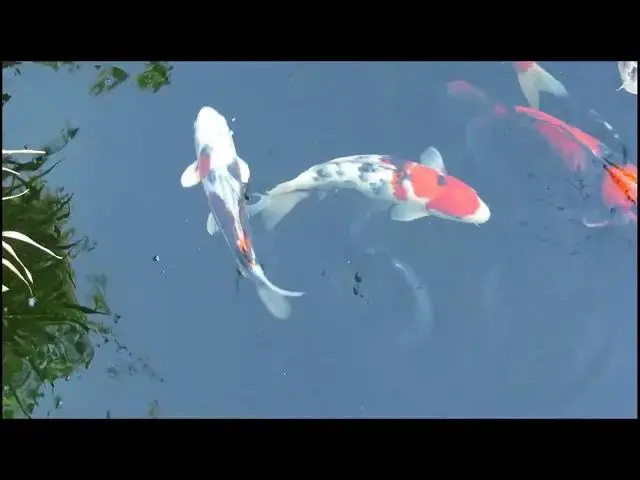
Explore the truth behind the popular belief that koi fish form unbreakable bonds. This video examines koi behavior, fish cognition research, and the factors influencing how these colorful creatures interact in ponds. Learn why our perception of koi relationships might be more human projection than fish reality.
Show More Show Less View Video Transcript
0:00
koi fish bonds myth or reality the
0:03
graceful koi fish with their vibrant
0:05
colors and elegant movements have
0:08
captured the hearts of many but there's
0:10
a popular belief that goes beyond mere
0:12
admiration the idea that koi fish form
0:15
unbreakable bonds with each other today
0:18
we're diving into the truth behind this
0:20
captivating myth koi fish originally
0:23
from East Asia have become beloved
0:25
ornamental fish worldwide their
0:28
popularity in garden ponds and water
0:30
features has led to many observations
0:33
and beliefs about their behavior one of
0:35
the most enduring is the notion that koi
0:37
fish form strong lifelong bonds with
0:40
their pmates this myth suggests that KO
0:42
fish recognize and prefer the company of
0:45
specific individuals in their group some
0:48
even claim that koi can become depressed
0:50
or die of loneliness if separated from
0:52
their bonded companions it's a romantic
0:55
idea that has captured the imagination
0:57
of ko enthusiasts and casual observers
1:01
alike however when we look at the
1:03
scientific research on fish behavior and
1:05
cognition a different picture emerges
1:08
while fish are more intelligent than
1:09
they were once given credit for the
1:11
concept of emotional bonding as we
1:13
understand it in manuals doesn't quite
1:15
apply to them in the same way Studies
1:17
have shown that fish can recognize
1:19
individual consp specifics members of
1:21
their own species and even show
1:24
preferences for certain individuals
1:26
however this recognition is more likely
1:28
based on factors such as such as size
1:30
color patterns or behavior rather than
1:33
an emotional attachment several factors
1:35
influence koi behavior that might be
1:37
misinterpreted as bonding for instance
1:40
koi are Shing fish meaning they
1:43
naturally group together for safety and
1:45
efficiency and finding food this
1:47
instinctive Behavior can easily be
1:49
mistaken for affection or friendship
1:51
environmental factors also play a
1:53
crucial role K may appear to stick close
1:55
to certain Pond mates simply because
1:57
they prefer similar areas of the pond
2:00
based on temperature oxygen levels or
2:02
food availability changes in these
2:04
factors can alter their grouping
2:07
Behavior which might be misunderstood as
2:09
breaking or forming bonds it's also
2:11
worth considering how our human emotions
2:14
and tendency to
2:16
anthropomorphise attribute human
2:18
characteristics to animals influence our
2:21
perception of koi Behavior we naturally
2:24
want to see emotions and relationships
2:26
in animals that mirror our own but this
2:29
can lead to misinterpretation of their
2:31
actions while koi fish may not form
2:34
unbreakable Bonds in the way the myth
2:35
suggests they are still fascinating
2:38
creatures with complex behaviors they
2:40
can recognize their human caretakers
2:42
show preferences for certain foods and
2:44
even learn simple tricks these behaviors
2:47
demonstrate their intelligence and
2:49
adaptability without necessarily
2:50
implying emotional bonding as we
2:53
understand it in conclusion the myth of
2:55
the unbreakable bond between koi fish is
2:57
more a reflection of human emotion than
2:59
fish Behavior while koi do exhibit
3:02
social behaviors and can recognize
3:04
individuals the idea of emotional
3:06
bonding is likely an
3:08
oversimplification understanding koi
3:10
Behavior through a scientific lens
3:12
allows us to appreciate these beautiful
3:14
fish for what they truly are complex
3:18
intelligent creatures adapted to their
3:20
aquatic environment rather than small
3:23
scaly versions of ourselves
#Fishing
#Pets
#Fish & Aquaria
#Fish & Aquaria
#Biological Sciences