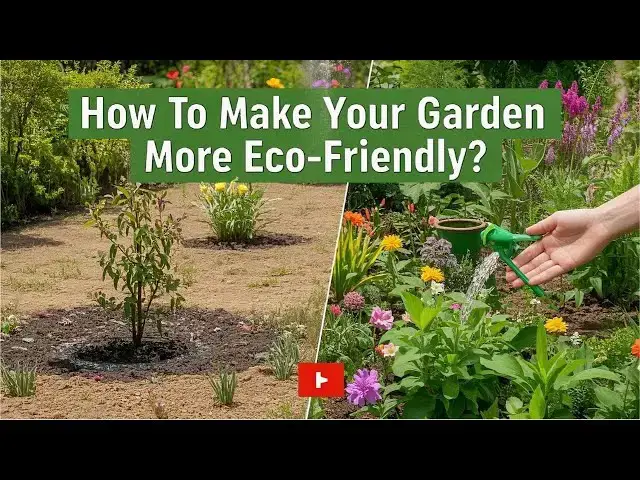

How To Make Your Garden More Eco-Friendly?
Aug 15, 2025
Intro:
Here’s a clear, practical guide to making your garden more eco-friendly — without needing a degree in environmental science or a herd of goats for weed control. 🌱
1. Choose Native Plants
Native plants thrive in your climate with minimal watering and fertilizers.
They attract local pollinators like bees, butterflies, and birds.
Bonus: fewer pests because they’re adapted to the local ecosystem.
2. Ditch Chemical Pesticides
Use natural pest control: ladybugs, lacewings, neem oil, or garlic spray.
Plant pest-repelling companions (e.g., marigolds near tomatoes).
Maintain biodiversity so “good bugs” outnumber the bad ones.
3. Compost Kitchen & Garden Waste
Turn fruit peels, veggie scraps, coffee grounds, and grass clippings into nutrient-rich soil.
Reduces landfill waste and improves soil structure naturally.
Avoid adding meat, dairy, or oily foods to compost.
4. Harvest Rainwater
Install a rain barrel to collect water from your roof.
Use it for watering plants instead of treated tap water.
Saves money and conserves local water resources.
5. Mulch, Mulch, Mulch
Organic mulch (wood chips, leaves, straw) keeps soil moist and reduces weeds.
Breaks down over time, enriching your soil with organic matter.
6. Plant for Pollinators
Grow nectar-rich flowers like lavender, sunflowers, or echinacea.
Avoid hybrid varieties bred for looks but lacking pollen/nectar.
Leave a small “wild” patch for bees and butterflies.
7. Reduce Lawn Area
Lawns guzzle water and fertilizer.
Replace parts with wildflower meadows, shrubs, or veggie beds.
Low-maintenance ground covers like clover are a greener alternative.
8. Reuse & Recycle in the Garden
Repurpose containers, old furniture, or pallets for planters.
Use reclaimed wood for raised beds.
Avoid single-use plastics for plant pots.
9. Grow Your Own Food
Herbs, leafy greens, and seasonal veggies cut your food miles to zero.
Choose heirloom seeds to support biodiversity.
Even a few pots of basil on a balcony help.
10. Support Wildlife
Add a bird bath, bee hotel, or small pond.
Avoid tidying up too much — some leaves and branches provide shelter.
Create hedges or dense shrubs for nesting.
=================================
#EcoFriendlyGarden #SustainableGardening #ZeroWasteGarden #OrganicGardening #GardenTips #GreenLiving #GrowYourOwnFood #NatureLovers #UrbanGardening #CompostLife #PlasticFreeLiving #SaveTheBees #EcoLifestyle #SlowLiving #PlantBasedLife #GardenGoals #SustainableLiving #RegenerativeGardening #WildlifeFriendlyGarden #PollinatorParadise
=================================
DISCLAIMER❗
¯¯¯¯¯¯¯¯¯¯¯¯¯
We have used video footage and images to maximize the content's clarity. This content only intends to share information for educational purposes.
■ Footage, music, image, and graphics used in the video belong to their respective owners, and we or this channel do not claim any right over them. This video has been produced following Fair Usage Policy "Under Section 107" of the "Copyright Act 1976". If you have any copyright issues, please contact us by email.
Mail Us: [email protected].
■ Some of our contents may contain affiliate links, from which we earn some commission that supports us to run this channel.
"As An Amazon Influencer, I Earn From Qualifying Purchases"
Some of the footage used in this video is not original content produced by "Best For Living". Portions of stock footage of products were gathered from multiple sources including manufacturers, fellow creators, and various other sources. If something belongs to you and you would like it removed,
please contact us at [email protected].
Show More Show Less