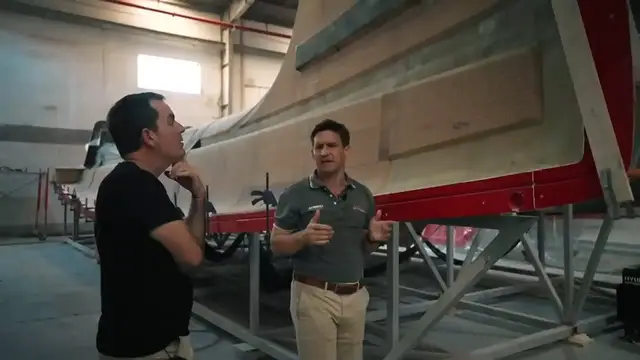

This week we're answering the critical question: what happens if you crash the boat? This is a rare but extremely serious situation and can have dire consequences if the boat is not built with collisions in mind. Seawind manager Mike takes us through the crash bulkheads and how they're made to prevent water ingress, and the Seawind 1370's watertight compartments, and we have a chance to chat to Seawind owners Mark and Isobel from s/v Jollydogs who happened to collide with an underwater object in the middle of the Pacific Ocean and had their entire starboard bow ripped off. And yes, they sailed over 1000 miles to safety.
//Creative Commons Attribution Licence video (Reuse allowed)
Show More Show Less View Video Transcript
0:00
We recently had an 1160 that was out in the Pacific that hit something and it really did tear quite a decent height
0:06
And they sailed for about 10 to 12 days I think it was, with basically the front half of the boat missing
0:10
Welcome Mark and Isabel SV Jolly Dogs. They have a pretty interesting harrowing story to put across
0:16
They really don't know what it was. They woke up to a massive bang. Suddenly the boat came to a complete standstill
0:22
It gnawed me out. Very, very stressful. Do they need to change their underwear after that? I think so
0:30
Welcome to another episode of Rubirose 2 Building
0:40
So today I want to introduce you to a friend of mine I have known him for a couple of years
0:44
This is Mike Rees. Mike is the General Manager at Sea Wind Catamarans. Mike, lovely to see you finally in Vietnam
0:50
Hi Nick. Hi guys. So today I want to discuss with Mike a topic that I hope we never actually have to
0:57
realize in a real world situation. And that is what happens if we hit that submerged container
1:04
Sea Wind have done a lot of work with the 1370 on crash bulkheads both fore and aft
1:09
So today with Mike we are going to talk about crash bulkheads
1:13
Where they are. What they do. We're going to talk about the kills which are sacrificial
1:17
We're going to talk about what happens if we rip the drive leg off. And all these other massively unlikely scenarios
1:24
But they do haunt our nightmares when we're kind of like passage planning on what ifs
1:29
So with crash bulkheads fore and aft. With the keels and with engine compartments that are watertight
1:34
We've got a lot to unpack today. So this is going to be really technical as are most of our episodes
1:39
So this is hull three. And it's really useful to see hull three because it's still in the mold
1:46
And that means that we can see like the reverse image of it. And that gives Mike a really good opportunity to just talk through collision protection on the 1370
1:55
So Mike what have we got? Yeah okay so just I mean we're looking at the inboard side of the 1370 here
2:01
And look I mean obviously watertight integrity is so critical. And hopefully it's not something you have to deal with
2:08
But the reality is you know people do hit things. Whether it's just at the marina or whether it is really offshore
2:12
But understanding what's behind the hull here. And understanding where your watertight bulkheads are is important
2:19
So firstly we have our first full watertight bulkhead that goes in here
2:24
And you can see it butts up to the end of the inboard stringer here. Yep
2:28
So that's a full composite bulkhead right. For a long time we've had composite bulkheads in glassed on the inboard side only
2:34
So you get bonded in on the edge of the bulkhead. Yeah. And then once it's in you're then glassing on the back face and then the outboard side. Okay
2:43
On this boat we're going a little bit further. The way we put these in is that we have a bonding flange that we put in the front surface
2:51
Okay just to give it some extra reinforcement. So what we do is we actually put in a temporary component that goes in
2:59
It's like a ring frame. We put that in temporarily. We then glass to it so we end up having basically like an angled shaped piece of glass. Yep
3:08
We take the temporary ring frame out. We then put our epoxy glue on the face of it
3:13
And we then put in our full bulkhead. So we've got a bonded flange on the front surface
3:19
Right so double flanged. Yeah. So then on the back surface we can then come in and do our glassing
3:25
We're sort of looking at a water line that's coming through here right. So full bulkhead and that all ties into the front of the boat also
3:33
giving a lot of stiffness around that four beam area. We've got our first collision bulkhead in here
3:38
On the 1370 we then have another watertight compartment that goes through
3:42
It's actually the component that comes through here and it's part of the furniture
3:46
and then comes back to around about this sort of level. Right. Okay so that's a horizontal watertight bulkhead
3:52
But as I was just saying the majority of time you're going to strike something that's low down in the water. Right
3:58
So getting that watertight integrity low down actually makes sense. So it's way above the water line
4:02
Water line would be about here somewhere and we've got a watertight bulkhead that's coming along
4:07
And then going down here. Again this one is all glassed back and back surface and forward surface
4:13
The first bulkhead is about here. Yep. Second bulkhead is about. Round about there yeah
4:18
About there. Typically you know when you're looking at impact you're normally looking fairly low down
4:24
But I've got to say we recently had an 1160 that was out in the in the Pacific that hit something
4:30
and it really did tear quite a quite a decent height. Now that 1160 was fine
4:35
They sailed for about 10 to 12 days I think it was
4:39
With basically the front half of the boat missing. But we had that same system on the 1160 of a full height watertight bulkhead in
4:47
It was glassed only on the back surface which is certainly strong enough
4:52
And they made it home no problem. So it's a critical critical bulkhead in the boat
4:57
Do they need to change their underwear after that? Because I think so
5:01
Adam probably been all over like. Very very stressful. But we we talked them through and we there were a whole series of things that we were
5:08
talking to them to how they could reinforce it along the way. They did that and they got home and they were good
5:14
Was it a shipping container? They don't know. They don't know. They really don't know what it was
5:18
It's one of those things where they woke up to a massive bang. The owner said he was thrown over the boat and twisted his knee and a real real shock
5:25
to them massively stressful. So they had all this front area flooded. But the bulkhead held good and they and they they made it home
5:32
And they were they were in the middle of nowhere. The timeline was probably never 20 minutes before we realized holy moly we we have a
5:42
highly compromised vessel. We slowed the boat down to around four knots or so
5:46
I went up and I looked at the bow and I thought I don't know if I should tell Isabel about this
5:53
Next thing to do we we've removed all the contents of the forward locker
5:57
so that we could see the back side of the crash bulkhead
6:01
We could see water spraying in little dribbles through a couple of spots
6:07
Every time we the bow kind of crashed down in the waves there was water that was getting
6:11
through the inspection hatch that's up there. It's a little circular six inch hatch
6:17
We had a broken boat that was floating and sailing just fine
6:21
A huge thank you to Marg and Isabel from Jolly Dogs for chatting to us over Zoom
6:26
We really appreciate the time that you guys took to talk to us. We had a huge conversation with Marg and Isabel about their entire experience which is
6:36
thankfully very rare but it does happen and it was a very enlightening conversation
6:41
We are going to make another episode about how to deal with the unthinkable which is a collision
6:48
at sea or an impact at sea which breaches a hull and you have some kind of water ingress situation
6:54
So that is a topic that we're going to tackle in a separate episode. If that's something that you want to watch and I
7:01
encourage you to do so because it's something that we all need to think about
7:05
then make sure you subscribe to the channel and get your notification bell on so that you
7:10
are notified when that episode comes out. In the meantime we're going to go back to talking about the construction of the 1370
7:17
and how the boat is actually built to withstand these kinds of collisions that we're talking about
7:22
So let's get on board Riverose 2 and continue the discussion with Nick and Mike
7:27
As per our discussion on hull three where you could see the reverse of the hull now
7:34
the collision bulkhead, sorry I almost poked you in the eye, is already glassed in. So do you want to talk us through that just pretty quickly
7:40
Yeah so as we explained we had that flange, bonding flange put into the hull and then we've
7:46
then inserted the composite bulkhead against that flange so it's got basically it's got a
7:51
flange ring that we've bonded this onto on the front surface and then we've come in and then
7:56
we've glassed six layers of glass all the way around that watertight bulkhead so it's 100
8:02
sealed on both front and aft faces so that's immensely strong and just by nature of it being
8:08
a fine bow shape with that bulkhead in there it makes it very very strong in that area
8:14
and obviously you can see you've got these huge carbon capped stringers tying into that as well
8:20
so it's making the front of the boat very very impact resistance up there both high and also
8:25
in the lower areas here. You've also got a longitudinal on the centre line here which
8:29
again that ties into that collision bulkhead and so you if you imagine sure you could potentially
8:36
strike something right on the stem of the bow but also you might it might be that you're coming down
8:40
onto something and you've got this longitudinal stringer on the centre line giving additional
8:45
stiffness and strength in this area. So the second bulkhead comes in so that's that forward area
8:51
which is sort of turns out to be the the bunk top or or in your case the workshop
8:57
Workshop flooded. Exactly so keep your tools dry so that's a bulkhead that's going to come in and
9:03
gets glassed in on this surface and comes down and it ties into this the end of the
9:10
structural grid that's down at the floor here. So it's actually held in mechanically as well
9:14
so it's a mechanic just because it's just it's going to be braced there and then you're going
9:18
to glass. So that's glassed yeah okay glassed in as well so we have access we have access into it
9:24
but we can get in and we can glass everything yeah. Huh okay brilliant that's fantastic okay
9:30
yeah. So moving aft we now have obviously looking at the boat from the other side this is the sump
9:36
so the keels sit here yeah? Correct yeah so so we just stood at the main bulkhead here so that's
9:43
going into the forward cabin any water that's inside the bilge will drain down so there's
9:47
there's drainage holes in those in the structural grid and they'll come down through so we have a
9:52
basically there's a there's a bilge drain that comes underneath the main bulkhead and then into
9:57
the sump in this area here so so this part here which is sitting 100 mil below the hull is the
10:05
sump and the false floor of the keel. Yep. Okay so that's basically your watertight compartment
10:12
essentially below that is a separate component. All right let's just keep going back
10:18
So aft again again we can see all this is obviously where the drive leg sits. We've got the
10:26
the bunk comes across here yep coming down to that point yeah so really what they call
10:31
it a crash bulkhead is really typically your fore and aft collision bulkhead. This is sort of a
10:37
watertight bulkhead sure so aft one is a full structural ring frame that has an insert panel
10:44
that goes in there so that's that's a fastened panel so you can access it to get into the
10:49
transom but when you as I say when you're cruising you want that panel in yep if that were to be
10:55
breached or there was a breach from the sail drive leg then yes you've got a the the back of the
11:01
starboard aft bunk comes up to it's around about this sort of height it sort of sits in with the
11:05
chine for maximum bunk width that's where that gets dictated but then your immersed water line
11:11
is is way below that point okay yeah and that's where you can access the engine to do your sail
11:17
drive maintenance and you can actually inspect here you're talking about sail drive flooding and
11:22
and maintenance you get really good access to the sail drive from inside the boat and you can do
11:28
really good access for engine maintenance going through the the external entrance to the engine
11:34
bay and then finally there's this this aft compartment which we talked about um watertight
11:40
in case of a collision from the stern exactly right yeah so it may be possible that some
11:46
owners may possibly go stern too so you can you can you know park your boat accidentally and have
11:51
a pretty decent impact or you've got the the probably the more likely thing is that you've
11:56
got another boat that hits you uh our friends um on follow the boat they got rammed by a ferry a
12:03
ferry in thailand yeah and it just took the arse of the boat i think they actually protected by
12:07
their davits but um yeah yeah that was yeah so yeah it can happen yeah stuff very much can happen
12:12
at sea so uh a whole episode on bulkheads it's super important to us and i think from looking
12:17
at everything that happened with jolly dogs really important to understand whether or not your boat
12:22
is going to protect you whether you have an impact from the stern or when you have a an an impact at the front of the boat also what happens if you do lose a keel these to us are
12:31
really important and so much of sailing and so much of our life sailing is about kind of like
12:37
ticking off those questions before you leave port hope you enjoyed that there is so much
12:42
more technical stuff coming this way so if you enjoyed what you saw give us a like give us a
12:46
thumbs up we will be back every week detailing the build of this boat until she's launched and
12:52
then we get to sail us so hope you enjoyed that see you next week goodbye
Travel & Transportation