Up next in 10


When building a boat, it is the little things that matter. Indications of a quality build that give you confidence in the whole build.
So for those of you considering buying a boat, whether new or used, check this one tiny detail before deciding if the quality is up to muster.
This week we look at the detail involved in the stainless steel we will be using on Ruby Rose 2.
Back to nerding out bout boat building! We have an in-depth look at the whole process of making the stainless steel for Ruby Rose 2.
//Creative Commons Attribution Licence video (Reuse allowed)
Show More Show Less View Video Transcript
0:00
Now, if you've ever wanted to see how we get from these ingots through the design and manufacture process to this level of quality, you're going to want to keep watching this. This is a pretty amazing episode
0:27
Now, in 2022, all the design. for the 1370 starts with CAD drawings
0:33
There is a team at the stainless steel manufacturers that take the drawings
0:36
and these are pretty technical. They have every single measurement angle down to the 10th of a millimeter
0:45
And these are going to be the rails on the C-Win-1370 Ruby Rose 2
0:49
So again, we start with CAD drawings, very, very in-depth, very, very detailed
0:55
and different aspects that they have 100% of the information at hand
1:00
Also, interestingly, they're not just making the Seawin. This is a design for a mega yacht
1:10
A little bit about stainless steel. If this is a little bit boring, please just skip forward
1:14
We will put a timestamp so you can skip this bit. Let's talk about regular steel
1:18
This is our ruler. This is the steel ruler that we all had at school. 99% iron, 1% carbon and some trace elements in there
1:26
But what's the problem with our regular steel rule? Well, iron oxygen in the presence of water gives you iron oxide, also known as rust
1:35
And so in the presence of water, regular steel, well, it goes all rusty
1:41
Further complicate that by adding salt water. Now, essentially, saltwater is an electrolytic solution, and the more electrolytes you have
1:50
the faster that you get the rusting process, because there is a greater flow of electrons
1:55
So in saltwater, everything rusts a hell of a lot faster. And this is where stainless steel comes in to save the day
2:03
Now let's look at our C-Win-1370. You need to add chromium, nickel and molybdenum
2:11
316 stainless steel, which is the industry standard for steel, 0.0.05% carbon, 17% chrome, 11% nickel and 2.1% malibdum
2:20
And by adding these elements, you prevent rusting. But how I hear you ask is this stop rusting
2:27
Well, the chromium in the stainless steel forms an oxidation layer that happens so rapidly that there is a permanent, passive layer of chromium oxide on the surface of your steel, and that stops corrosion
2:40
I hope you enjoyed that bit. Let's get back to the tour and work out how we make the bars for our 1370
2:48
So here we are back in the factory in Hanoi. Now the stainless steel, the 316 stainless steel, is shipped
2:54
from Australia to the factory in Vietnam and it comes in various ingots preformed bars preformed curves
3:01
so that essentially you have a huge starting point different selections of sizes of stainless steel
3:09
to work with and so using the cad drawings what we now do is we move to using high precision instruments to cut the stainless steel into the right length sections and then curve it into absolutely identical curves This means that
3:24
you can essentially replicate the same part over and over again identically. And so what you are
3:30
left with is identical sections that are micron perfect. And this means that when you are working
3:35
with tolerances that are this small, you have absolute continuity of product
3:42
Now, this is the process for tubular applications. However, for other purposes, there are some really, really high-end materials here. So whether you are using a computer milling machine, and this machine, if you look at the tolerances here, it is insane. The level of absolute detail, they can get onto a single piece of stainless steel. And these are milling out identical products day in, day out. It is absolutely to me fascinating. Moving on, they have plasma cutter. So again, if you
4:12
want to cut identical shapes in flat stainless steel. Again, this is the machine that you're going
4:18
to want to use. And so they've got two beds there punching out identical components over and over
4:24
and over again. And when you're building a boat, I guess you want to know that every component
4:28
that you are going to be producing is identical. This is going to be super important. Just as an
4:34
interesting aside here, these yellow posts have little lasers in. And if you move inside these lines
4:38
everything shuts down. It's a pretty efficient safety procedure. And I have a haven't seen the sort of thing before. And this is the end result. Custom pieces, absolutely
4:47
micron perfect. So for whatever application you're going to want, you have a custom piece. But
4:52
obviously, as you can see here, these need to be finished and polished. And this is the area that we're
4:58
going to move on to next. And the result is you've got a factory with 150 people in it, welding products
5:05
welding flanges, and putting everything together so that you are guaranteed the product that comes off the
5:11
production line is identical to the product that is actually designed by the CAD machine
5:17
And then finally, you've also got these old school jigs, and by using a jig, essentially a
5:21
template, you can ensure that when you're welding, all the welds are in the right place and flanges
5:26
are in the right place. So again, another level of protection to make sure that the final
5:30
product, as we can see here, is absolutely identical to what was designed by the designers on
5:37
the CAD machine. It's all absolutely fascinating. It does show the level
5:41
of detail that I never really understood. But look here, these need to be talked about
5:46
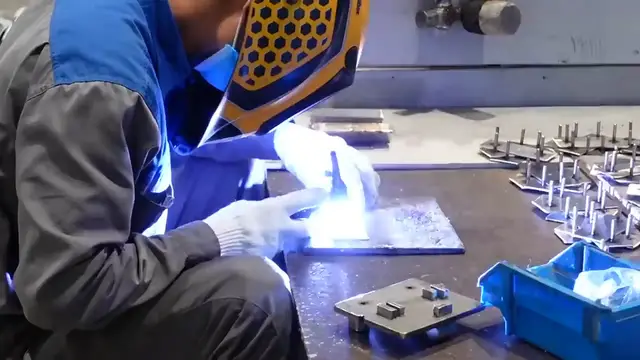
And we're going to discuss this next. And that is the welding of any two pieces of stainless
5:51
steel together. Occasionally we do get naysayers saying, oh, well, it's a factory in Asia
5:56
You know, you're not going to get the same quality. The quality assurance processes here are
5:59
absolutely insane. Recycling here, you can see recycling of product. And there is such a nod
6:06
to safety of stuff. Full protective gear everywhere. And, you know, you can see recycling of product. And
6:11
Everything that I would want from a factory from say a Western or a European maker is replicated identically here
6:18
Now the next stage of this is washing every single stainless steel product in acid
6:22
Midway we pretty keen to inform me that not all manufacturers do this and it is a step that they believe is super important because what it does is it removes carbide from the worlds and that adds a massive level of protection against rust As we move to the next area the factory this is broadly termed the polishing area
6:40
And what they do first is they start by polishing the worlds off the joins
6:46
Now, I have owned a boat before that I could clearly see the worlds around the stainless steel work
6:51
where two sections have been joined together. Now, this again is not something that is always done, but actually using and taking the time
6:59
to remove the welds using high-grip polishing. Actually, again, is going to give you a far better quality finish
7:06
And when all the grinding and polishing has been complete, you can actually see the finished product
7:11
And again, these are the levels of details that I would expect
7:14
to be looking at when I'm assessing a boat. So again, all the world's completely ground out
7:20
This is a beautiful looking product already. Now, I know I'm nerding out of a stainless steel
7:24
but you should be as well. And then finally, once everything and all the worlds have been ground
7:29
that we move on to polishing now. Everything is polished using different grits of wet dry paper or the
7:35
equivalent and it's interesting to see that, I mean, I used to be a dentist, so this essentially
7:39
is just upscale dentistry, the way we used to polish fillings. But there's a whole team of people here
7:44
just working to polish the stainless steel to a very, very, very high finish. And obviously
7:49
the more you polish it and the finer, the kind of like the microscopic profile, the less
7:55
it's going to pick up pollutants and the less it's going to rust. So you can see here that you have a lot of very, very highly polished. I think in this case, these are stanchion bases
8:04
And again, by just getting a different series of increasingly finer grits to the product that you are polishing
8:11
you are going to end up with which not only is beautiful, but is once again going to be more resistant to corrosion
8:17
And as we know, if you're on a boat, then, you know, polishing your stanchions are saying that we all actually talk about probably far more than we should do
8:23
So whether you're looking at very small pieces here that I think in this case these are, this actually looks like
8:28
which holds a gas strut to larger pieces. Again, the level of polish and the level of finish
8:33
is what is going to give you not only an aesthetic look, but also an increased protection against corrosion
8:40
And you can clearly see here on this table of before and after bottom right hand side
8:45
you've got pre-polishing and then at the top left of the screen here, you've got everything that is
8:49
absolutely polished. You can see a clear demarcation in level of sheen
8:54
And just as an interesting aside, this is actually a separate workshop and all these guys do
8:58
is just service and repair the sanders and polishes. These things need to be in tip-top condition all the time
9:05
And then finally, this is the A-grade stainless steel. This is a bow roller for a very, very big boat
9:11
But just look at the quality of the finish on this stuff. I know, I know I shouldn't be banging on about it
9:17
And I know that a load of you are like, just get on with some sailing. But honestly, this really does it for me
9:22
The mirror finish on this stainless steel is so good. In fact, it's so good that they assess the quality of the finish by using this checkered board
9:33
Now, when I first saw this, I'm like, well, what does it do? But it's clever because if the mirror finish is of a high enough quality
9:40
then the reflection of the mirrored board gives very little distortion in the actual reflection of the squares on the board And they photograph this and assess this This really is amazing quality material And I never understood how much variance there was in different qualities of materials
10:00
when I started out this whole journey into kind of exploring boat building
10:04
So an incredibly simple but yet effective QC tool to see the quality of the finish on your Stanley Steel product
10:11
And the final product is as much a blend of art as it is science
10:15
these pieces are beautiful and I would be proud to have them on any boat
10:19
But moving forward to this middle-aged graying fellow who you've got in the camera here
10:23
just watch as actually I pull back and look at the quality of the reflection in this stainless steel
10:29
It is mind-numbing. I honestly, I'm overwhelmed by the quality of this stuff
10:36
And the final stage in all this is shrink, wrapping it, covering it in protective films
10:41
polishing it again and getting it into bubble wrap before it is shipped to
10:45
wherever it's meant to go. So the next time we see a lot of these products, it will be on Ruby Rose 2
10:50
So, you know, whether it's table bases or flanges or Stanchion bases, everything wrapped, protected
10:57
and sent to Sea Wind in Vietnam. And this is where it will all be mounted to our boat
11:02
And they know that whatever they have sent in CAD is going to be replicated absolutely perfectly
11:07
on Ruby Rose 2. And there we go. These boxes, I'll show you these parts again when they arrive in Ho Chi Minh
11:14
and are being fitted to Ruby Rose 2. Now, 10 seconds of shameless advertising
11:19
our WhatsApp bloopers being absolutely great this week. We also have on Patreon this week
11:23
a really interesting interview with Anthony Joddy, the CEO of Midway Metals
11:27
And if you're interested in our lives in Ho Chi Minh and what we get up to behind the scenes
11:33
well, then we'd love to see you on Patreon. So what did you think of that
11:38
It's an amazing, amazing factory. 150 workers, they are making some fantastic
11:44
products and the tolerances. We're talking micro level tolerances. One cleat, one guardrail
11:51
they are identical and that is no mean feat. The other thing that I really was super impressed
11:56
with is number one, the amount of care and attention that goes into things that you would not
12:01
normally think about polishing the welds out so that they don't, they, you can't see them
12:07
How many times have you looked at a boat and thought that weld, that's a horrible weld? You can still
12:12
see the world. These are all polished out and it's these little details that make me start to
12:17
understand the care that goes into building boats and how one boat is different from another
12:23
Now if you watch our Catalan series, you'll have heard me banging on. Check the catches
12:27
check the catches, check the drawers. Start checking the welds. If you look at this stuff and you
12:32
think, Christ, there's a difference. If you start looking at this stuff and you're like
12:36
I can see the difference. I can see the worlds here. It attest to the quality of the boat over
12:42
all. Super impressed with this and I hope that you find this interesting. It's not our normal
12:47
stuff over the coming months. We'll be doing a lot of work, a lot of work with building
12:52
with developing the Ruby Rose 2. So if you did like it, give us a thumbs up, give us a like
12:57
and we'll be back real soon with another episode. Take care, goodbye
Boats & Watercraft
Travel & Transportation
Other