Up next in 10


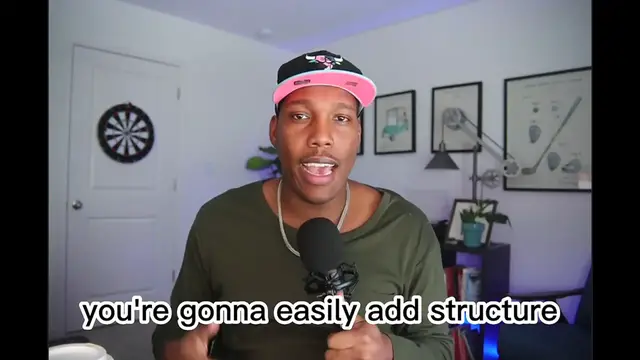
Looking for a job? Behavioral questions are some of the most common in job interviews. But don't worry, with the Star Method you can ace them every time! Watch this video to learn how to answer any behavioral question like a pro.
You'll be able to walk into your interview with confidence and know that you're going to get the job!
//Creative Commons Attribution Licence video (Reuse allowed)
Show More Show Less View Video Transcript
0:00
In this video, I'm going to show you how to finesse those behavioral questions that you get at the interview
0:05
By using this four-step method, you're going to easily add structure and impress your interviewer
0:10
This work. I'm going to get this work. I'm going to be ready to get this work. Get this work. Get this work. I'm going to get this work
0:15
Hey, what's going on? Shelton Banks here, aka Mr. Get This Work
0:19
So, in this video, I'm going to teach you some tips and tricks on how to answer those behavioral questions that you get at the interview
0:26
A lot of people get tripped up on behavioral type of questions because they don't know how to answer the question properly
0:31
Sometimes, they even forget to answer the question. By using this four-step method, the STAR method, you're going to be able to easily organize your thoughts and look like a pro at the interview
0:40
So, the question that we're going to answer today, tell me about a time you failed at something
0:44
Before I answer the question, we got to set some ground rules first. Round rule number one, be conversational
0:49
Your answers shouldn't take longer than two to three minutes. In fact, if they do, you're more than likely rambling and you're probably not even answering the question
0:58
In fact, you want to be able to throw the conversation back to the interviewer so that they can then ask you questions or make statements about the story that they just heard
1:07
Round rule number two, you need to know the script. The script being your resume
1:12
There's no reason why you should be surprised by any question that the interviewer may throw you in regards to behavioral questions
1:20
which may mean you need to spend some time writing down some of the answers to the most frequently asked questions at interviews so that you can have in mind at least an outline of what you're going to say or at least the story that you're going to use or the instance that you're going to use
1:36
Three, do the research. Most employers are going to be looking for three types of behaviors on the interview
1:41
The first one, skills and experiences that are job specific. Competencies related to interacting with others
1:48
Competencies related to how you handle yourself. So the first one, skills and experiences that are job specific are generally work specific skills like carpentry or counting or sales
2:00
Competencies related to interacting with others are like teamwork, communicating, coaching, competencies, competencies related to how you handle yourself
2:10
I'm more or less like what motivates you. Are you punctual work ethic
2:14
Cool thing is, is that those competencies in which they're looking for will be on the job description and probably found all throughout their website, which means you need to do the research because it'll probably give you a leg up to know which type of questions that they're more than likely to ask at the interview
2:29
So let's talk about how to answer these behavioral type of questions. So not everybody always talks about using the star method, but let's actually break down what the star method is and what it looks like or what it sounds like
2:43
So if you're not familiar with star, it's an acronym standing for situation, task, action, result
2:49
So the S situation is you describing the time and the place in which this story is occurring
2:56
It should probably take no longer than 15 seconds. Honestly, this is the part that most people forget, but you need to pinpoint exactly where in this timeline on your resume that this story is taking place
3:09
Whether you were a greeter at Walmart or a cashier at Starbucks, the task is star, relatively simple
3:15
Describe the task that you were required to do, that you were required to do
3:19
Not everybody else, not the team. You want to talk about you specific
3:23
The A stands for action. So then after you describe the task or whatever goal that you were given or that you set, you then want to talk about the action that you took
3:34
You alone. You don't want to say they, them, we. You want to talk specific to you
3:40
Action part of the story is usually where you want to be able to help whoever's interviewing you to draw the conclusion that you are either competent enough or whatever competency they're looking for
3:51
The action part of the story more than likely is going to be the longest part of your story and should probably last around 30 to 60 seconds
3:59
And you drive it home with the R or the result. You want to make sure that you let the interviewer know that based on whatever course of action that you took, here was the results that came from it
4:11
And again, these results came to you. Not everybody else. Let's give you a sound bite
4:16
Here goes. Tell me about a time you failed at something. So I used to be a personal banker at JP Morgan Chase
4:23
It was the one time that my manager gave me a goal on Friday to open it up 10 checking accounts by the following Friday
4:30
So what I end up doing is I pulled the list of customers that didn't have checking accounts
4:34
They only had savings accounts and credit cards and I called and emailed those customers on Friday to schedule appointments for Monday, Tuesday and Wednesday of the following week
4:44
Based on my efforts. I was able to reach 12 people. I said 12 appointments for the following week and between Monday, Tuesday and Wednesday, six of those customers came in
4:54
But unfortunately, six of those customers fell off and ghosted me. On Thursday, I tried my best to get some last-minute appointments
5:03
I was only able to get two and unfortunately on Friday of the following week
5:08
I was able only able to open up eight checking accounts and I missed my goal by two
5:13
And so what I end up doing, you know, I asked my manager, what could I have done better
5:17
And she told me that I probably needed to create a bigger list of customers to call and schedule more appointments than 12 goal was 10
5:27
So what I end up doing, I end up having the same goal the following week
5:30
And so I actually made a bigger list of customers the next week
5:35
I end up making a list of a hundred customers and I end up setting 25 appointments another 25 appointments that I said the following week
5:43
I actually hit the goal to follow a week and exceeded it actually of setting and opening up 12 checking accounts the week after this taught me that I probably don't need to play it as close and that you probably need a little bit of a cushion
5:56
Just in case of the unexpected heard my situation. I grabbed JP Morgan chase task
6:01
What manager gave me a goal to open up 10 checking accounts heard the action I took to open up those 10 checking accounts
6:07
You heard when I failed her half a nest my way out of the fail
6:11
How did I do like videos like this? Make sure you hit the subscribe button struggling to figure out what type of questions that they're going to ask you at the interview
6:18
or want to learn more about how you can get into Tech sales. Make sure you head over to rework training.org to learn more about how we're helping people get this work
Fun & Trivia
Fun Tests & Silly Surveys
Jobs & Education
Jobs
Career Resources & Planning