Up next in 10

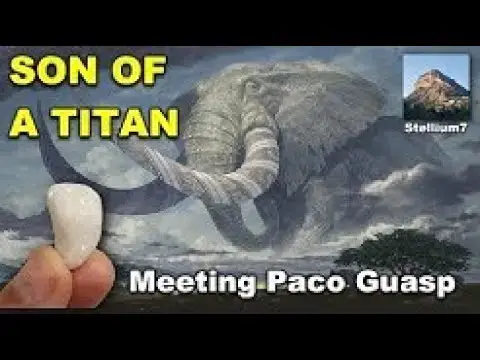
Versione originale del 2 apr 2021: SON OF A TITAN - Meeting Paco Guasp
dal canale di Stellium7 https://www.youtube.com/watch?v=aozGvK5__xE
Sottotitolato stampato in italiano e con sottotitoli di varie altre lingue in automatico
Puoi supportarmi con PayPal https://www.paypal.com/donate?hosted_button_id=U32RA23ENCG9L
Una rivisitazione del mio recente incontro con il figlio del leggendario cardiologo Francisco (Paco) Torrent Guasp, che è stato lo scopritore della banda miocardico-ventricolare e della natura elicoidale (spirale) del cuore. Questo è il seguito alle informazioni che ho trattato in questo video: https://www.youtube.com/watch?v=rH7D-9tCucw
Questo mondo è molto più di quanto avessimo mai immaginato! La geologia potrebbe effettivamente essere biologia? Sì! Benvenuti in BIOGEOLOGIA.
Link al video di Youtube recentemente bloccato:
Titani e organi pietrificati Parte II, Come e perché - in italiano http://tinyurl.com/3faecf5b e in inglese http://tinyurl.com/5yezzv3h
Parte I - Titani e organi pietrificati - Le scoperte http://tinyurl.com/jj368h9t
Intervista con SGT Report https://www.youtube.com/watch?v=GDDRDEqASn0&t=0s
Intervista a Sarah Westall http://tinyurl.com/5akuyefw
Show More Show Less View Video Transcript
0:14
foreign
0:29
[Music]
0:52
[Music]
1:04
[Music]
1:10
so
1:42
greetings this video will be a follow-up to my last video which i recorded as i
1:48
was eagerly awaiting a visit from the son of the great cardiologist francisco torrent gwasp also known as
1:55
paco gwasp was the discoverer of the myocardioventricular band
2:00
and is truly a legend not only because he was able to prove once and for all that the heart is not a four chamber pump as most of us
2:08
were taught in school but is helical and is structured and functions as a double spiraling vortex many
2:16
including myself consider his discoveries to be nothing short of monumental and firmly believe they should have
2:21
earned him a nobel prize if you'd like to know more about this incredible man i recommend watching the documentary about his life called
2:28
the helical heart don't be intimidated by the technical terminology because gwasps discoveries are all very
2:35
visual and you'll likely grasp the most important points without any technical expertise
2:40
in my video helical hearts petrified organs and synchronicities i discuss his
2:46
amazing discoveries their implications and also look at the ways in which they dovetail with those
2:51
of the great austrian scientist victor schauberger for those of you who were hoping for video footage of our
2:57
meeting or perhaps an audio recording i'm sorry to disappoint this was our first encounter
3:03
and i didn't want to risk an awkward or uncomfortable situation by asking to record him the last thing i
3:09
wanted to do was put him on guard especially given the unusual nature of the information i was about to share
3:15
with him paco arrived punctually and i greeted him at the door with a smile
3:20
but i also correctly anticipated that he'd be wearing a mask the virus paranoia here is palpable for
3:26
some and i didn't want to risk offending him so i did the same i let him know he was welcome to take it off if he liked but
3:32
he respectfully declined explaining that his mom and others in the family are elderly and at risk
3:38
it was frustrating not being able to see his face or his facial expression but our communication went well despite
3:44
the handicap his eyes were lively and full of expression and later when we exchanged text
3:49
messages i could see from his picture that he looked just like a younger version of his dad
3:55
the fact that our conversation took place in spanish initially made things a bit challenging for me fortunately in my work as a chiropractor
4:02
i regularly speak the language and use basic medical and anatomical terminology with my patients
4:08
i've never studied the language formally however so i was a bit nervous at the beginning of the conversation at one point i paused trying to find the
4:15
right words and paco switched to english to help but i could see he too was struggling and decided it'd be better for us to stick
4:21
with spanish thankfully the rest of the conversation went off without a hitch
4:27
paco seemed warm and genuinely enthusiastic to be meeting someone who was an admirer of his father's work
4:33
i spoke with him initially in the entryway wanting to lay a foundation so he could better understand what i was
4:39
about to show him and not immediately assume that i was crazy i began with the story of how my
4:44
research started i mentioned that a couple of years ago i came across some rather unconventional theories about
4:50
geology and more specifically petrogenesis the origins of stone
4:55
and i became fascinated by the idea that some of the stones we see may actually be biological in origin
5:01
i made it clear to him i wasn't referring to the widely accepted geological narrative that tells us that
5:06
the remains of dead creatures come to rest at the bottom of the sea floor and are compressed under great
5:12
pressure for millions of years the compressed matter forms sedimentary layers which are then pushed upward by
5:19
tectonic activity and break off into ever smaller chunks which are smoothed and shaped by
5:24
chemical processes wind water and abrasion to the best of my knowledge
5:29
this would be the predominant explanation given by geologists to explain the various features of the stones that i have found and presented
5:37
i told paco i didn't believe this to be an accurate explanation for the findings i was about to show him
5:42
and that shortly i'd explain why i mentioned emerging alternative theories suggesting
5:48
that many of the rocks we see may actually be the remains of far more recently deceased creatures which could
5:54
have turned to stone in a geological blink of an eye likely due to some great cataclysm
6:01
lastly before opening the door to show him my collection i requested he keep an open mind
6:06
reminding him of his own father's challenges with established narratives and i told him that the reason i had
6:12
invited him was because i believed that there were overlaps literally with his own father's
6:17
discoveries how many times throughout history have innovative ideas been cast out or
6:23
branded ludicrous when seen from within the context of a flawed paradigm
6:28
gwasp was the quintessential lone wolf working over 20 years on his own dissecting
6:34
thousands of hearts of numerous species in his spare time at his family medical practice just a
6:39
stone's throw from here for decades his work was rejected by cardiologists and in some cases he was mocked for
6:46
daring to challenge the prevailing models regarding the function and anatomy of the heart paco nodded
6:53
agreeing that his father had indeed been ignored and even ridiculed in spite of the irrefutable
6:58
empirical evidence he had provided one spanish cardiologist in particular was
7:04
seemingly ever present with negative comments regularly proclaiming his father's ideas to be
7:10
ridiculous i mentioned in my last video that i considered pacotorent gwasp
7:16
to be the person who taught humankind more about the true structure and function of the heart
7:22
than anyone else in history but he was also forced to deal with trolls
7:27
isn't it ironic that the trolls are the first to point the finger claiming pseudoscience without any
7:33
investigation they grab the moral high ground prop themselves up with logical fallacies and
7:39
claim we must protect the herd from these dangerous ideas this is heresy while still in the
7:46
hallway i touch briefly on roger spurs theories about mud fossils and the idea that
7:52
fossilization given the right conditions can occur far more rapidly than previously believed roger's theory
7:59
offers a plausible answer to the question how could soft tissue petrify without undergoing
8:05
decay the answer is that when the flesh is surrounded by mud it creates an anaerobic environment
8:12
which means lacking oxygen wherein the bacteria and the larvae which would normally eat away at the
8:18
tissue are unable to thrive in this process known as paramineralization the minerals in the
8:24
surrounding earth slowly work their way into the tissues as the liquids and gases work their way
8:29
out petrified trees are a typical example of this phenomenon but we're told that it occurs over many
8:36
millions of years of time paco told me that he was aware that
8:41
examples of non-skeletal soft tissue petrification existed in the fossil record
8:46
but like most he understood them to be very rare i explained that if some of these
8:51
alternative theories are indeed correct then the period of time required to create them may be much
8:57
much shorter meaning that such fossils may be far more common than we previously believed
9:03
and that we have collectively lacked the eyes to see them finally i told him that i didn't believe
9:09
mud fossil theory could sufficiently explain the findings i was about to show him and that i had theories of my own that
9:15
i'd share with him shortly as i opened the door to lead him into the collection i expressed my
9:21
frustration with many of the videos covering this subject in which 100 certain claims were made about
9:28
nondescript stones often recorded with shaky and blurry video my take on things from early on was that
9:36
if there was truth to these theories then it should be easy to find rocks exhibiting undeniable anatomical features shining
9:44
examples of what i have now taken to calling biogeology in my helical hearts video i shared the
9:50
discovery i made as i watched gwasp unravel a heart revealing the myoventricular band
9:57
as he rolled the heart back up it forms folds known as sulcuses watch as he does this
10:02
and look at the lines see the overlaps of the muscles as he
10:08
folds it back up these are the places that the muscle fibers meet
10:13
and form the heart's chambers i had an epiphany as i saw this the first time
10:18
realizing i'd seen similar lines in those exact locations and many of the heart stones i'd already gathered
10:24
it was a reoccurring feature i had missed and i discovered it thanks to the work of gwasp
10:30
more recently i recognized that a number of the rocks also exhibited a spiral shape at the base the result of a
10:37
spiral contraction of the fibers extremely specific and not easily explained away as the result of some
10:44
random erosion i welcomed paco into the main room and i can only imagine what his initial
10:49
thoughts might have been he seemed fine as he took in the strange sight of more than a hundred stones
10:54
all different sizes laid out on tables across the room and thankfully he didn't appear to be
11:00
nervously making a move for the exit not wanting to waste any time i went straight to the best examples
11:07
several of the largest stones show a large number of anatomical correlations and i'd hoped he'd recognize this
11:13
immediately i began pointing out the most common anatomical features
11:18
such as openings for the pulmonary arteries the isthmus separating them the aorta
11:24
and vena cava openings a tapering in of the sides of the ventricles
11:30
a flattening of the top sulcus lines and of course the overall harp shapes
11:35
these themes are the most common and easily spotted once you've learned the basic heart anatomy
11:41
as he was already aware heart shapes can vary widely depending on the species i continue to show them around rather
11:48
than think of these features as coincidences i think it's far more helpful to see them as coincidences
11:55
meaning that they coincide not because of random chance but because they are in actuality two
12:02
different states of the same thing namely a petrified versus non-petrified
12:07
heart i'm curious to know what someone who is a master of understanding and
12:12
calculating odds a bookie from vegas perhaps might have to say about these supposed
12:18
coincidences i suspect the odds of finding so many stones exhibiting such a high
12:24
number of specific anatomical features must be astronomical given that a great many of the stones i
12:30
have found also exhibit blood vessel openings in the right places and internal chambers as well
12:36
it greatly increases the odds against finding such a rock while the mathematics involved in
12:41
calculating such a thing is way beyond my capabilities the empirical evidence suggests that
12:47
such an analysis would definitely be warranted my good friend victor suggests that what
12:52
i've begun to provide are the humble beginnings of what in mathematics would be known as a proof based on logical
13:00
consistency how many coincidences does it take before one must acknowledge a
13:05
preponderance of evidence the fact that the vast majority of these stones are also
13:10
continuous smooth and unbroken offers further support to this idea
13:15
because the smallest chip or fragment in the stones is immediately recognizable making it clear that they are not
13:21
fragments broken away from larger structures in my broken hearts tell tales video i
13:27
break several of them open in the field to reveal not only the chambers but what appears to be petrified blood
13:34
okay back to my meeting with gwasp after a few minutes pointing out to him all the numerous anatomical features
13:41
found in the stones i mentioned that my theory is that the harp shape occurs
13:46
so frequently because like all the muscles in the body the heart goes into contraction upon death
13:52
this is known as rigor mortis or postmortem rigidity this contraction in the heart causes the
13:58
ventricles to curve inward the base of the heart to twist and the back side will either
14:04
flatten or curve inward you can see this in the video the effects peak at approximately 12
14:10
hours after death and then subside when the tissue breakdown begins to occur paco listened intently to what i had to
14:17
say but soon found fault with the idea of the heart remaining in a contracted state following death
14:23
he spotted the anatomy book i'd placed on the chair which i'd opened to the heart pages and begin to clarify that the heart does
14:29
not remain in contraction when dead but as can be seen in the video of his father performing a dissection
14:36
the heart is rather soft and malleable once removed from the body in paco's mind this meant that it was
14:41
impossible that it would take on the form that i was describing i hadn't yet explained to him that i
14:47
suspected that the petrification process likely occurs very quickly perhaps in as
14:52
little as hours and most likely involves either extreme heat and pressure or some sort of a
14:58
monumental electrical or plasma event anyone who's ever used a tens machine or been hit by
15:04
a taser knows what electricity does to muscle fibers i asked paco if he was familiar with the
15:10
works of victor schauberger and how they related to his father's work but to my surprise he'd not heard
15:15
of the austrian scientist i wonder if his father came across schauburger or learned of his many
15:20
discoveries the overlaps between their work are surely many i also mentioned the works
15:26
of jira lama sagato the early 1800s scientist who held the secret to the petrification of
15:32
all kinds of flesh while the secret of his technique died with him the irrefutable proof of
15:38
his knowledge can be found in museums in italy to this day i've also cited
15:43
several other examples of rapid petrification which i go into in detail in the petrified titans
15:48
and organs parts 1 and 2 videos i listened with great pleasure as paco
15:54
went on to tell me more about his father's discoveries though he himself is not a medical doctor given his heritage i wasn't at
16:01
all surprised to see that he possessed a solid knowledge of heart anatomy especially as it pertained to his
16:06
father's discoveries he told me stories about his father's research and all the years he worked on his own
16:12
dissecting thousands of hearts attempting to solve the conundrum of how such a little pump could possibly supply
16:19
the body's estimated sixty 000 miles of blood vessels he told me of the difficulty his father had
16:25
already as a student at the university of salamanca in accepting the prevailing cardiological paradigm
16:31
that such a tiny pump could accomplish so much pushing our viscous blood through a vast
16:37
array of ever-narrowing blood vessels was a model that made no sense to him it took more than 20 years before the
16:43
profession finally caught up to him recognizing his discoveries and contributions
16:48
the high point of his career came when he was asked to perform a dissection on stage in madrid for a room full of his
16:55
peers as he finished you could have heard a pin drop there was a prolonged
17:00
uncomfortable silence but the ice was finally broken by the great american cardiologist gerald buckberg
17:07
he stood and began clapping enthusiastically the room broke into a thunderous
17:12
applause and standing ovations his work had finally been recognized by experts in the field
17:18
of cardiology that the event occurred in his homeland was the icing on the cake buckberg was
17:24
the first prominent cardiologist to finally recognize the genius of gwasps discoveries and promote his ideas
17:31
you know i learned about the ventricular band when i visited barcelona about a year and a half ago
17:36
and i went over to talk to some colleagues about a new operation we're doing for heart failure
17:42
and they suggested that there was something in barcelona that had dissected the heart out and had some ideas about cardiac anatomy and
17:48
i'd never heard of dr francisco torrent wasp and he and i met and the first thing he
17:55
told me is that my concept of how the heart was formed was not accurate then he told me that the
18:00
hearts way it's the way it has its conduction that i understood is probably not accurate in fact the heart's a rope and i think
18:07
that i heard something like that and i said that's really amazing i can't believe it but he then showed us exactly how the
18:14
heart was formed and had reduced it in its simplest possible category and i said that's truly amazing because he had
18:20
dissected segments of heart and he showed us that his concept of a rope was was very appropriate but here in spain
18:27
gwasps ideas for decades had been rejected by his fellow cardiologists
18:33
it was the perfect example of the classic phrase no man is a prophet in his own land the two
18:39
apical segments loop in a helical fashion forming the apex of the heart
18:44
which reveals itself to belong to the left ventricle when i looked at the heart the first
18:50
time i saw a circumferential basal loop and then i saw a descending limb in an ascending limb
18:56
and they curled around each other had a helix and had a vortex at the tip of the ventricle and the angles at which they
19:02
go was about 60 degrees 60 degrees going down and 60 degrees going up and they cross each other in that way
19:08
and for years people had wondered why that happened in the sept and why the heart looked that way
19:13
i realized this was really a spiral and i began to think about spirals and i
19:18
began to understand that the spirals are almost the master plan of nature in terms of
19:24
structure and in terms of rhythm and if you begin to look at spirals if
19:30
you look at a spiral simply and pick the middle of the spiral up you'd form a helix of course the heart is a helix using a
19:36
unique imaging technique to examine the architecture of the heart a cow heart is first inflated with
19:43
compressed air then in a series of x-ray images looking down on the heart
19:49
the helical structure of the muscular band is clearly revealed as we move down into the apex of the left ventricle
19:57
once again notice how the loops of the band turn in opposition two reciprocal
20:03
spirals merging at the apex the spiraling helical structure of the ventricular
20:10
band is a pattern found throughout nature you can see it in the patterns of
20:15
seashells in the growing flower buds of a daisy
20:21
a ram's horn gets its strength from the spirals within spirals of its architecture
20:27
the spiral is a common formation at every scale of nature from the dna molecule to global weather
20:35
systems all the way up to the stars you see this correlation between a
20:42
spiral formation in nature which is common in plants shells fish
20:48
heaven all different areas and the heart seems to be one part of that spiral and so the design of the ventricle seems
20:55
to be a natural design it is it's no different than many of the other spirals in nature it's just that we just discovered it
21:01
called a mugga scan isotopes along the heart are excited and change colors when
21:06
the heart muscle contracts with an understanding of the loops of the ventricular band
21:12
it is possible to follow the changing isotopes and visualize the wave of contraction that contradicts
21:18
conventional knowledge the recognized sequence is from apex to base
21:24
yet this method shows progression in an opposite direction from base to apex we've been
21:30
taught in the past that the heart constricted and dilated and we learned that from william harvey and it turns out that the spiral formation of the
21:37
heart makes the heart twist and untwist and when it twists and untwists the twisting
21:42
is for ejection and the untwisting is for emptying so once you understand that formation you begin to understand
21:49
what you see on a on an example of how the heart works and in general we have in the past looked at the cavity
21:56
of the heart but not the walls and with the magnetic resonance imaging we began to look at the walls
22:02
and suddenly you understand that the heart has an apex which stays still and the way it works is that it it it
22:09
twists and thickens and untwists and lengthens so our concept of the heart
22:15
filling and emptying by constriction and dilatation as a transverse segment factor doesn't doesn't really
22:21
occur in the heart what i always learned in the past was that the heart filled from the atrium to
22:27
the ventricle by the pressure that that was different between the age from the ventricle and this was taught to me
22:32
over about 350 years because this is what william harvey who designed the circulation taught us and
22:38
well if you look at the mri you see two things that are quite fascinating first you see it constrict and shorten
22:44
and thicken to eject and then you see it change its orientation and untwist
22:50
and it lengthens and the cavity of the heart changes its size before the valves open and because of that change in the size
22:57
of the cavity compared to the blood within it that is the blood's the same you create suction and with the suction
23:03
you can watch the blood on the mri get sucked into the ventricle and you can see that 90 percent of filling occurs
23:09
during that initial phase even though the pressure difference is tiny it's not a pressure phenomenon it's a suction phenomena so with
23:15
understanding the nature of how the loops twist and untwist
23:21
you understand two things the first thing you understand is how the heart ejects
23:26
and fills by suction and the second thing you realize if that anatomy is changed as we can also see an
23:32
mri where the ventricle becomes spherical the capacity to twist and eject
23:38
and untwist and suck is lost so the patient heart failure can't twist very well and therefore he
23:44
can't increase his output of his heart to be able to work and he gets tired frequently and more importantly it can't
23:51
untwist to suck the blood back if it doesn't untwist to take the blood back it only can fill by pressure and
23:56
that's exactly what harvey said it did but it only does that when it fails as a predominant mechanism when it fills
24:02
by pressure the pressure in the heart increases the pressure in the lungs increase and the patient has pulmonary congestion or his lungs get
24:08
full of fluid and he can't breathe and and the symptoms are related to the inability of the heart to do its
24:14
standard twisting and untwisting which the spirals allow us to see observe the wave of contraction as it
24:21
moves across the band just as torrent wasp had theorized
24:26
many call it the cardiac dance the twisting pulsing rhythms of the human
24:31
heart in motion now for the first time in history it can be understood as the sequential movement
24:38
of the muscular band starting just below the pulmonary artery and ending where the band touches the
24:44
aorta the helical course of the contraction continues with a vortex or figure eight
24:51
around the apex contraction of the ascendant segment
24:57
twists its fibers resulting in a clockwise rotation of the heart
25:03
active contraction wanes along the band as the wave progresses the spiral formation of the apical loop
25:10
produces a twisting effect causing a counterclockwise rotation of the heart
25:15
including the apex which remains in a fixed position
25:20
the shortening and twisting of the apical loop squeezes the ventricular cavity to raise
25:25
pressure and opens the aortic valve to eject blood to the body
25:32
the helical course the torrent wasp myocardial ventricular band
25:37
the heart unraveled will change forever the way we view it
25:42
such a simple thing like a rope like a muscular band twisted like a rope that describes
25:51
a helicoid in this space the limitation to cavities the right cavity in the particular cavity this is
25:57
so simple [Music]
26:04
sadly that same night following his greatest success gwasp returned to his hotel room in
26:10
madrid and died of heart failure i mentioned to his son that several people in the common threads of the
26:15
video that i made about his father were suspicious of foul play he said he too had heard such rumors but did not
26:22
give them any credence i'm sorry to say i don't recall the reasons he gave for his certainty but if gwasp's own son
26:28
is convinced that there was no funny business then it's good enough for me worried we might run out of time i
26:34
steered our conversation back onto the subject of the stones and i began to lay out my ideas on how i thought
26:40
these findings could have come about the most obvious questions being how could these organs
26:45
have turned to stone in the first place and why would they be found in such abundance completely separate from the bodies that
26:52
originally housed them my attempts to answer these questions are presented in the video petrified
26:58
titans and organs part 2 the how and why in this first meeting
27:03
with paco i chose not to mention any of the research i conducted on the mountain montgo
27:08
i felt the things i was suggesting to him were already wild enough and if i brought up my research and
27:14
conclusions about the mountain he would most certainly have concluded i was off my
27:19
those of you who are new to the channel may not know but prior to presenting these hearthstone discoveries i already
27:26
performed what i believe to be the most thorough anatomical and histological analysis of a titan
27:31
to date to see the research check out my unveiling and titan playlist
27:37
the first video was always intended as an intro to these ideas and an outline of the research to follow the
27:44
body of the findings are presented in parts two through five with a part six soon to come critics have and will
27:52
accuse me of suffering from an overactive imagination others say i'm a victim of the dunning-kruger effect
27:59
or that i'm experiencing apophenia a tendency to see connections and patterns between
28:04
unrelated or random things in their eyes i know just enough about this stuff to
28:10
fool myself into thinking that i'm an expert and have intentionally or unintentionally ignored information that
28:16
conflicts with my preconceived notions the truth is i don't consider myself an expert at all
28:21
i'm just a curious person who observes nature and is willing to ask questions we've been taught to assume are absurd
28:28
a more appropriate title might be a cross-disciplinary field researcher who believes that empirical observations
28:36
trump theoretical imaginings having said that if my conclusions are someday proven
28:42
correct then these videos may serve as an excellent antidote to expertise are you suffering from
28:50
expertise do you find yourself casting judgment on subjects you've never investigated
28:55
do you know increasingly more and more about less and less then try paradigm breaker today side
29:02
effects may include perceiving the world with new eyes increased humility and a sudden willingness to consider possibilities
29:09
that most would never dream of
29:15
i've already outed myself as looney tunes on multiple occasions and i certainly don't imagine that these ideas
29:20
will be adopted by the mainstream anytime soon and yes in a room full of random
29:26
people i'm the guy that believes some mountains are elephants and that many of the stones we see are petrified organs
29:33
so take everything i say with a grain of salt
29:39
while i've never been a follower of a specific religion i do believe in a creator and that god's fingerprint can be seen
29:45
throughout all of creation it's the vital force that keeps us alive through every heartbeat of our lives
29:51
and our hearts little perpetual motion machines are spinning from the first weeks following
29:56
conception to our final breath while i've not approached this research from a religious perspective
30:02
i can't help but admit that this has all begun to seem pretty mythical perhaps even biblical
30:08
the two findings both montgo and the hearthstones while very different from each other in scale
30:15
are unified in the understanding that if either or both are true then they must have been caused by some
30:21
grand scale cataclysm could it be that the stories of medusa were based on
30:27
actual events maybe this mythological character and others like cthulhu are symbolic reminders of grand scale
30:34
electrical or plasma discharges who knows
30:39
synchronicities have abounded throughout the course of these investigations i see them as little nudges from god
30:46
one rather amusing one is that the name of the river which runs through this valley where i've found the majority of
30:52
these stones just happens to be known as the gata de gorgos river in english this translates as
30:59
gorgon's cat who are the gorgons well it just so happens that they were
31:05
three supernatural sisters one of them named medusa remember her
31:11
in the greek myth perseus cuts off her head and uses it to turn the kraken a titan to stone
31:19
i mean what are the odds i concluded my presentation for paco saving the largest
31:25
of the stones for last after showing it to him he shook his head eyebrows raised and conceded that
31:32
there were indeed an astonishing number of anatomical correlations he told me he found the theories
31:38
fascinating but he did not feel qualified to draw any conclusions and wondered how i thought he could be
31:44
of help to me at the beginning of the conversation i mentioned that i had hoped he might be
31:49
able to put me in touch with a cardiologist preferably someone near who was familiar with his father's work
31:56
someone with access to instrumentation for analysis and an open mind my hope was that a cardiologist would
32:03
more readily recognize the anatomy than any geologist would and if we're someone familiar with his
32:09
father's work they might be willing to consider these unusual theories and perhaps even assist in the research
32:14
he thought for a moment then explained that the cardiologists he knew were rather narrow in their thinking
32:21
focused on their specialties and in his opinion would not likely be open-minded enough to consider these
32:27
theories i wish i could tell you my meeting with him was an utter success and that it was
32:32
already leading to some sort of collaboration in a way it was a success as he seemed
32:38
open to the things i shared stayed longer than i anticipated and seemed to enjoy the conversation
32:45
we said our farewells bumped elbows and i promised to send him a link to the channel
32:50
and to the documentary about victor schauberger i don't really know what he thought
32:55
about the whole thing the communication went well but i'm sure the subject matter was not what he might have been anticipating
33:02
i sent a message the following day thanking him for the visit and for taking the time to listen to what i had to share i told him i hoped
33:09
he enjoyed the meeting and suggested grabbing a coffee someday when the cafes reopen
33:14
i could see the message was received but he didn't reply not wanting to be pushy i waited a few
33:20
days and then sent another message thanking him again and inquiring to see if he'd received the first message
33:26
a short time later he replied with one word received and a smiling emoji so what he may have
33:32
thought about it all beyond what i've already shared i i cannot say i was a bit disappointed he
33:37
didn't take the time to write anything more but c'est la vie my friend howard was thrilled that i'd
33:44
taken the initiative to contact him and told me not to worry you've planted seeds mike and someday
33:50
they'll grow and he'll realize what you've shared with him
33:55
well that's the story of my encounter with the son of a legend
34:01
i hope you've enjoyed the video and if you did please like share comment and subscribe
34:08
your comments make this all worthwhile so i hope you're all well take care
34:15
keep your heart soft they work better that way
34:37
so i found this one which is already broken you can see there and then i turned it
34:44
and look at what it revealed
34:49
and it doesn't come out but you can see if that piece was there
34:55
that's broken off which happened to reveal chambers
35:01
inside the rock that would have that same shape as so many of the other ones
35:56
foreign
36:53
you
Health Education & Medical Training
Health Foundations & Medical Research
Science
Other