Up next in 10



One of the wildest stories about the making of a Hollywood film ever.
Show More Show Less View Video Transcript
0:00
This is one of the wildest stories about the making of a Hollywood film ever
0:04
and many of you have probably never heard it before. In 1984, film librarian Merle Ray Harlan was charged with stealing 419 films
0:12
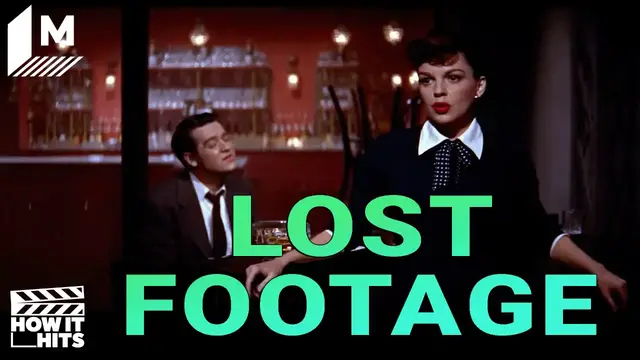
One scrap found in his vast collection was a missing scene from the 1954 film A Star Is Born
0:17
starring Judy Garland. So many stolen films that could have been lost to history
0:22
and so many more we don't even know are lost. Unfortunately, that loss still includes seven minutes of A Star Is Born
0:28
If you try to watch the entire, originally-screened cut of A Star is Born now, it's a pretty odd experience
0:34
About 41 minutes into the film, it briefly ceases to be a motion picture
0:39
instead suddenly consisting of still images like some avant-garde thing your Brooklyn boyfriend would drag you to see
0:45
And he's used your wonderful shape, huh? He'll sleep it off on the plane
0:52
It's odd. You see, only four missing minutes from A Star is Born were recovered from Merle Harlan
0:58
There are still seven minutes of the full cut of the movie that are presumably lost to time
1:03
resulting in a somewhat incomplete film. So, who stole those last seven minutes
1:08
Well, the people who steal everything beautiful from us, my darling. Capitalists
1:13
Back in the 50s, Hollywood was feeling a bit nervous about the growing popularity of television
1:18
so they were getting a little gimmicky. Originally A Star is Born was going to be a 3D movie Then it was decided it would be shot in something called Warner Super Scope to compete with the new hotness CinemaScope Then it was decided a week into filming that no actually let just shoot it in CinemaScope
1:33
because people like CinemaScope, and that'll make us more money. Between the studio constantly changing its mind about how to shoot the movie
1:39
and Judy Garland's erratic behavior that might have been due to her struggles with addiction, the movie sounds like it was hell to make
1:45
It blew past its production schedule, needed extensive reshoots, and ultimately cost over $5 million to produce
1:50
Warner Brothers' most expensive film to date. But after all the drama
1:54
A Star is Born was screened for critics and audiences in New York and L.A. and received rave reviews
1:59
Judy's performance was incredible. George Cukor's directing was sharp and evocative. The songs by Harold Arlen and Ira Gershwin could be instant classics
2:07
All that work was apparently worth it, resulting in a three-hour-long masterpiece
2:12
The issue? Movie theaters didn't want a three-hour-long anything, even if it was a masterpiece or whatever you nerds are calling it
2:18
In order to recoup the enormous costs of production, Warner Brothers wanted the movie to run multiple times a day, and a three-hour movie limited the number of showings
2:26
Without input from director George Cukor, Jack Warner, one of the bros, sliced 27 minutes out of the movie, including two musical members
2:34
The final product went to wide release, and audiences weren't thrilled. It barely earned back its budget, and while the film was nominated for six Oscars, it received none
2:43
A sad end to a sad story. Until... Fast forward nearly 30 years
2:49
The Oscars are doing a retrospective for Ira Gershwin and they include one of his numbers from A Star is Born People are suddenly interested in the movie again and want to see the original version
3:04
But there's a big problem. When Jack Warner sliced it up, the studio destroyed the original
3:09
negatives. So in 1981, film historian Ronald Haver got the blessing of Academy President
3:14
Faye Kanin, who convinced the board chairman for Warner Brothers to let Ronald dig through
3:18
the Warner Vault to see if, even by accident, some of the scrap scenes survived. He was able
3:23
to find alternate takes of the two missing numbers, as well as a few other moments, but there were
3:28
entire scenes with shots missing that were simply impossible to recover. But rather than give up on
3:33
the project, Ronald and Faye decided to use production stills to patchwork over the missing
3:38
bits. Better than nothing, but as mentioned, it still feels off. It's still a beloved rumination
3:44
on Hollywood, a vision of Judy Garland at her finest, but we'll never see what the movie could
3:48
have, what it should have looked like. So here's a question for you that might feel a little out of
3:54
the blue. Is this a good use case for AI? Full disclosure, I myself am opposed on moral grounds
4:00
to the use of AI in cinema and, frankly, everywhere. It's resource-hungry, it isn't additive to the
4:06
creative process, considering it is incapable of generating genuinely new ideas. But with that in
4:11
mind, would it be acceptable to use AI here, in this circumstance, to try to get us closer
4:16
to the original vision of the filmmakers? In honor of its director and star who did their damnedest to make something unique and beautiful and were sabotaged by studio meddling Well I still going to say no
4:28
And the reason is that the movie is incomplete, yes, but its incompleteness is now part of its story
4:35
As Faye Kanin put it in a 1983 New York Times piece about the restoration
4:39
this will dramatize better than anything else what a violation those cuts really made
4:43
We sort of take it for granted that someone, somewhere, is preserving all of these movies
4:48
But a study done in 2013 by the Library of Congress revealed that only 14% of silent films produced in America from 1912 to 1929
4:57
still exist in their entirety. There are thousands of movies we'll never see
5:02
because at the time, no one thought to preserve them, or couldn't afford to, or could afford to
5:08
but thought it was a waste of money. If not for folks like Ronald Haver, who cares so deeply about cinema that they work long hours in an attempt to preserve it
5:15
there would be large swaths of our history that would be lost to time. If we tried to paper over this with AI
5:21
we would be denying that real people screwed up for a little extra money, and that real people tried to fix it through passion and perseverance
5:28
This movie, as originally screened, was about the madness of the Hollywood machine
5:33
And now, in its current form, it's even more so about that
5:37
by its ability to illustrate what happens if we don't take pains to preserve this art form
5:43
Thank you very much for watching. If you have any comments, please leave them below and don't forget to like and subscribe
#Celebrities & Entertainment News
#Classic Films
#Drama Films