Up next in 10



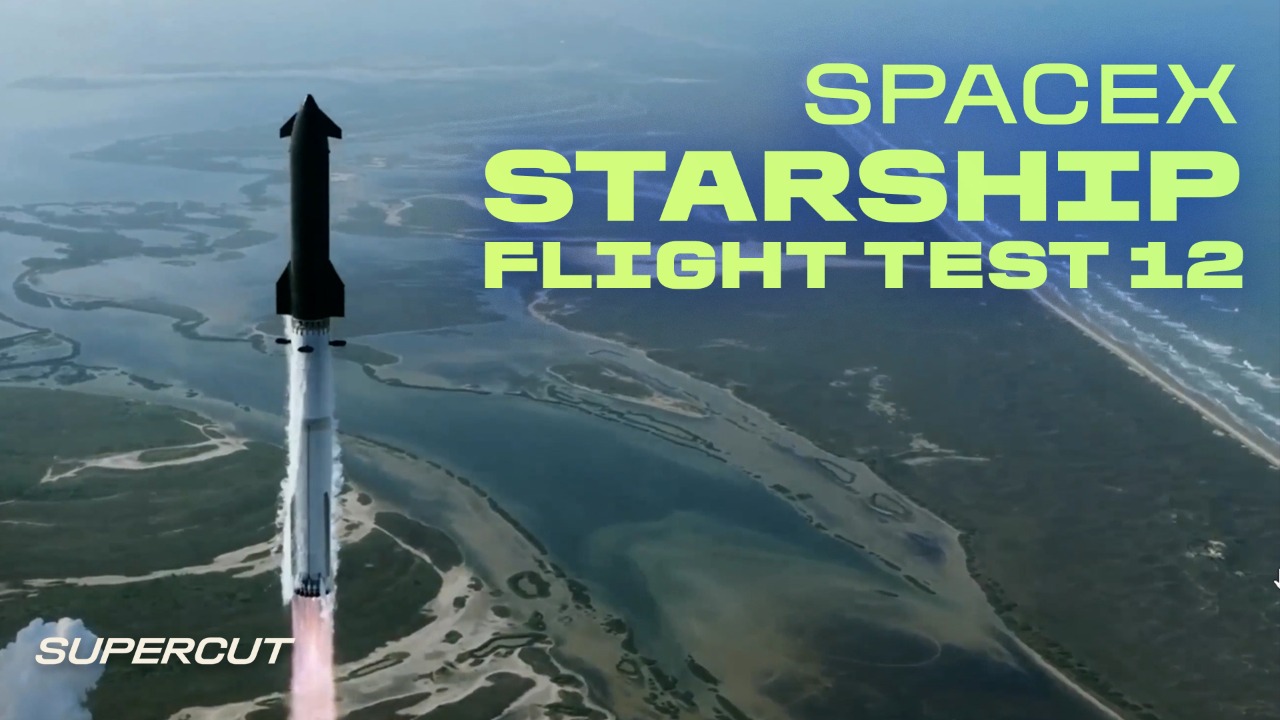
Starship’s latest test delivered another dramatic finish.
Show More Show Less View Video Transcript
0:00
We've made extensive upgrades across every single system
0:03
Start with the big picture because Starship still very, very big. Just over 407 feet tall, fully stacked, a little bit taller than version two
0:13
With that extra stretch, we can carry even more propellant, but big rocket
0:18
The bottom half is our super heavy booster, and there are some pretty visible structural changes on the outside
0:25
We'll jump in. You've got version 3 on the left there, version 2 on the right at the very top
0:31
We've changed from a one-time-use hot stage adapter that used to pop off
0:35
to one that's fully integrated for reusability. And Starship's Raptors are actually going to be igniting directly on top of the booster's fuel tank
0:43
The fuel tank pressure itself and then a non-structural layer of steel
0:47
it's what's protecting the top of that booster when we do hot stage separation
0:52
Moving down a little bit, we went from four grid fins to three. We made them 50% bigger and higher strength
0:58
Just a reminder, that's what Booster is using to kind of steer itself as it's flying back for a catch
1:04
We're also now going to use those grid fins for lift and catch itself
1:08
We zoom in a little bit, and you can see new catch points now on those grid fin structures
1:15
Moving inside the rocket, we redesigned the fuel transfer tube. This is the really big tube inside the rocket that's moving all of that liquid methane down to the Super Heavy's 33 Raptor engines
1:26
It's going to help us flip faster, and we can now start up all of the engines simultaneously
1:31
This thing is big. It's about the size of a Falcon 9 first stage, which gives us the fun realization that we kind of put a rocket inside of our rocket
1:41
The very bottom of the booster looks very different. You've got those new Raptor 3 engines that enabled us to delete the bulky heat shields, the engine shrouds that we had on the previous generation
1:52
And then all of the propulsion avionics hardware for those engines are super tightly integrated now and protected by much slimmer shielding
2:01
Move on up, second stage. This version of Starship is designed to carry massive orbital payloads
2:07
We're talking up to 100 metric tons to Earth orbit, the Moon, and Mars
2:12
The biggest changes are pretty much all under the hood. We gave the propulsion system a clean sheet redesign
2:18
increased the propellant tank volume, and improved our reaction control system, our steering, while we're on orbit
2:24
When we X-ray inside, the PEZ dispenser is now supercharged, a little bit of turbo
2:29
and that's going to allow us to increase the deploy speed for each of those satellites
2:33
Today, we're actually flying the heaviest payload we've ever carried on Starship, but eventually we're going to launch with up to 60 of those Starlink V3 satellites
2:41
Just below that, just below the payload bay, and also down on the aft part of the ship, we've added new docking ports
2:47
That going to enable us to link up in orbit between two starships do propellant transfer We also modified that main connection point where we load propellants into the vehicle for those future prop transfer missions Five four three ignition
3:15
Pitching downrange. Booster Raptor, chamber pressure nominal
3:37
Alright, we are T plus 30 seconds into flight. See a 33 out of 33 Raptor 3 engines on Booster V3
3:46
Ascending over the Gulf now, coming up on maximum aerodynamic pressure. Booster in ship, avionics power, telemetry nominal
3:56
Systems looking good. We're just passing through the period of maximum dynamic pressure
4:07
A little over a minute into flight now. Vibrations chilling out here at Star Factory as we continue to watch Starship Flight 12 arc out over the Gulf
4:19
The next major thing coming up is going to be hot staging. Booster props
4:24
Reminder, we do what's our version of MECO. Most engines cut off, so we're going to shut down all but five of the Raptor engines on the booster
4:36
And then after that happens, we're going to ignite the six engines on ship while it is still attached
4:44
We have clamps that hold the two together. Those are going to retract inside of that hot stage ring, kind of protect them
4:53
Looks like we had one of the engines go out, still flying on 32 of the Raptor engines
4:59
But again, once we get the hot staging, those six engines on the ship are going to ignite
5:05
We're going to do it in a little bit different of a sequence on version 3
5:12
Essentially, those three RVAC engines will ignite first. Almost immediately after, just one of those central engines is going to ignite
5:20
and that's going to give the booster a bit of a kick, sending it in a known direction
5:25
followed shortly after by the other two. We're through Miko. Separation
5:42
There you go. Successful hot staging separation. We are not seeing as many booster engines ignite as we expected for boostback but we are seeing six good engines lit on ship
5:59
It looks like we just had an early boostback shutdown. Again, a reminder, the booster was planned to essentially head into the Gulf for a splashdown, but it has shut its engines down early on into boostback
6:12
And we just see one of the RVACs, so we're now running on five engines on ship
6:27
We do have engine out capabilities, so it's going to continue into its ascent
6:34
You got booster on the left there, ship on the right. Ship avionics power and telemetry nominal
6:42
planning on bringing the booster back for this flight as this was the very first time
6:55
All right, so about three minutes, 50 seconds into today's flight. Just a reminder, the ship planned to burn its engines for about eight minutes and change
7:07
about 8 minutes and 11 seconds was our planned timeline for today
7:12
That could shift slightly as we do have one engine out running on one fewer RVACs
7:26
Again, continuing to watch. So booster did not complete its boost back burn
7:30
We would not see all of the engines ignite. That we expected
7:34
are continuing to get some views from it, though. That's going to make a splashdown somewhere in the Gulf
7:41
Reminder, we clear air, sea space, everything for these launches. We have views here from the booster coming back down
7:52
making its way into the Gulf. Pretty cool to see. We have healthy chamber pressures on five out of six shipwreptor engines
8:00
Great news there for Starship. Once again, we were not going to bring the super heavy booster back to the tower
8:15
We were planning on having it land in the Gulf. And it looks like the booster ended its mission there in the Gulf
8:29
but we've got a ship still flying. Great to see that. Still have five out of six engines there on S39
8:35
And the camera is going to attempt to look back and image Starship's heat shield
8:38
as it flies slowly away from the vehicle. And there it goes Let there be light
8:56
Yeah, it almost looks like the light is just shining right at us there. If you couldn't tell, we're pretty excited
9:09
Yeah. It is always sunny in space. Always sunny in space. and that looks like an empty payload bay
9:17
Sure does. That's exactly what you want to see there. That's great. So, yeah, with payload deploy complete
9:23
oh, you can see the door closing there. All right. There we go
9:27
So, yeah, with payload deploy complete, Starship will now close. And this is a view from one of those satellites
9:39
As we deployed, it looks like this was from the last one out. Flashlight turning on
9:43
taking a look at Starship in space. The way this system is set up is the satellites are essentially recording it
9:52
and making contact with our Starlink constellation and then transferring that video back down to us on the ground
10:03
That's a Starship in space. So aside from just being really cool
10:10
This was our test to try and develop a free flyer that we could fire outside of Starship's payload bay
10:18
look back at it, and then do essentially a pirouette with Starship to get a look at the heat shield
10:25
It's going to be really important when we start bringing these things back for a catch
10:30
which we are hopefully doing in the not-too-distant future, as they are intended to be fully reusable
10:38
but this will give us an opportunity to look at the heat shield while Starship is still in space
10:44
The ship is re-entering the Earth's atmosphere. This is the plasma starting to build up on the exterior of the vehicle
10:50
Now we do not plan to recover the spacecraft today but rapid and reliable reusability is the ultimate goal
10:59
Passing. Landing burn start up. Landing burn start up. Two engines lit
11:38
Amazing
Celebrities & Entertainment News