Up next in 10



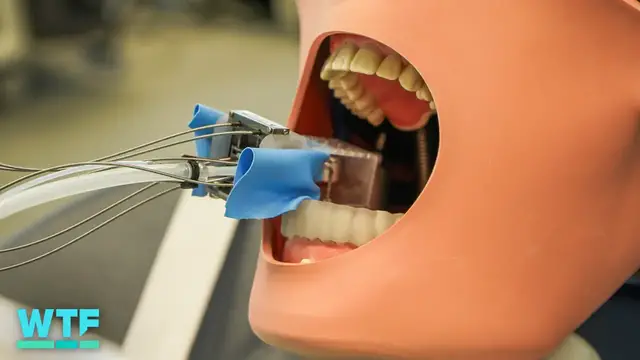
This robotic system could help make dental crown procedures faster.
Show More Show Less View Video Transcript
0:00
A new dental robot is being developed right now at the University of Basel in Switzerland to help
0:05
with tooth drilling. Meet MER, short for Miniature Intraoral Robot. It's about the size of a wine
0:10
cork and designed to fit inside a patient's mouth. To accomplish this, larger components like the
0:16
motor and controls are kept outside the mouth and connected to the robot by cables and a drive shaft
0:21
like what's used in cars to transfer motion from the motor to the wheels. To be perfectly honest
0:26
I cringed pretty hard thinking about what might happen if the patient moves their head too fast
0:31
but the team actually planned for that. The robot is mounted to a custom-fitted dental splint which
0:36
attaches to the teeth, so if the patient moves their head, the robot moves with it. No getting
0:42
away from this dentist drill. The process starts with a wider drill that removes the surface of the
0:46
tooth. Then a longer and thinner drill does more detailed work. So far it's been tested on fake
0:51
ceramic teeth in a fake patient's mouth, and the team plans to add sensors in a camera
0:56
so that the robot can keep track of its position even during a power outage Researchers hope that MER will make the cavity filling process easier for both patients and dentists Usually several appointments are
1:07
needed to complete this kind of procedure, one to scan the affected tooth, one to remove the damaged
1:11
area, and a final one to install the permanent crown. MER could allow dentists to do the drilling
1:16
and the placement in the same visit. Dentists can pre-plan exactly how the robot removes the tooth
1:21
material to order a crown before drilling, meaning less visits to the dentist for patients and more
1:26
time to see other patients for the dentist. Surgical robots are becoming more common in
1:30
multiple fields of medicine. Neuralink designed its entire brain implant process around a surgical
1:35
robot. And histotripsy, a process for destroying tumors with sound waves, also uses a similar
1:41
scanning and targeting machine to liquefy tumors in a non-invasive way. To see our in-depth demo
1:47
and explainer on the device that destroys tumor with sound waves, click here. Would you go to a
1:51
robot dentist? Let us know down in the comments and subscribe for more stories that make you say
1:56
What the future
Celebrities & Entertainment News