Up next in 10



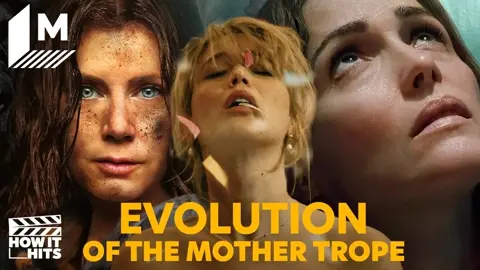
Are recent films reflecting a wider cultural shift in the way we perceive mothers?
Show More Show Less View Video Transcript
0:00
Hollywood is obsessed with mothers, and lately it seems like more and more directors are leaning
0:07
towards the darker sides of motherhood. But is it enough to signify a cultural shift? From
0:14
If I Had Legs I'd Kick You to Die My Love, mothers in crisis are leading cinema lately
0:21
And while Woman on the Verge is a well-explored, some may even argue tired, cinematic trope
0:27
The sheer amount of recent releases that deal with the subject tend to point towards a shift
0:33
in the way filmmakers tell mothers' stories. In her book, Modern Motherhood and American History, Jodie Van Der Bergh-Davis writes
0:43
that in the 20th century, the American modern mother would be self-consciously gifted with
0:48
and burdened by the idea that they had a unique influence on their children
0:53
At least initially, their influence was thought to depend upon their virtue, their watchfulness
0:59
their confinement to the home, and their constant availability. Any deviation from these virtues would immediately mean bad mother
1:08
We only need to look at the canon of 20th century American horror cinema to see how
1:13
that definition of bad mother has been exploited on the big screen
1:18
From Psycho, Rosemary's Baby and Carrie, the genre is full of mothers who have erred
1:24
By obsessing over their children, by wanting to reject them, even if the child is the actual
1:31
Antichrist, or by simply desiring a life beyond their motherly role. 1968's Rosemary's Baby, starring Mia Farrow, was made a year after the abandonment of the
1:42
Hays Code, which forbade explicit depictions of pregnancy and childbirth. It's arguably the first American horror film to engage with the very physicality of motherhood
1:53
which would become a defining feature of the genre, especially in body horror
1:58
Recent films, like Lynne Rousey's Die My Love and Mario Heller's Night
2:03
may not fit neatly into the horror genre but they still bear elements of it in that they place the physical experiences of their female protagonists at the center of their narrative and formal approach And like their predecessors they also engage
2:20
with the idea of the bad mother as Van Der Bergh-Davies defines it. Only this time
2:25
they don't reaffirm, but challenge it. New motherhood is at the center of Die My Love
2:32
Based on Ariana Harwitz's 2012 novel, the film stars Jennifer Lawrence and Robert Pattinson
2:38
as a young couple who leave their New York life behind to renovate his family house in Montana
2:45
Grace and Jackson, the playful and passionate couple we first meet, transform once their baby is born
2:53
In this postpartum world, Grace has found herself in a strange house
2:57
separated from her friends and family and struggling with more than writer's block
3:03
Jackson, on the other hand, goes out in the world. He works, he sees friends and family, and neglects Grace's needs
3:11
She falls into a state of postpartum depression and psychosis where the real and the imagined merge
3:19
Harwitz's novel is written entirely as an internal monologue, and Ramsey translates that onto screen through the dance between performance
3:27
cinematography, and the director's distinctly immersive style. Director of Photography Seamus McGarvey, who also worked with Ramsey on We Need to Talk About Kevin
3:37
shot Die My Love on Ektachrome's talk to give the images an eerie, heightened reality
3:44
The 1x33x1 aspect ratio confines these images, further boosting the sense of entrapment
3:52
Within this box is Lawrence's performance, which relies heavily on physicality to convey Grace's psychological state
3:59
from the dancing and sex scenes at the start of the film, through animal play in the garden
4:04
to masturbation and acts of self-harm. A sense of tactility, one of the defining features of Ramsey's work
4:13
further creates that sense of subjectivity. The world Grace touches is the world we see in close-up
4:20
The grass she plays in, the glass she licks the bathroom wallpaper she tears down until she bleeds It a story about a new mother in crisis whose only real connection is with her mother
4:33
herself also in crisis, as she grieves the loss of her husband
4:38
Grace's shortcomings are never weaponized against her by the film, as they are in some of the earlier examples we mentioned at the start of the video
4:47
Instead, Die My Love captures Grace's subjective world, immersing its viewers in her experience
4:56
Mario Heller's Night tries to do something similar. Based on Rachel Yoder's novel, the film sees Amy Adams as a suburban, stay-at-home mom
5:07
ambiguously called mother, who has abandoned her art career to care for her toddler
5:12
Her days feel like Groundhog Day. She wakes up, makes meals for her son, and goes to the playground
5:18
In between, she deals with his tantrums and misbehavings, while her husband, caricature-like in his inadequacy, is almost absent
5:26
Like Grace in Die My Love, Night Beach's mother has also left her artistic work behind
5:33
And even though old colleagues and other mothers she meets remind her of her old self
5:37
she seems unable and unwilling to return to it. mother's internal world is also externalized through corporeal experiences but this film
5:47
communicates it via physical transformation initially mistaking her symptoms for perimenopause mother starts growing a tail then extra hair dogs in the park are drawn to her and ultimately
5:59
she becomes one of them mother's dog metamorphosis allows her to set herself free and reconnect with
6:06
her wilder side, which ultimately brings her back to herself. While these two films explore the
6:13
challenges of early parenthood, Mary Bronstine's If I Had Legs at Kikyu explores the life of a
6:19
mother caring for a new child. Linda, played by Rose Byrne, is a psychotherapist and a caretaker
6:25
for her sick daughter while her husband works away. A flood in the upstairs flat causes their
6:30
ceiling to collapse, and Linda and her daughter are forced into a life in a shabby motel
6:36
Linda daughter is intubated by a feeding machine that will only be taken off if she gains enough weight to eat on her own It seems like the young girl isn meeting her weight goals and the sense of accountability
6:48
and guilt sends Linda down a spiral. The film portrays her working mother at the epicenter of an increasingly stressful reality
6:55
where her character flaws are weaponized against her by other characters in the film
7:00
And Linda is a flawed person. She self-medicates with alcohol and recreational drugs
7:05
often leaves her daughter alone at night and lies about it and gets into petty fights over parking fees
7:12
Formerly, If I Had Legs Ate Kick You plays almost like a psychological horror
7:16
and trapping close-ups frame Burns' performance while a tense core brings the viewers into her hectic and anxiety-inducing world
7:26
But the real horrors are those of a woman and mother left without support
7:31
The three films, notably all directed by women, show mothers who do not comply with the impossible standards expected of them
7:39
The people these heroines live with may judge them for their shortcomings
7:44
but the films themselves do not. Instead, they take us for a walk in the mothers' shoes
7:50
The same material previous films would use to make monsters from, the new ones present a simple humanity
7:58
When mothers are stripped of community, understanding and support. And maybe that's why, though playing with the genre's elements
8:05
none of these films become true horror. Instead of villainizing the darker sides of motherhood
8:11
they choose to understand them. So what do you think? Can we talk about a cultural shift just yet
8:18
And do you think mothers are currently faithfully represented on screen? Let us know in the comments what your favorite example is
8:25
and if you're still missing something. and check out how it hits for more deep dives on cinema movements and your favorite films
#Celebrities & Entertainment News