Up next in 10



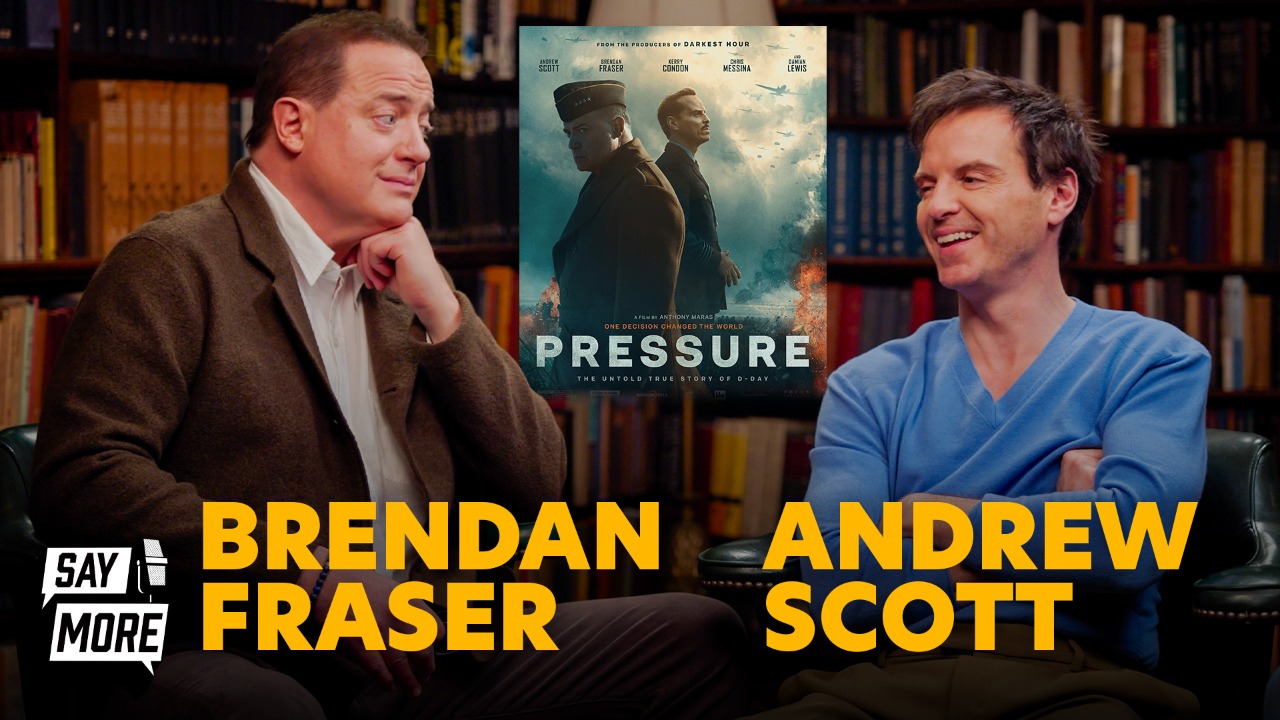
Their new WWII movie has surprising humor and that deeply satisfying thing of watching people be really good at their jobs.
Show More Show Less View Video Transcript
0:00
People will call it competency porn
0:01
Right. Because it's people who are so good at their job and want to do the best at their job, and that's where the conflicts come from
0:06
Right. And it reminded me of that. Have you heard that phrase before? Competency porn
0:10
No. Yeah. It's like not literal. No, I see. But the idea that like..
0:14
I don't even know how competency porn could be literal. It's a conversation for another time
0:20
Why is it horse shit? Yes, the weather was, as he described, in 1904 and 1925
0:26
but he fails to mention 1916, June 5th, the battle for Mount Sorrel
0:30
Then, as now, there were areas of high pressure above the Azores, but the storms came anyway
0:35
Many people here will remember that battle. Chaos. Absolute chaos. Thousands of lives lost
0:42
Hell on Earth. Torrential rain. He's selecting the data that suits him and ignoring the rest
0:48
and we must face the facts. The facts! However frightening they may be
0:54
I'm very excited to talk to you guys about this, because I will be honest, I'm not much of a war movies person
0:59
And then I was like, oh, it's a war movie about weather. Okay. But to me, it's like conclave
1:04
We're like on the surface. It's like very serious things. And then like right below the surface, it's like attitude collision
1:10
which I was very into. Yes. So I want to talk about that
1:15
Because like in particular, your character gets to say so many things
1:19
Like it's like a read. And at one point, one of the characters says to him, like you can't just insult me to my face
1:24
And he's like, I'm not insulting you. I'm describing you. Great line
1:29
Obsessed. So I'd like to talk a little bit about that kind of dialogue and the fun of that
1:33
and where it is to kind of find the level because you don't play it like..
1:37
It feels like a read, but I don't want people thinking... It's not like a drag queen level. You're playing it very dry
1:41
Yeah, yeah. Well, I think he's just unflailingly honest, which is why, you know, it's what the story is about
1:46
He's saying what he thinks and he's not... I don't think he's..
1:51
I've never believed that he was a particularly antagonistic person. But I suppose a lot of things that he says, I suppose
2:00
are what might be described as an inconvenient truth. Mm. Mm. You know so Depending on who listening Depending on who listening Depending on who listening So yeah I think a lot of it I think there is fun I think it does sound unusual to say that it a fun film about
2:17
I'll say it's a fun film about war and weather. Yeah, you know, as you say, there are huge..
2:21
I think a lot of the drama comes from, you know, a cultural difference and a personality difference
2:28
But I think in any story about allies, there are sort of essential components
2:34
that not everybody who has the same values seem to be this
2:39
outwardly the same, have the same characteristics, you know. It's the one mistake
2:45
Ike, you have to stop doing this to yourself. What's done is done
2:49
Your character has to be a little more buttoned up, and he's more of a people person, I would say, than the meteorologist
2:56
So can you tell me a little bit about playing from that perspective? Ike Eisenhower was, by all accounts, loved by his troops
3:02
and he cared about them intensely. And that's a fact. So he felt a great deal of pressure to do right by them
3:10
And even if that meant having the awkward and uncomfortable conversations that were essential to take place that weekend before the Monday, June 5th appointed original date to land on the beaches of Normandy
3:26
when he needed to take the opinions of all. He was the supreme commander of the Joint Chiefs of Staff
3:36
so he did have the last word, and he did take responsibility for the entire operation's success or failure
3:44
And to make that decision based on a weather forecast may seem anachronistic to you and I living now
3:53
but imagine the circumstances. I think the movie describes the impact of the weather very quickly in a way that I'm
3:58
like, I get it. And then I think it's also interesting because between this British meteorologist and this
4:03
American general, there is this kind of culture clash where I feel like there's a very American
4:07
idea in the movie, particularly with Chris Messina's character, of wanting to give your
4:12
boss the answer he wants, even if it's not necessarily the right answer. And that is not your way about going about things
4:17
Although to be fair I think there are just different methodologies And I think what interesting about it is I think the film is so much about listening about sort of going okay well this is what we sort of know and this is a
4:30
tool, these are the tools that we can use in order to give an expert report
4:35
So a lot of the stuff that Colonel Crick was saying had worked before but
4:41
what James Steyer was saying was that the weather climate, you can go into a certain culture and you could say that the weather is for the most part
4:50
predictable. Whereas the climates in and around France and northern Europe is very very changeable and then later on in the story you have to listen
5:00
again and so it's always a little bit like the weather we go okay well there
5:03
it is there but we have to just remember to have the humility to listen in some
5:08
ways. I think that's one of the most pleasing things about the movie
5:12
Yeah, I think that dynamic made it feel very modern to me. The kind of comparison is, I don't know if you guys have heard this term in regards to the pit
5:19
but people will call it competency porn. Because it's people who are so good at their job and want to do the best of their job
5:25
and that's where the conflicts come from. And it reminded me of that. Have you heard that phrase before
5:29
Competency porn. Yeah, it's like not literal. No, I don't even know how competency porn could be literal
5:39
A conversation for another time. I see. It's actually, we have a little fight for that
5:45
But the idea of people being so good at their jobs that it's satisfying to watch, because that's what you hope
5:51
is going on behind the scenes. And I think that that's part of what
5:54
was so exciting about this film that I can't pretend I understand what it's like to be in a war room
5:59
but I felt like the film is. Now you can. You know what I mean? Truly. Now you can, because of the fly on the wall aspect Yes
6:04
Of how these dialogues likely had to have had taken place. Well, especially because it's that thing where a lot of war movies
6:12
everyone is talking like this, and it's very, and sometimes they're shouting. But in this, I felt like there's such a sense of actual personality that to me
6:19
I thought this feels more like what I would imagine actually being in these high tension situations would be
6:24
And that was the purpose of David Haig's stage play that had a long run on the West End
6:29
and the adaptation by he and Anthony Amaris our director to the screenplay which we brought to the fold with the film pressure
6:40
is to put a human face on what would otherwise have been very dusty, sterile facts
6:50
And to my mind, I mean, I don't think there's really a villain, per se, in this film
6:56
I mean, apart from the obvious. Obviously there's Nazis, but they're not on camera
7:00
We don't need to underline that there's an enemy. Yeah, yeah, yeah
7:04
But the enemy also share the same concerns that the Allies did in that the weather affects us all
7:12
They'll never see it coming was the thinking when they made the decision to delay from the 5th, which was a Monday, to the 6th, Tuesday, which was no small feat
7:24
I mean, they couldn't shake their fist at the sky and say, change, because frankly, science doesn't care what you think or feel
7:32
So that's what's so interesting to me, because I also thought, like, I don't tend to think too much about how science is coming into, like, the war room
7:37
and I thought that was really interesting, but then on a level beyond that, it becomes about how as much as we like to think we're in control of things
7:44
there are things we cannot control that are bigger than us. Yes, exactly. It's striking to watch
7:48
Yeah, we have to have, well, again, it's about the power, the power of nature and our human power and how we have to, you know, I think some of our greatest leaders are the ones who have to concede that they are powerless in a certain situation and you have to be able to ask experts to help you and to be able to listen to them and also to make an executive decision
8:10
it's really, it's, I think it's for that reason very moving. And also I think to see, for cinema audiences
8:17
I always think it's really wonderful to see people be simply good at their jobs
8:22
To see people be expert at their jobs. And I think one of the things that I found really interesting
8:27
was finding out about weather forecasting, which, you know, we say in the film, people could perceive us quite dull
8:35
Sure. But actually, you know, I think finding out in some small way
8:39
about how the weather affects us scientifically is actually really fascinating
#Celebrities & Entertainment News