Up next in 10



A sentiment that echoes through history.
Show More Show Less View Video Transcript
0:00
It was a line that I think Paul thought he should cut
0:03
The king is the law. We have nothing more left. He says pay taxes, you pay taxes
0:11
The 1381 revolt is one of the defining moments of English radicalism
0:16
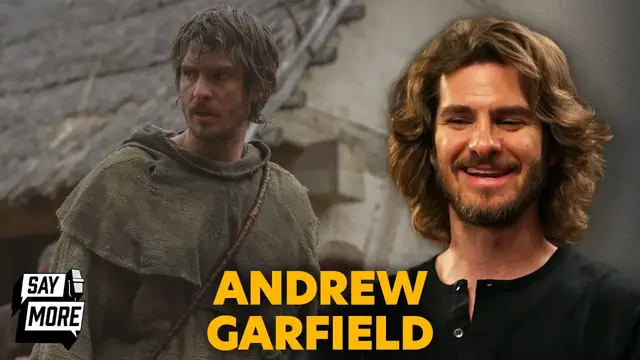
Locate us, where we meet your character at the start of the uprising. In his home in Essex, in the Fen, on his little plot of land that doesn't belong to him
0:25
that he has to work because he is tied to that land through a legal framework at the time
0:30
where no man was really free outside of the oligarchs and royalty
0:37
And we learn that the ploughman has lost both of his children
0:41
and his wife to the plague. So he's been alone carrying the weight of that loss
0:48
and the confusion and the betrayal that he feels he's experienced with that loss
0:53
and a meandering meaninglessness and a kind of sense of deep injustice
0:58
that's been coursing through his veins ever since that loss. So, yeah, that's the cheery beginning of our little story
1:07
The land is broken. We are forced to work beyond what our souls can take
1:13
You've done some serious prep work for films before. I mean, for Martin Scorsese's Silence, you went on a silent retreat
1:19
Was there anything that you did specifically for The Uprising? I mean, there was a lot of research into daily life of a man in his position
1:28
There was a lot of time spent making sure that I knew how to work the land in a way that felt specific and true
1:39
Handling the tools, being with our ox, that primary relationship was very, very important
1:46
And learning about daily life and village life and the specifics of the disease of the plague
1:53
and how it coursed through the body, particularly of a young child
1:57
the kind of horror of that felt very, very important to understand deeply
2:01
so that one can carry the weight of that kind of devastation and awfulness
2:07
Even though it very specific to this moment in time it relevant to uprisings across the world across history And at one point your character quite literally says the line
2:19
No Kings, which is very different politically for viewers in 2026. What does it mean to see that line and pull it across time like that
2:28
Yeah, it was a line that I think Paul thought he should cut after
2:33
because he had written it before all of the No Kings protests that were happening in the United States
2:37
against Trump and he was worried that it would feel like we are trying to say something specific
2:46
in response to something that's just happening um but in fact it was pre it predated any of that
2:55
stuff happening in real time so it felt like the right thing just to go no this is something
3:00
universal this is something that is unfortunately uh timeless um and it's a beautiful sentiment
3:06
It's like the idea of hierarchy that is preordained being deconstructed feels very important
3:17
Definitely. And there's sort of this dalliance between the divine right to rule and all people under God equal
3:25
particularly in this time of history. And then we find your character, as the sort of resistance gains momentum
3:31
your character comes across two legendary figures who are played by Cosmo Jarvis and Jamie Bell
3:37
We have the military man, Tyler, and the radical priest, John Bell
3:40
How does your character sort of sit between them in their sort of sense of justice and what the mission is
3:48
Yeah, I think the ploughman is coming to this moment very naively and very instinctively
3:57
and it's almost like he's being led by some other force. that is awakening in him
4:03
And he's kind of a semi-willing participant. He's kind of following the wind
4:11
He's following a calling that he doesn't know where it leading him but he trying to walk the middle way He has no desire to lead anybody He has no desire to cause any trouble but there something that erupts in him that wants all the trouble to happen
4:31
in order to get freed, to free himself and to free others, ultimately
4:37
Osmo's character, Watt, is coming at it from a more militaristic standpoint and having fought in the previous war with the previous king
4:46
has seen a lot, has felt a lot, and has seen some of the world
4:50
and knows the injustice in a conscious way, knows that the world is out of joint
4:55
John Ball, that Jamie plays, he was someone who was radical and who challenged the ideas of the church
5:03
and was therefore oppressed by the church. So he has a lot of his own vengeance in him
5:07
They know that these things cannot be won without some bloodshed. Whereas the ploughman is struggling with that
5:13
He has no desire. I think what he's really struggling with where there's this terror that he's leaving his family behind in some way
5:21
even though they're no longer with us. To go on this journey, he fears that he will lose that connection
5:30
But the idea is that maybe as he does go on this journey, it's what they want of him
5:35
They want him to avenge and to set the world in order
5:41
That's the calling that is on the wind for him. And you've obviously got a lot of combat in this film
5:48
It's a different sort of level of combat because, you know, everyone that was in the uprising is using sort of rudimentary tools
5:55
as their weapons against this sort of, like, armour of steel. I wanted to speak to your weapon, which is a particular farming tool
6:04
What is it about this tool that is representative of the fight
6:08
Yeah, the sickle. I love that it's reappropriated. I love that it's a symbol of communism
6:17
I love that it's very evocative. I've never really seen it before
6:22
I've never seen it employed in the way that we employ it in the film. It's cool. It's like a cool weapon
6:29
And I love that it's practical. I love that it just taken from the nearest thing that could be the most effective object of self And you just using it all the way to the Capitol And obviously you done a lot of action films
6:46
from The Amazing Spider-Man to Hacksaw Ridge. How did you find Plowman's style of combat this time
6:51
Yeah, I mean, again, so nice to get into the specificity and the development and the growth
6:56
because I think he's someone who starts out just completely against his will that he's involved in this situation
7:01
But then by the end of the film, where he has a big transformation
7:05
and he kind of steps in into more of an embodiment of his own being an instrument
7:14
He becomes himself an instrument of nature as well by the end of the story
7:19
And to explore the journey of that physicality and also the expression of grief
7:25
and rage within those acts of violence feels really important. To make them not gratuitous and to make them not purposeless
7:39
but to make them completely connected to the emotional state of the character
7:43
and their need to survive. And the power of song is used in a really beautiful way in The Uprising
7:48
Yeah, I love that. What did you love about this element of the film
7:52
and how does it sort of link to this modern sense of songs of resistance
7:57
I love that and it feels very important. and it feels for people that are in a position of resistance
8:04
that they feel they're forced into a position of resistance, art and creativity becomes a big part of that resistance
8:15
I remember visiting Cuba a bunch of years ago and feeling the frustration and the limitation
8:26
that regular people were having to live under was being expressed very, maybe most freely
8:37
within the dance clubs and musical, you know, live music. And, yeah
8:44
So I think, yeah, I think it's a really, really important element
8:47
that I'm really, really glad that Paul included
#Celebrities & Entertainment News