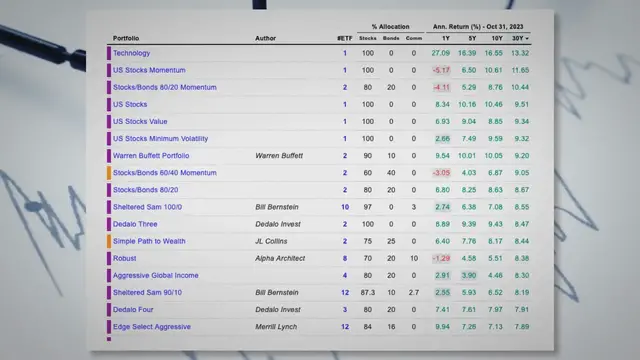

15 Tips for Building Wealth with Lazy Portfolios and Passive Investing Strategies
Nov 20, 2023
Building wealth with lazy portfolios and passive investing strategies involves a long-term approach that aims to minimize active management and fees while maximizing diversification and risk-adjusted returns. Here are some key concepts and steps to consider:
1. Understand Passive Investing:
Passive investing involves tracking a market index rather than trying to outperform it.
Popular passive investment vehicles include index funds and exchange-traded funds (ETFs).
2. Diversification:
Diversify your investments across different asset classes (stocks, bonds, real estate, etc.) to reduce risk.
Consider global diversification to benefit from different economies and regions.
3. Lazy Portfolios:
Lazy portfolios are simple, diversified investment portfolios that require minimal maintenance.
Examples include the "Three-Fund Portfolio" (stocks, bonds, and international stocks) or the "Coffeehouse Portfolio."
4. Asset Allocation:
Determine the right mix of asset classes based on your risk tolerance, investment goals, and time horizon.
Rebalance periodically to maintain your desired asset allocation.
5. Low-Cost Index Funds and ETFs:
Choose low-cost index funds or ETFs to minimize expenses.
Look for funds with low expense ratios, as fees can significantly impact long-term returns.
6. Automate Contributions:
Set up automatic contributions to your investment accounts to take advantage of dollar-cost averaging.
Regular contributions can smooth out the impact of market volatility.
7. Reinvest Dividends:
Reinvesting dividends compounds your returns over time and can accelerate wealth growth.
8. Tax Efficiency:
Be mindful of tax implications. Utilize tax-efficient funds and accounts (e.g., tax-advantaged retirement accounts) to minimize taxes.
9. Stay the Course:
Avoid reacting to short-term market fluctuations.
Stay disciplined and stick to your long-term investment plan.
10. Review Periodically:
Periodically review your portfolio to ensure it aligns with your financial goals.
Reassess your risk tolerance and adjust your asset allocation if needed.
11. Emergency Fund:
Maintain an emergency fund to cover unexpected expenses, so you're not forced to sell investments during market downturns.
12. Educate Yourself:
Continuously educate yourself about investing principles and market trends.
13. Seek Professional Advice if Needed:
If you're unsure about your investment strategy, consider consulting with a financial advisor.
14. Monitor Fees:
Keep an eye on fees, including expense ratios and transaction costs. High fees can erode your returns over time.
15. Discipline and a long-term perspective:
Remember, the key to success with lazy portfolios and passive investing is discipline and a long-term perspective. Markets will have ups and downs, but historically, a diversified, low-cost, and passive approach has proven effective in building wealth over time.
Show More Show Less