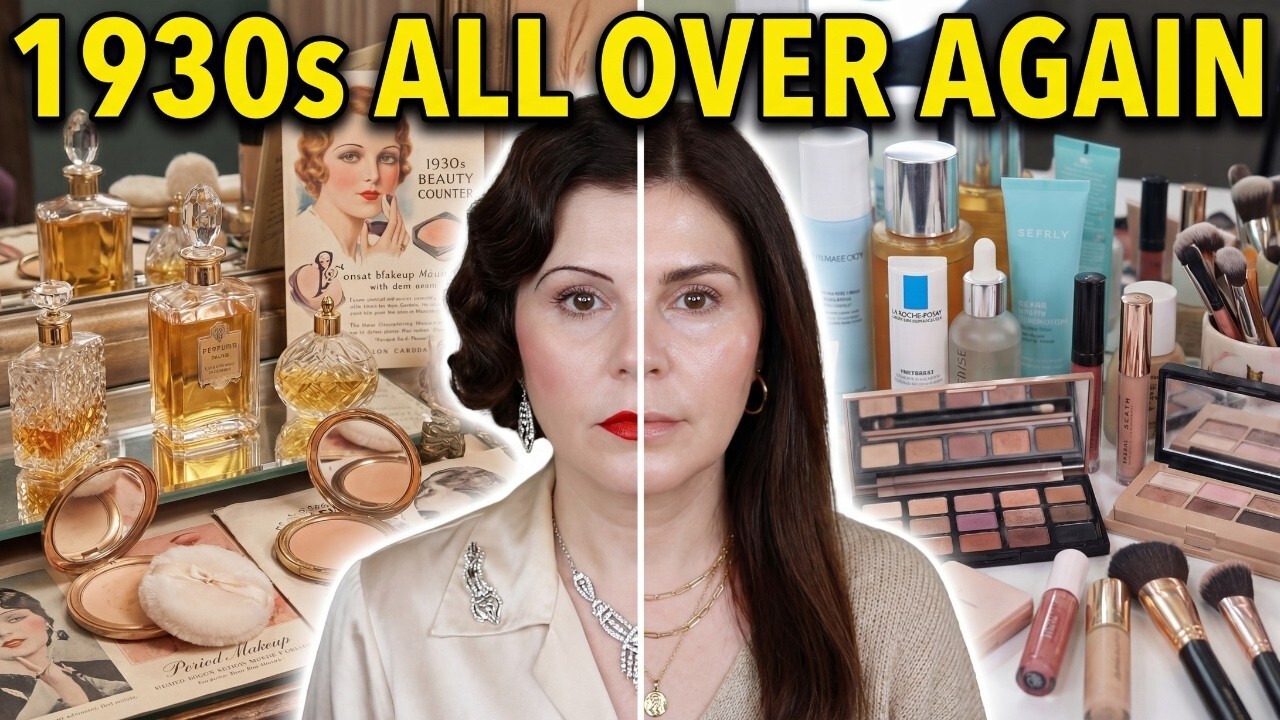

Why De-Influencing Is Just History Repeating Itself
Feb 6, 2026

De-influencing feels like a new rebellion—but it isn’t.
Long before TikTok, GRWM routines, and “don’t buy this” videos, women were already standing at beauty counters in the 1930s, questioning exaggerated promises, miracle creams, and the pressure to buy their way into perfection.
In this video, we explore how today’s de-influencing trend mirrors the skepticism women have always held toward the beauty industry. From glamorous department store counters to modern influencer culture, we trace a repeating cycle of beauty hype → doubt → rebranding—and ask why skepticism itself has become so profitable.
This isn’t a takedown of beauty, and it isn’t a rejection of care or self-expression. It’s a cultural history of how women have learned to navigate beauty promises with discernment—and why the industry has always depended on that doubt to survive.
In this essay, we explore:
Why de-influencing feels radical—but isn’t new
How 1930s beauty counters shaped modern consumer skepticism
The psychology behind beauty doubt and “protective skepticism”
Why honesty and restraint have become aesthetic—and monetizable
How beauty culture survives by absorbing backlash
If you’ve ever felt exhausted by constant beauty recommendations…
If you’ve ever wondered why every trend feels familiar…
If you’ve ever paused before buying and thought, haven’t we done this before?
You’re not wrong.
Because history doesn’t repeat itself quietly—especially in beauty.
Question for the comments:
What beauty product or trend made you start questioning the hype?
Join this channel to get access to perks:
https://www.youtube.com/channel/UCM4hiMCyAEMxibzIYrOKD5Q/join
#DeInfluencing #BeautyHistory #BeautyTrends #InfluencerCulture #FemininityAndCulture #BeautySkepticism #ConsumerCulture #ModernFemininity #BeautyEssay #CulturalCommentary #AestheticHistory #WomenAndMedia #BeautyMarketing #DigitalCulture #LauraJaneAtelier
Show More Show Less