Up next in 10


€100 free commissions with Degiro: https://bit.ly/3M0tf19
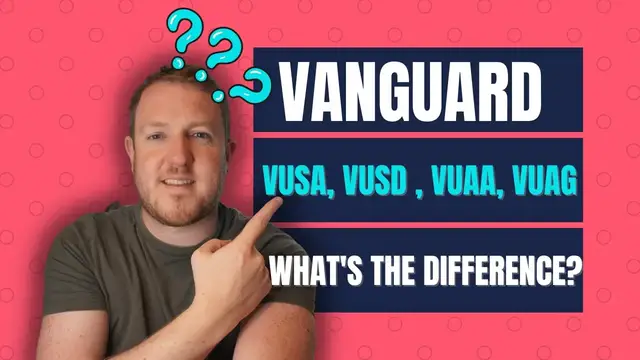
In this video I go through what the differences are between the 4 Vanguard ETFs that you can trade in Europe: VUSA, VUAG, VUSD and VUAA.
Thanks for watching
______________________________________________________________________________
More reading and resources on the topic:
https://irishfinancial.ie/vusa-vs-vuaa-vs-vuag-vs-vusd-sp-500-etfs-differences-explained/
Show More Show Less View Video Transcript
0:00
For many people, investing is something that they want to keep as simple as possible
0:04
Like for example, putting your money once a month into the S&P 500 and leaving it at that
0:09
And that makes a lot of sense for people who want to see their money grow over the long term
0:14
but do not want to get too deep into investing and researching companies and building strategies for investing
0:20
All they want to do is just go in at a high level and see their money grow, because they have better things to be doing with their time
0:26
Even though this sounds like a very, very simple strategy, it can often still get confusing in practice when you go and try to implement it
0:33
Because when you go and look for something that tracks the S&P 500, you'll notice that there is so many different options to choose from
0:40
One of the most popular issuers of the funds that track the S&P 500 is Vanguard
0:45
And if you are based in Europe, they will have a couple of different options for you to choose from
0:49
They will have the following ETFs. They have the VUSA, the VUSD, the VUAA and the VUAG
0:57
And in this video, I'm going to give you a brief overview of what the key differences are between these four different ETFs
1:03
to help you make your decision in which one you want to choose. And most importantly, I will explain why you see such big differences in the performance of these funds
1:11
And as well as this, I will go over what I think personally is the best one to choose over the short term
1:18
given the current economic situation. So let's just get straight into it. I've put all the key bits of information that you need to know so you can see all the differences between these four ETFs on just one single table
1:29
If you want to come back and reference that later I also have it published on my blog irishfinancial.ie which I'll leave a link to below in the description section if you want to check that out as well
1:38
The first difference that you will notice on the table is that you will see that some of the funds are accumulating and some of them are distributing
1:45
For anybody that is completely new to investing, I'll briefly explain the difference between
1:49
these two terms and what it means for the fund. So first off, a distributing fund
1:55
A distributing fund will pay you out periodic dividends over certain periods of time, so
2:00
it could be a month or a quarter but every so often you will be paid out these cash dividends as a part of your return on your investment But then if you take an accumulating fund instead of actually paying you out those cash dividends what they will do is they will automatically reinvest those dividends for you
2:17
So at the end of the day, you end up with more units invested in the fund
2:21
And this actually has a compound effect because you get growth on the additional units that you have now invested
2:27
and so what we tend to see over the longer term is that an accumulating fund will slightly
2:32
outperform a distributing fund due to that compound effect as well as that there may be
2:37
tax benefits depending on whether you go with a distributing or accumulating fund i know in ireland
2:43
where i am from investors are allowed to automatically reinvest those dividends tax-free
2:48
up until a point of eight years or whenever you sell them whatever the earliest time is
2:53
and you don't pay tax on any of that growth or those dividends like you would normally be paying
2:58
tax on them. So it would be worth you checking out what the specific rules are in your country as well
3:02
before you choose one over the other. To show you this marginal benefit of investing in an
3:07
accumulating fund versus a distributing fund in terms of performance let's just have a look at
3:12
the returns over the last year for two of the funds. So we're looking at VUSA and VUAG. So you
3:19
can see VUAG has returned 5.86% over the last year whereas VUSA has only returned investors 4.49%
3:27
The difference there is entirely the reinvested dividends. So those investors who chose the
3:32
accumulating fund are 1.37% better off and over a very long period of time that could add up to a
3:39
lot more. The second key difference that you're going to notice on the table here is the currency
3:44
So some of them have a trading currency of USD and some of them have a trading currency of GBP
3:50
Something that often confuses investors is when they see such a huge difference in performance between some of these funds that are traded in GBP versus USD
4:00
So if we have a look here for example, both of the distributing funds, VUSA had a return of 4.49% and that was trading in GBP
4:10
and then the VUSD which is trading in US dollar actually had a loss of 19 But in reality both of these funds have actually performed the exact same The only difference is that the VUSA has priced in all the FX movements between
4:25
GBP and USD and the VUSD fund hasn't. Over the last year the US dollar has appreciated
4:31
significantly against the sterling due to a number of factors such as the Fed increasing their interest rates much faster and higher than those in the
4:39
UK over the last couple of months as well as the energy crisis and as well as the UK economy not
4:44
performing so well. So the VUSD fund still hasn't taken into account the FX movement. So let's say
4:50
a couple of months ago you took £5,000 and you invested it in VUSD so you would have then been
4:56
converting your pounds into US dollar and since then the dollar has appreciated against the pound
5:01
so now when you go to convert your dollars back into pounds you're going to get a much better rate
5:06
and this hasn't been priced in until you actually sell your investment
5:10
So when you do actually sell your investment, you're going to be also up around that 4.49% of the VUSA
5:16
when you take that FX movement into account as well. Then you maybe are better off staying away from the VUSA and the VUAG fund
5:24
as the base currency of the S&P 500 is USD. The trading currency then would be GBP and your home currency would be Euro
5:31
So you're adding a bit of complication into the situation there. So you are exposed to the FX movements of three different currencies as opposed to two
5:38
So maybe you're just better off avoiding those two funds if you are based in the EU
5:43
Now in terms of my own opinion on what might be the best fund to pick over the short term
5:48
In my opinion we are possibly close to seeing the end of the dollar appreciating against the euro and the GBP
5:54
There might be a little bit more to go but we are surely close to the end. And we should see that relationship stabilize again over the next few months
6:01
or maybe even the next few years where they get back into a bit of a normal relationship again
6:06
If this comes to be, then we are going to see the US dollar depreciate
6:10
against the euro and the GBP. So that means everything that you hold in dollar
6:15
is going to lose value. So this means all of your US investments are going to be fighting an uphill battle You going to have to make a return up and above the FX movements which are going to be going against you so in my personal opinion over the next short term I don think any of these four funds is the right one to choose possibly better off going with
6:35
a currency hedged ETF and this will be something that I will make a video on again over the next
6:40
week so stay tuned to the channel for that in terms of the rest of my table here there's no
6:45
other real differences between any of these four vanguard funds all of them are passive funds which
6:50
means they don't have fund managers and huge amounts of staff trying to beat the performance
6:55
of the index because it is just trying to track the index and that is quite simple to do compared
7:00
to actually beating an index so it doesn't take much resources so they have low fees compared to
7:06
active managed funds so you don't have to worry about anything there and the fees charged on all
7:12
of these funds is very low at 0.07 so there again you don't have to worry about any differences so
7:17
the key differences just to recap basically are are some of the funds there are distributing some
7:22
of them are accumulating and lastly some of them are traded in gbp and some of them are trading in
7:29
usd so depending on where you are if you're based in the uk you might want to go with the vusa or
7:34
vua g and that way it has all of the fx priced into it so you know how the overall performance
7:41
of your investment is doing because it has the FX price into it as well as the movement of the
7:46
underlying S&P 500. Whereas if you are based in the EU you might be better off going with VUAA
7:51
or VUSD that way you're not exposed to both the pound the dollar and the euro you're just exposed
7:57
to the dollar versus the euro and that will make it easier for you to manage what's going on but
8:02
the risk is as I said at the moment the euro and the pound are both significantly undervalued
8:07
against the dollar and that might correct over the short to medium term so if you are going long on
8:14
the dollar basically you're going to lose a bit on the fx so you need to try and hedge against that
8:19
over the next short term and i'll try and cover that as well in next week's video so please stay
8:24
tuned and subscribe to the channel so thanks very much for watching i hope you enjoyed the video
8:28
if you did please make sure and drop a like on it and i'll see you guys again next week
Finance
Investing
Hobbies & Leisure