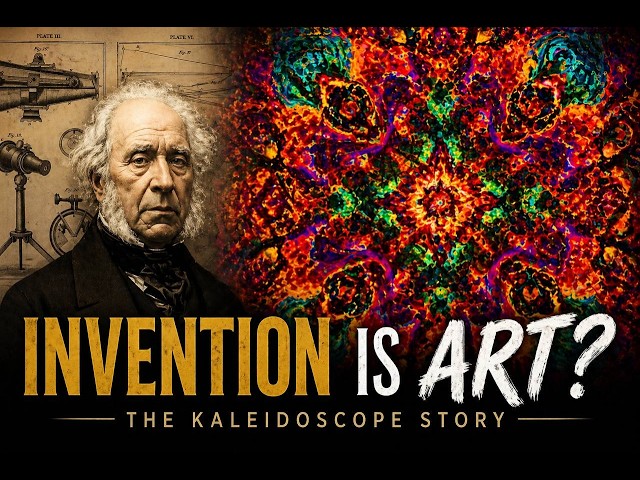

Kaleidoscope Made Millions… But Not for Its Inventor
Apr 27, 2026

Wrong Patent. Lost Millions?
In 1816, Scottish scientist David Brewster was studying light when he accidentally created one of the most mesmerizing inventions in history — the kaleidoscope.
A simple tube of mirrors and glass fragments turned into a global sensation, selling hundreds of thousands of units almost instantly.
But here’s the twist.
Despite patenting the invention in 1817, Brewster made almost nothing from it. Manufacturers copied the design, improved it, and flooded the market — leaving the original inventor behind.
So what actually happened?
In this video, we break down:
• the real physics behind the kaleidoscope
• how mirror angles create infinite symmetry
• why Brewster’s patent failed
• how others turned it into a global business
• and how this invention survived for over 200 years
From Victorian parlors to modern art and design, the kaleidoscope never disappeared — it evolved.
Show More Show Less #Science