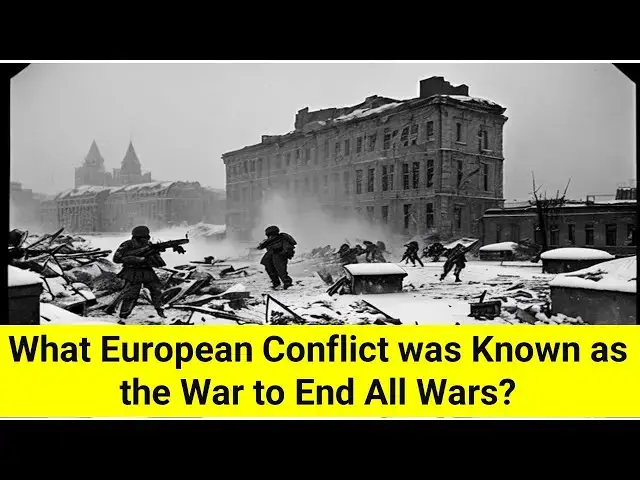

What European Conflict was Known as the War to End All Wars?
Nov 4, 2024

The European conflict known as the "War to End All Wars" is more commonly referred to as World War I. This name, "the War to End All Wars," reflects the optimism and hope of the time that this massive and devastating conflict would bring about a lasting peace and end to all future wars. Unfortunately, history would prove otherwise, as World War I was followed by even more destructive conflicts in the 20th century.
Here's a detailed overview of World War I and its significance:
1. Background:
World War I, also known as the Great War, took place from 1914 to 1918. It involved many of the world's great powers, with the main alliances being the Allies (including France, Russia, and later the United Kingdom and the United States) and the Central Powers (including Germany, Austria-Hungary, and the Ottoman Empire).
2. Causes:
The war had deep-rooted causes, including political rivalries, militarism, imperialism, and a complex web of alliances. The assassination of Archduke Franz Ferdinand of Austria-Hungary in Sarajevo in June 1914 is often considered the immediate trigger for the conflict.
3. The War's Course:
World War I saw extensive trench warfare on the Western Front, characterized by brutal battles like the Battle of the Somme and the Battle of Verdun.
The Eastern Front witnessed clashes between Germany and Russia, while other theaters of war included the Italian Front, the Balkans, and the Middle East.
4. Devastation:
World War I was characterized by unprecedented levels of destruction and casualties. The use of new technologies, such as poison gas, tanks, and machine guns, made it one of the deadliest conflicts in history.
Millions of soldiers and civilians lost their lives, and many more were wounded or left traumatized.
5. The Armistice and Treaty of Versailles:
Show More Show Less #War & Conflict