0:07
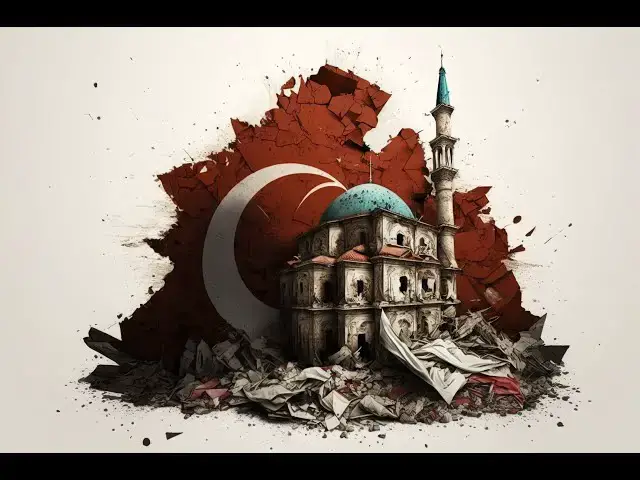
nationalism and the fragmentation of the
0:11
the Ottoman Empire at its peak was an
0:13
expansive realm comprising various
0:15
ethnic religious and cultural groups it
0:18
was a sprawling multinational state that
0:20
stretched across three continents for
0:22
much of its history it managed to
0:24
maintain a semblance of Unity by
0:26
adopting a flexible approach to
0:28
governance allowing considerable
0:29
autonomy to its diverse constituents
0:32
however the rise of nationalism in the
0:35
19th century significantly challenged
0:37
this delicate balance leading to
0:39
internal Discord and contributing to the
0:41
Empire's decline 1. the Millet system
0:44
attenuous Unity the Ottomans governed
0:47
their multi-ethnic empire through a
0:49
system known as the Millet which
0:51
organized communities based on religious
0:53
affiliations rather than ethnic
0:56
the Millet system allowed non-muslim
0:59
communities considerable autonomy in
1:01
matters such as religious practice
1:02
education and legal disputes this
1:06
somewhat pluralistic approach was
1:07
initially effective in maintaining
1:09
internal stability but it also sowed the
1:11
seeds for future divisiveness by
1:13
allowing distinct identities to remain
1:15
entrenched 2. the European export of
1:19
nationalism the spread of nationalist
1:21
ideas often fueled by the intellectual
1:24
currents of the European Enlightenment
1:26
and the impact of events like the French
1:28
Revolution penetrated the Ottoman Empire
1:33
these ideas often found fertile ground
1:35
among the Empire's educated Elites and
1:38
expatriate communities who were exposed
1:40
to European philosophies and political
1:44
nationalism contradicted the very
1:46
foundations of Ottoman governance which
1:49
prioritized religious identity over
1:51
ethnic identity the concept of a
1:53
nation-state based on a shared language
1:56
culture and territory was antithetical
1:58
to the Empire's multi-ethnic
2:00
multi-religious composition 3. ethnic
2:04
and religious groups from cohesion to
2:06
separatism the Empire's diverse
2:08
population included Turks Arabs Greeks
2:11
Armenians Kurds and many others as the
2:15
influence of nationalism grew these
2:17
groups increasingly saw themselves as
2:19
distinct Nations deserving of
2:20
self-determination this shift began to
2:23
manifest in various forms including
2:25
cultural revivals literary movements and
2:28
political activism aimed at greater
2:30
autonomy or complete Independence
2:33
4. the Greek war of independence one of
2:37
the first and most prominent expressions
2:38
of nationalism leading to direct
2:40
conflict within the empire was the Greek
2:43
war of independence in 1821
2:46
energized by the ideas of Liberty and
2:48
national identity the Greeks
2:50
successfully revolted against ottoman
2:52
rule culminating in the recognition of
2:55
Greece as an independent state in 1830.
2:58
this not only resulted in territorial
3:00
loss for the Empire but also inspired
3:02
other nationalist movements 4. the
3:05
Balkans a hotbed of nationalism the
3:08
Balkans were particularly volatile
3:10
featuring a mix of ethnic groups
3:12
including serbs bulgarians and albanians
3:17
the 19th century saw a series of
3:20
uprisings and conflicts in the region
3:22
driven by nationalist fervor the Treaty
3:25
of Berlin in 1878 was a significant
3:28
setback for the Empire as it led to the
3:30
independence or semi-independence of
3:32
several Balkan territories
3:35
5. Arab nationalism although it emerged
3:38
somewhat later than in the Balkans or
3:40
among the Greeks Arab nationalism became
3:43
another significant centrifugal force
3:45
intellectual currents and
3:47
dissatisfaction with ottoman rule led to
3:49
the demand for greater Arab autonomy
3:51
most notably during World War one with
3:53
the Arab revolt 6. internal reforms and
3:57
their limitations the Empire attempted
3:59
to quell nationalist aspirations through
4:01
various reforms such as the tanzimat and
4:04
later the Young Turk Revolution however
4:07
these often had the unintended
4:09
consequence of strengthening nationalist
4:11
sentiment by creating more structured
4:13
centralized and thus national
4:15
Administrative entities moreover reforms
4:19
like the imposition of the Turkish
4:20
language angered non-turkish communities
4:23
exacerbating nationalist tendencies
4:27
conclusion the rise of nationalism in
4:29
the 19th century severely undermined the
4:32
ottoman Empire's Unity
4:34
as different ethnic and cultural groups
4:36
sought to assert their independence or
4:38
autonomy the Empire found itself
4:40
increasingly embroiled in internal
4:42
conflicts and territorial losses
4:45
its attempts to suppress or co-opt
4:47
nationalist movements largely failed
4:50
often backfiring and fueling further
4:52
discontent nationalism therefore served
4:55
as both a symptom and a catalyst of the
4:57
Empire's Decay weakening its internal
5:00
cohesion at a time when it was already
5:02
facing significant external threats the
5:05
consequence was a gradual erosion of the
5:07
Empire's territorial integrity and a
5:10
significant undermining of its ability
5:12
to govern a diverse population
5:13
effectively eventually contributing to