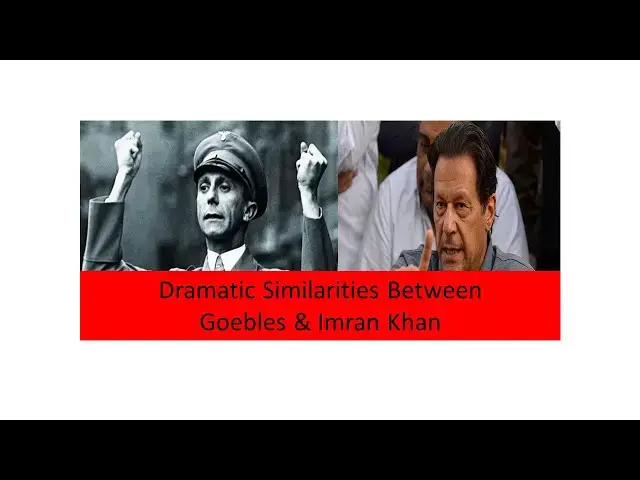

Dramatic Similarities between Goebbels and Imran Khan | #germany #imrankhan
Nov 4, 2024
Paul Joseph Goebbels was the infamous propaganda minister of Nazi Germany during World War II, known for his masterful manipulation of public opinion and relentless use of propaganda to advance the Nazi agenda. Imran Khan, on the other hand, is a former Prime Minister of Pakistan and current Prime Minister of Pakistan, who is known for his populist appeal and unconventional approach to politics. Despite the differences in their backgrounds and contexts, there are some interesting similarities between Goebbels and Imran Khan. Here are some of the most notable:
Rise to prominence: Both Goebbels and Imran Khan rose to prominence through unconventional means. Goebbels was a relatively unknown figure in Nazi circles until he caught the eye of Hitler with his passionate speeches and fierce loyalty to the Nazi cause. Imran Khan, similarly, rose to fame as a cricket player, leading the Pakistani team to victory in the 1992 World Cup. He later transitioned to politics and founded his own political party, the Pakistan Tehreek-e-Insaf (PTI).
Propaganda and media manipulation: Both Goebbels and Imran Khan have employed sophisticated propaganda and media manipulation techniques to shape public opinion. Goebbels was a master of propaganda, using film, radio, and other media to promote the Nazi agenda and demonize Jews and other perceived enemies of the state. Imran Khan has also been known to use social media and other platforms to spread his message and rally his supporters. He has been accused of using state media to promote his political agenda and censoring opposition voices.
Charismatic leadership: Both Goebbels and Imran Khan have cultivated a strong following through their charismatic leadership styles. Goebbels was a charismatic speaker, able to whip crowds into a frenzy with his fiery rhetoric and passionate delivery. Imran Khan, similarly, has been able to tap into the frustrations of ordinary Pakistanis who feel neglected by the political elite. He has positioned himself as a champion of the poor and promised to tackle corruption and improve the economy.
Controversial statements: Both Goebbels and Imran Khan have made controversial statements that have drawn criticism and condemnation from the international community. Goebbels was notorious for his anti-Semitic rhetoric, which demonized Jews as a threat to the German people. Imran Khan has been accused of making derogatory remarks about women, minorities, and other groups, as well as making inflammatory statements about India and other neighboring countries.
Authoritarian tendencies: Both Goebbels and Imran Khan have been accused of having authoritarian tendencies and promoting an illiberal agenda. Goebbels was a staunch supporter of Hitler's totalitarian regime and played a key role in suppressing dissent and free speech. Imran Khan, similarly, has been accused of undermining democratic institutions and consolidating power in the hands of the military and his own political party. He has been criticized for his handling of the media, the judiciary, and the opposition.
Nationalistic fervor: Both Goebbels and Imran Khan have appealed to a sense of nationalistic fervor among their followers. Goebbels promoted the idea of a strong, united Germany that would reclaim its rightful place as a world power. Imran Khan has similarly appealed to Pakistani nationalism, positioning himself as a defender of Pakistan's sovereignty and promoting a vision of a strong, prosperous Pakistan.
In conclusion, while there are certainly differences between Goebbels and Imran Khan, there are also some interesting similarities in their rise to prominence, propaganda and media manipulation techniques, charismatic leadership styles, controversial statements, authoritarian tendencies, and nationalistic fervor. These similarities raise important questions about the nature of leadership and the role of propaganda in shaping public opinion. Join us as we delve into the intriguing similarities between these two figures and their impact on history
Show More Show Less #Politics
#Media Critics & Watchdogs
#Other
#Communications & Media Studies