0:00
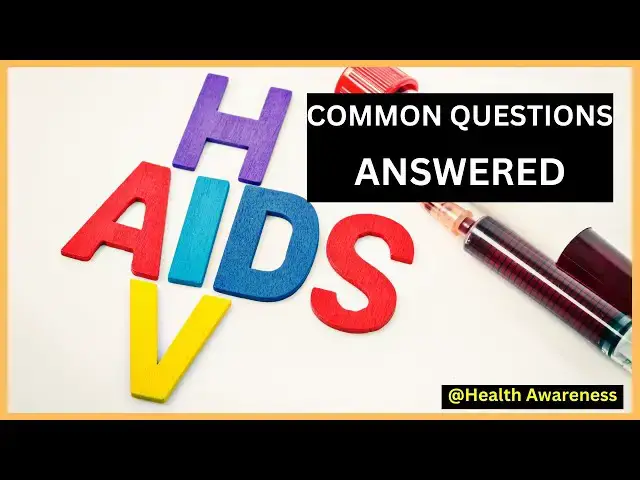
think you know everything about HIV you
0:02
might be surprised today we're tackling
0:05
the top 10 questions about HIV to bust
0:07
some common myths and give you the facts
0:10
before we get started don't forget to
0:12
follow us by subscribing to the channel
0:14
and turn on the notification Bell for
0:17
contents although people are more
0:19
educated about the human imuno
0:21
deficiency virus HIV today there are
0:23
still misconceptions about the virus
0:26
false assumptions can increase the risk
0:28
of infection and the odds of
0:29
transmitting the virus to someone else
0:31
here are some mythbusting answers to the
0:33
most commonly asked questions about
0:36
HIV one are HIV and AIDS the same thing
0:40
HIV and AIDS are not the same thing HIV
0:43
is a virus while AIDS is a stage of
0:46
advanced infection specifically HIV or
0:49
the human imuno deficiency virus is an
0:52
infectious virus that gradually breaks
0:54
down a person's immune system leaving
0:56
the body less able to defend itself
0:58
against viruses bacteria fungi and
1:01
parasites these infections which are
1:04
called opportunistic tend to be mild in
1:06
the early stages and can become
1:08
progressively worse as they deplete your
1:09
immune system AIDS or acquired immuno
1:13
deficiency syndrome is the stage of the
1:15
disease when the immune system is
1:17
weakened by the loss of CD4 T cells also
1:20
called helper tea cells these are white
1:22
blood cells that help fend off harmful
1:24
pathogens in the body without these
1:26
defenses a person will be at high risk
1:28
for serious illnesses that a healthy
1:30
person would be able to fight off AIDS
1:32
is diagnosed when a person has a CD4
1:35
count of less than 200 meaning less than
1:38
200 cells per cubic millim of blood or
1:41
has at least one of 27 AIDS defining
1:44
conditions outlined by the Centers for
1:46
Disease Control and prevention CDC such
1:48
as recurrent pneumonia and some lymphome
1:51
phase two Can HIV live outside the body
1:55
HIV does not live outside the body for
1:58
very long compared with other types of
2:00
viruses such as flu or chickenpox HIV is
2:03
relatively fragile it does not Thrive at
2:06
room temperature 68° F when exposed to
2:09
ultraviolet UV radiation from the Sun or
2:12
at pH levels that are dissimilar to that
2:14
of blood even if a small amount of virus
2:17
does manage to survive for a short
2:19
period of time the odds that it will
2:21
infect you are next to zero there have
2:24
been no confirmed cases of HIV caused by
2:26
a blood tainted needle in a public place
2:30
even in a health care setting the risk
2:32
of infection from a needl stick injury
2:34
is less than 1% per the
2:37
CDC three which activities are most
2:41
HIV the three main roots of HIV
2:44
infection in the United States are anal
2:46
sex vaginal sex and shared needles of
2:49
these unprotected anal sex poses the
2:51
highest risk here is the estimated
2:54
probability of acquiring HIV from an
2:56
infected Source through drug use and
2:58
different sex acts according to the
3:00
CDC receptive anal sex 1 in
3:04
72 shared injection drug use 1 in 160
3:10
insertive anal sex 1 in
3:13
99 receptive penile vaginal sex 1 in
3:18
1250 insert of penile vaginal sex 1 in
3:23
2500 the more you engage in these
3:25
activities the more likely you are to
3:27
contract the virus although it is still
3:30
possible to get infected after a single
3:32
exposure if you're worried about your
3:34
risk of Contracting HIV talk to your
3:36
healthcare provider about prep
3:38
pre-exposure prophylaxis a highly
3:41
effective oral or injectable medication
3:43
for HIV prevention for HIV prevention
3:46
according to the CDC it can reduce the
3:48
risk of HIV infection through sex by 99%
3:53
correctly four can you get HIV from oral
3:56
sex while there is a possible risk of
3:59
getting HIV from oral sex the documented
4:01
risk remains extremely low the CDC says
4:04
that the risk is hard to quantify
4:06
because a lot of people who have oral
4:07
sex have anal or vaginal sex
4:10
too still there are certain factors that
4:13
may increase the potential for infection
4:16
these include coexisting sexually
4:18
transmitted diseases stes and bleeding
4:21
gums even then it's unlikely that a
4:24
person will be infected by having oral
4:25
sex using a condom or dental dam can
4:28
further reduce the all low risk as can
4:31
taking medicine to prevent or treat
4:33
HIV five how common are false negatives
4:38
positives thanks to the use of Next
4:40
Generation Technologies the accuracy of
4:43
HIV TV testing in healthcare settings
4:45
has never been better still false
4:48
positives and false negatives have been
4:49
known to occur albeit
4:52
infrequently today the false negative
4:54
rate for antibody only tests is only
4:58
0.3% or rough three out of every 1,000
5:01
tests according to ibase false positive
5:04
rates are even lower between 0.4% and
5:08
0.7% according to stat pearls due in
5:11
large part to the practice of confirming
5:13
a positive result with a secondary test
5:16
if a false negative does occur it is
5:19
often the result of premature testing
5:21
during the so-called window period this
5:23
is the period of time following
5:25
infection when the body has not yet
5:27
produced enough protective proteins
5:29
called an antibodies to register an
5:31
accurate result if this happens a person
5:34
may believe that they haven't been
5:36
infected newer antigen antibody lab
5:38
tests have significantly reduced this
5:40
window period according to the CDC
5:43
however you still need to wait about 3
5:45
to 5 weeks after being exposed to the
5:47
virus to get a reliable result that said
5:50
if you think you've been exposed to HIV
5:53
in the last 72 hours the CDC says to
5:56
contact a health provider Hospital or
5:58
Urgent Care Center right away about
6:00
getting post exposure prophylaxis PF six
6:05
how accurate are in home HIV
6:07
tests currently there is only one inhome
6:10
HIV test available in the United States
6:13
or a quick promoted as a means to ensure
6:16
privacy for those who might otherwise
6:17
avoid getting tested it is easy to use
6:20
requiring only a simple saliva swab and
6:23
can return a result in as little as 20
6:26
minutes because antibody levels in
6:28
saliva are lower than the are in blood
6:30
this test can fall short in its ability
6:32
to detect infection according to the US
6:35
Food and Drug Administration FDA one in
6:38
12 oroi tests will deliver a false
6:41
negative meaning that roughly one out of
6:43
every 12 tests will deliver an incorrect
6:47
sign seven can a pop smear detect
6:51
HIV the pop smear is valuable for many
6:54
things but HIV detection isn't one of
6:56
them the aim of a PO smear is to
6:58
identify cell changes that may indicate
7:00
cervical cancer not to check for the
7:02
presence of HIV which can be identified
7:05
only with a blood or saliva based HIV
7:08
test HIV test that said pop smears are
7:12
especially important for women who have
7:14
HIV these women are at least five times
7:17
more likely to develop invasive cervical
7:19
cancer than women who don't have HIV the
7:22
test can also be used to screen for anal
7:24
cancer and the human papiloma virus
7:27
HV eight how long does it take for HIV
7:31
symptoms to appear up to 80% of newly
7:34
infected people experience symptoms
7:37
during the early acute stage of HIV
7:40
infection these generally develop within
7:42
2 to 4 weeks of exposure and resemble
7:45
symptoms of the flu such as fever sore
7:47
throat body rash headache and muscle and
7:50
joint pain according to the National
7:53
NS one of the more telling signs of
7:56
acute infection is lymphadenopathy the
7:58
sometimes painful swelling of the lymph
8:00
nodes specifically on the neck behind
8:02
the ears under the armpits and in the
8:04
upper groin while flu like symptoms can
8:07
last anywhere from a few days to several
8:09
weeks lymphadenopathy can persist for
8:11
months and even Years and may improve
8:14
only after the start of HIV
8:16
treatment after the acute stage of HIV
8:19
infection symptoms may not reappear for
8:21
several years but the virus is still
8:23
active and causing damage if left uned
8:25
per the H that is why it's important to
8:28
see a healthcare provider as as soon as
8:30
possible if you suspect you have
8:32
HIV nine do HIV symptoms differ in women
8:36
and men the HIV symptoms in men and
8:39
women don't differ very much however
8:42
women with HIV can be susceptible to
8:44
other infections that may cause symptoms
8:46
in genital tract including bacterial
8:48
vaginosis and kosis a common fungal
8:50
infection that can manifest as a vaginal
8:53
yeast infection oral thrush a fungal
8:56
infection can appear in both women and
8:58
men women with HIV also have an
9:01
increased risk for recurrent and hard to
9:04
treat pelvic inflammatory disease PID
9:07
and can experience irregular periods
9:11
discharge in the later stages of HIV
9:14
women who also have HPV are more likely
9:17
to have an increased risk of cervical
9:18
cancer gay and bisexual men with HPV are
9:22
more likely to develop anal cancer but
9:25
beyond these differences the disease
9:27
varies more by the individual than by
9:30
other factors like genetics age
9:32
treatment history and lifestyle habits
9:34
such as smoking diet and exercise also
9:37
play a role 10 how long can I wait
9:42
treatment ideally you shouldn't wait to
9:44
start treatment in the past doctors
9:47
would delay treatment until a person's
9:48
CD4 count fell below 500 largely because
9:52
of concerns about the long-term effects
9:54
of HIV treatment and the premature
9:56
development of a drug resent virus but
9:59
that's no longer the case today things
10:02
are different says Linda Gail Becker PhD
10:06
an infectious disease specialist and
10:08
deputy director of a Desmond 22 HIV
10:11
Center at the University of Cape Town in
10:13
South Africa newer generation drugs have
10:16
overcome many of these concerns moreover
10:19
we have learned that delaying treatment
10:20
can have long-term consequences on a
10:22
person's health in fact according to the
10:25
National Institutes of Health starting
10:27
treatment immediately after an HIV
10:29
diagnosis can lower your risk of
10:31
developing non-aids defining conditions
10:34
like cardiovascular disease liver
10:36
disease kidney disease and certain types
10:39
cancer understanding HIV and staying
10:41
informed is crucial for everyone whether
10:44
you are directly affected or want to
10:45
support someone who is the right
10:47
knowledge can make all the difference if
10:49
you have any questions or need further
10:51
information don't hesitate to reach out
10:53
to healthcare professionals remember
10:55
early detection and treatment are key
10:57
stay safe and take care
10:59
thank you for watching if you found this
11:01
video helpful please like share and
11:04
subscribe to health awareness for more
11:05
informative content stay informed stay