0:00
I've just heard that there has been an explosion heard near the scene. We can
0:04
presume, I think, that that is something to do with the bomb disposal that's there
0:10
I guess, why don't we start with that point, that if an attacker has what appears to be
0:15
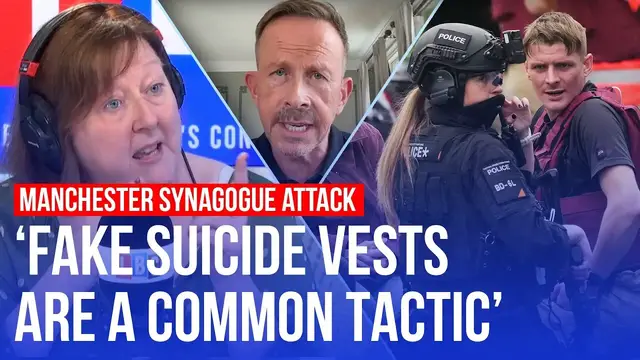
explosives around his or her body, you assume the worst? Yeah, of course, you have to assume the worst. I mean, we saw this before, Sheila, with the
0:24
London Bridge attack, if you recall, you know, where the individuals were wearing what were
0:29
perceived to be suicide vests or certainly bomb vests. However, obviously, they turned out to be
0:35
inert. And that was a tactic that they employed to try and keep law enforcement obviously at bay
0:41
In this particular instance, as you say, I mean, again, without confirmation from the authorities
0:46
we all have to presume that was a controlled detonation, whether that was of an inert device
0:52
or a viable device, again, hopefully we'll find out in time. And your sense of what flows from this
0:59
we know there's going to be a COBRA meeting this afternoon. What are they intended to establish
1:05
Well, I think this is going to be primarily based off intelligence
1:09
that will have come from our domestic intelligence service, MI5. And I think it would have been off the back of the fact
1:16
that this was actually coded as a Plato situation by the authorities when it first happened
1:21
Now, Plato refers to a marauding terrorist attack, which means that it puts all blue light services, that's obviously the police, the fire brigade and the ambulance service, on a ready position to react accordingly to perhaps more than one situation or instance
1:39
And I think today, again, it's too early to say this was done in isolation, because it is Yom Kippur
1:44
which is a very important day to the Jewish community. And again, one of the things that
1:49
we been preparing for in our world and I don want to strike fear into your listeners and viewers heads but we concerned about a marauding terrorist attack which is a an attack which could happen in multiple different
2:03
locations by different perpetrators as we've seen with say uh 7-7 attackers and Paris and Paris and
2:10
before that uh there was an there was one in in India wasn't there as well in Mumbai yes indeed
2:14
yeah um no I mean that they are terrifying uh to even think about aren't they and sadly we've seen
2:20
them and we've seen them fairly close to home um how much security work uh i mean clearly there's
2:29
a very particular sort of policing and intelligence kind of security work but it seems to me that in every community we all have a responsibility to uh to ferment
2:41
good relations with one another as best we can even if we disagree you know you know that's a
2:48
That's as important a part of security, isn't it, as the sort of high-end stuff that you often talk about
2:53
Well, yeah, I mean, there's two sides to it, Sheila. I mean, there's obviously the issue of being kind to your neighbours
2:59
and being nice to your neighbours and trying to integrate as much as you possibly can
3:03
But equally, there is an onus of responsibility, which is on certain enclosed or, if you like, segregated communities
3:11
to keep watch and self-police their own communities and to work with the authorities
3:17
I mean, we are a multicultural nation where we have very many different communities that bring a lot of good and positivity to this country and productivity as well
3:27
But nobody goes without responsibility. We have a collective choice as to whether we want to keep ourselves safe
3:34
And, you know, in standard crime, Sheila, it is quite often from reports by members of the general public of suspicious activities or criminality that helps the police get to those criminals to apprehend them and to intercept them
3:50
And the same applies in counterterrorism