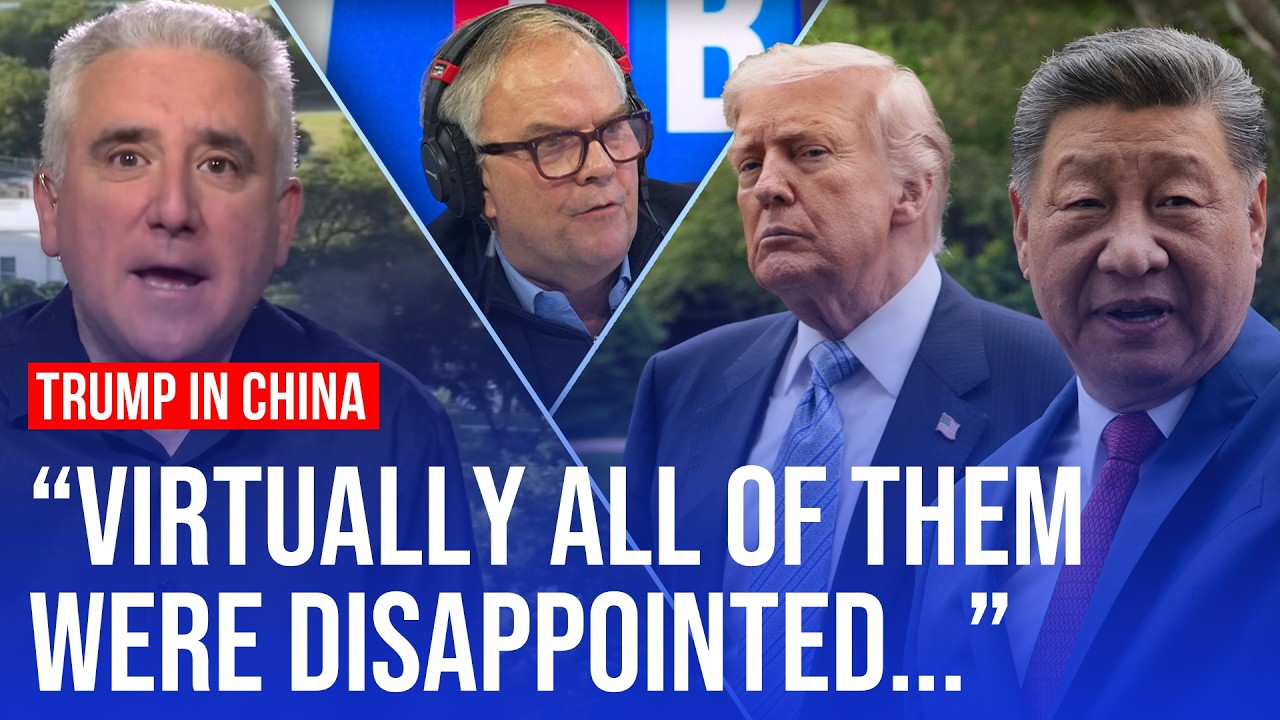

How China forced Trump into talking about ‘the one thing he didn’t want to’
May 17, 2026


China's Xi Jinping hailed positive trade negotiations with the United States at the start of a two-day summit with President Donald Trump in Beijing on Thursday. Simon Marks is on hand to make sense of it all. With his approval ratings dented by his entanglement in the Middle East, Trump's hotly anticipated trip to China - the first by a US president to America's main strategic rival since his last visit there in 2017 - has taken on added significance. "You're a great leader, sometimes people don’t like me saying it, but I say it anyway," Trump told Xi after the Chinese leader treated him to a grand reception at Beijing's imposing Great Hall of the People, featuring an honour guard and throngs of children excitedly waving flowers and U.S. and China flags. "There are those who say this may be the biggest summit ever," Trump said. "It's an honour to be with you. It's an honour to be your friend and the relationship between China and the USA is going to be better than ever before," he added. Xi opened the summit by telling Trump that a stable China–US relationship benefits the entire world. "When we cooperate, both sides benefit; when we confront each other, both sides suffer." He also said preparatory talks by economic and trade teams in South Korea on Wednesday had reached an "overall balanced and positive outcome", according to a readout by China's state-run Xinhua news agency. The latest round of negotiations aimed to maintain the trade truce struck last October and establish mechanisms to support future trade and investment, officials with knowledge of the matter said. Xi also told Trump that if the Taiwan issue is not handled well, the two countries will clash or even come into conflict, pushing China-US relations into "a very dangerous place", Chinese state media Xinhua reported. He called Taiwan the most important issue in China-US relations in his meeting with Trump, according to Xinhua. Joining Trump on the trip are a group of CEOs looking to resolve issues with China, including Elon Musk and Nvidia CEO Jensen Huang, a late addition. Trump has said his first request to Xi will be to "open up" China to U.S. industry. Musk, Huang and Apple's AAPL.O Tim Cook were present during the opening talks between the leaders, with Musk telling reporters they were "wonderful" as he left the Great Hall. This week's leaders' meetings will provide plenty of face time between Xi and Trump: after their initial talks, they will tour the UNESCO heritage site Temple of Heaven and attend a state banquet on Thursday, before taking tea and lunch together on Friday, according to the White House. The power dynamics have changed since Trump's last visit to Beijing when China went out of its way to lavish Trump and buy billions in U.S. goods, said Ali Wyne, senior adviser for U.S.-China relations at International Crisis Group. Back then "China was trying to persuade the United States of its growing status... This time around it's the United States, unprompted, of its own volition, that is acknowledging that status," Wyne said, pointing out Trump revived the term 'G2', referring to a superpower duo, when he last met Xi on the sidelines of an APEC meeting in South Korea in October. Trump enters the talks with a weakened hand. US courts have hemmed in his ability to levy tariffs at will on exports from China and other countries. The Iran war has also boosted inflation at home and escalated the risk that Trump's Republican Party will lose control of one or both legislative branches in November's midterm elections. Though the Chinese economy has faltered, Xi does not face comparable economic or political pressure. Nevertheless, both sides are eager to maintain a trade truce struck last October in which Trump suspended triple-digit tariffs on Chinese goods and Xi backed away from choking global supplies of rare earths, vital in making items from electric cars to weapons. They are also expected to discuss forums to support mutual trade and investment and dialogue on AI issues. Washington looks to sell Boeing BA.N airplanes, farm goods and energy to China to cut a trade deficit that has long irked Trump, while Beijing wants the U.S. to ease curbs on exports of chipmaking equipment and advanced semiconductors, officials involved in the planning said. Aside from trade matters, Trump is expected to encourage China to convince Iran to make a deal with Washington to end the conflict. But analysts doubt that Xi will be willing to push Tehran hard or end support for its military, given Iran's value to Beijing as a strategic counterweight to the U.S. Listen to the full show on the all-new LBC App: https://app.af.lbc.co.uk/btnc/thenewlbcapp #politics #trump #china #LBC LBC is the home of live debate around news and current affairs in the UK. Join in the conversation and listen at https://www.lbc.co.u
Show More Show Less