Up next in 10

'We're heading towards MASSIVE war' as Western leaders 'BOYCOTT diplomacy' | Glenn Diesen
May 13, 2026


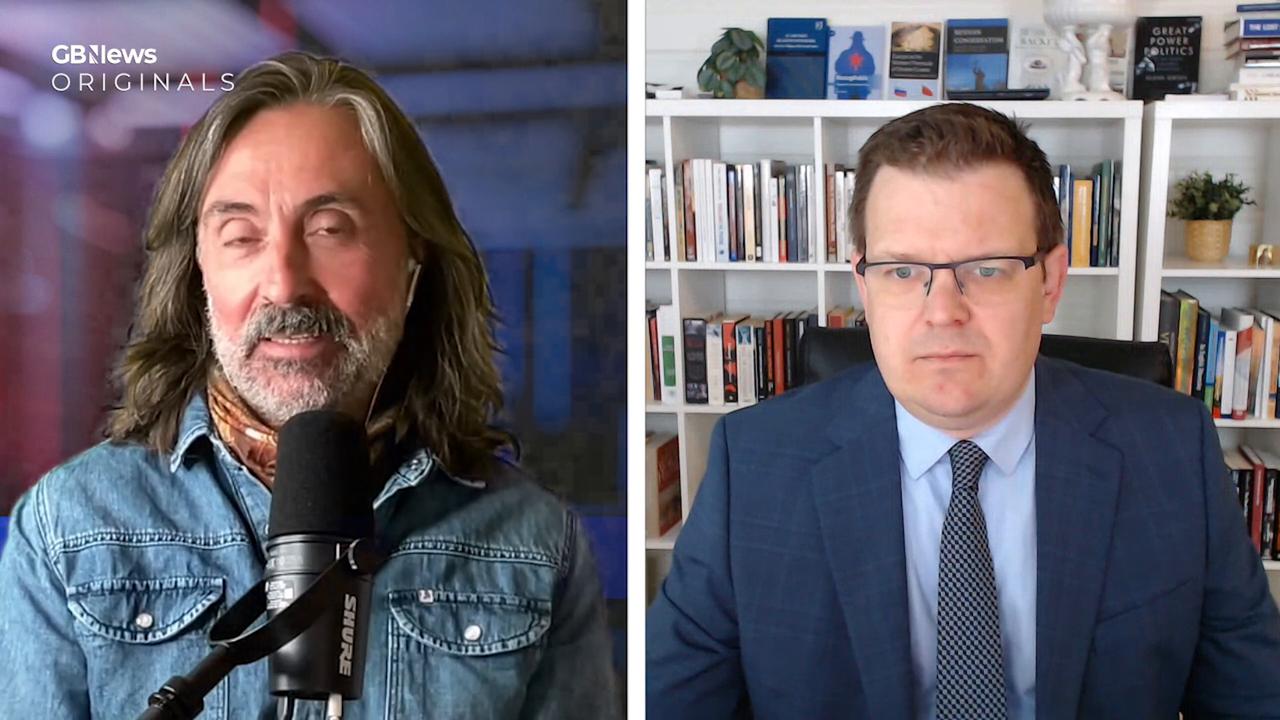
Professor Glenn Diesen has warned the West is heading towards “a massive war” because leaders are “boycotting diplomacy” and escalating conflicts with Russia and Iran instead of pursuing compromise.Speaking to GB News, Diesen claimed the “unprovoked” narrative surrounding Russia’s invasion of Ukraine had been used to shut down dissent and justify endless escalation, arguing Western governments now see diplomacy itself as “appeasement”.
Show More Show Less View Video Transcript
0:00
Hello everyone, thanks for joining me once again on GB News Originals. My guest for interview today is Glenn Deason, whose content online I have been watching for a long time now
0:10
Glenn Deason, Professor Deason, is a professor of business and social sciences at a Norwegian university, also specialising in Russian subjects, Russian topics
0:23
I have found him to be an extremely useful and informative source of fascinating content
0:30
Thanks for joining me, Professor Deason. Professor Deason, I have found you an incredibly useful source of information over the years
0:39
Via your podcast, you have turned the spotlight on voices that I certainly don't see getting much attention on the rest of, let's say, mainstream media
0:48
I'm talking about people like Jeffrey Sachs, Larry Johnson, Scott Ritter, Saeed Miranda, Alex Cranor, one or two of whom I do know a little bit
0:57
I wonder how much of a personal development you have been able to enjoy having had that kind of one-on-one access to those voices
1:08
well it's been great again I did my doctorate in European security
1:15
and over the past 11-12 years I wrote 11 books on Russian foreign policy
1:22
and also I read the work of a lot of these people all my classes teaching
1:28
we pretty much have Mersheimer for example on the reading list so it's been very rewarding to read them
1:33
kind of my main reason for wanting to do that podcast As I see around the world, we have all these prominent experts with very important ysis and perspectives
1:44
But in the media climate at the moment, they simply cut out anyone who doesn't agree with the established narratives of NATO
1:56
So, for example, I have Jack Matlock, who was the U.S. ambassador to the Soviet Union, who negotiated an end to the Cold War
2:03
You know, why wouldn't the media want to talk to him? I have a former CIA director for Russia ysis
2:09
He is quite interesting. I've had the former head of the German armed forces on
2:13
And so you get all this interesting voices, a lot of academics, ambassadors
2:19
and the various experts, also a president. And essentially the reason why the media doesn't want to hear from them
2:27
is because they're not repeating the war slogans of NATO. and well of the political west so whenever you have a war which makes little sense such as the
2:41
war we're fighting against russia or iran or any of the other wars we get engaged in there's only
2:46
one perspective that is permitted and so i thought why not bring on all these experts who have the
2:52
expertise but are being cut off from the debate because they essentially have the wrong conclusion
2:59
We have recently in Britain, I'm resident in Britain, we've recently had elections in England, in Scotland
3:08
I wonder what you made of Prime Minister Keir Starmer's reaction to the results
3:16
It was a disastrous election, I think it would be fair to say, for the Labour Party in Britain
3:20
Starmer is vowing to fight on and effectively to deliver to the people more of the policies
3:28
which they have roundly rejected. I wonder, looking at us from the outside, whose asset do you think Keir Starmer is
3:42
Well, it's quite fascinating, of course, what's happening with Starmer, but it's not all that unique
3:48
You see the same with Macron in France, for example. He will hold on no matter what the French people vote for
3:56
You know, the government will be organized around him. You see Chancellor Mertz, which by comparison, the Starmer starts to look popular, but he will also not leave
4:08
And indeed, when they see now that the largest political party by support is the alternative for Deutschland or AfD, the main reaction is, well, how do we start the process of banning this party
4:22
And indeed, they already criminalized it as an extremist organization, which allows them to use the intelligence services to go after them
4:29
So there is no appetite for any dissent, but you also have to deal with the reality that they're very, very unpopular because they no longer reflect the very basic national interest
4:42
And this is why they're creating a massive legitimacy crisis and a huge vacuum, which will allow any, I guess, populist forces to step in and take over
4:52
And, you know, this can be a positive thing, but it also allows for a lot of untested alternatives to come in
4:58
So if you're in Britain, I have no idea how Nigel Farage is going to rule Britain
5:03
But again, people are so sick of the current establishment that they're willing to roll the dice now on anything
5:11
Indeed, that's why they had elected Trump in the United States as well. It's not because of them
5:17
It wasn't despite of the media and the political class hitting him. It was because of it people voted him in
5:23
Of course, he's no different than the rest. So I think I see Britain falling in the same category, that is of a political class which has distanced itself too far
5:35
It's serving interests of an economic oligarchy. It's serving the interest of international institutions and military blocs like NATO
5:47
And I think this is the wider problem we have now across the West. When people say the populists say they go against the globalists
5:55
that's what they're referring to. They're referring to a denationalized elite, which doesn't have the same interests anymore in the nation state
6:05
To what extent do you think, we've talked about Starmer, you've name checked Macron, Mertz
6:15
to what extent does it feel like, and especially based on the broad spectrum of ysis that you've drawn from with your podcast
6:26
that there's a determination to perpetuate the conflict in Ukraine en route to some kind of full-scale kinetic conflict with Russia involving the European powers
6:45
just listed no i think that's definitely the the direction we're going and that was kind of obvious
6:53
from the beginning when russia invaded ukraine because everyone understood what this war was
7:01
about because many people had warned about it since the 90s with nato expansion that we would
7:07
revive the logic of the cold war especially everyone knew that the the brightest of all red
7:13
lines, as the former CIA director William Burns said, was Ukraine. Angela Merkel once said that if we if we offer a NATO membership to Ukraine with the membership action plan Moscow would interpret it as a declaration of war
7:28
So we all knew back then that, first of all, the majority of Ukrainians did not want to be part of NATO
7:34
And second, we knew it would trigger a war. Yet the most important thing was once the Russians invaded, the main narrative that came out was unprovoked
7:42
Every newscaster, every politician, everyone had to repeat this word, unprovoked. And I think this was a very important part of the foundational narrative
7:51
because if we recognized that it was provoked as it was, then we would seek to reduce the security competition
7:59
We would look for compromises based on how we provoked as well
8:04
However, when you say it's unprovoked, then you have this strange narrative of the Russians waking up one day
8:09
wanting to restore the Soviet Union or the Russian Empire. And under this logic, any compromise, even diplomacy, would simply be appeasement
8:22
It would be an emboldened Putin, they say. So after then he got the reward for invading
8:30
He would seek more concessions. So suddenly the logic is, well, if it's unprovoked, then we have to elevate the cost
8:38
because this is just military opportunism. In other words, let's boycott diplomacy because that's a reward and let's just send all the weapons we can
8:47
For me, this was evident that now it would just be escalation towards a direct war, which would likely result in a nuclear exchange at some point
8:58
Because that's what we've been doing. Our political leaders boycotted diplomacy now for more than four years, refusing to talk to the other side, even as they watched all these hundreds of thousands of young men die
9:09
and they just send more and more weapons and become more and more bold in terms of long range
9:15
and of course targeting the targeting of Russian cities so this is heading
9:25
a very dark place because at the moment the Europeans are escalating because things are not going well
9:31
on the front line, the Americans are signaling listen, we've outsourced this war to you, this is your problem now
9:36
and meanwhile the Russians are now in a position where they really need to restore their deterrent so they have to strike back and
9:44
given that the europeans are escalating and the americans are pulling away i think this is the
9:48
opportune time now for well if you're sitting in the kremlin to think well now is the time to
9:52
restore deterrent so i think we're heading towards a massive war and again this is something i warned
9:58
about all the back since 2022 but as we know that comes at a huge social cost because no one is
10:06
allowed to deviate from this foundational, unprovoked narrative. When it comes to Trump, President Donald Trump's White House, and the ongoing conflict in Iran
10:25
that you've already mentioned, within it, looking on at it, is there, in your opinion, a grand plan
10:35
however Machiavellian, that sees America emerge triumphant after some sort of grand global reset
10:44
Or alternatively, is it a terrible mistake followed by terrible mistake after terrible mistake
10:54
as broadly incompetent people keep doubling down on the original mistake? Well, I think it was a big mistake
11:05
given that the U.S. can't win this war. And I guess the objective was quite clear
11:14
That is, let's knock out Iran. They keep referring to things like regime change
11:19
But in Iran, we have to be honest, there's no backup government waiting in the rear that can take over
11:25
So any regime change would likely result in some fragmentation, if not vulcanization of Iran
11:31
you know maybe best case make it into a basket case like syria or simply break it up like
11:38
yugoslavia it's hard to say where this would go but anyways destruction of the current state of
11:43
iran is the objective and this now does not only allow for the united states to reassert its
11:48
dominance in this oil rich region and seize a lot of the resources it also would be a stepping stone
11:56
to weakening the other eurasian great powers be it russia and china so these objectives
12:02
you know for at least from my perspective seem to be very clear the problem is that
12:09
the u.s went in they weren't able to knock out the government the regime change didn't work
12:14
and even as they're able to degrade the iranian army they realized that that the country's more
12:23
let's build up like a fortress and a lot of the weapons they need to shut down the Strait of Hormuz
12:27
doesn't require you know that you know doesn't require an air force or a very complicated navy
12:33
you just need the drones and the missiles which they build and store below the ground so there's
12:40
not much the Americans can do and I think this is the problem for Trump because he thought you know
12:45
I'll go in I'll try to knock out the government if I'm successful you know they build that big
12:50
statue of me if i fail i can do what i did in yemen declare victory and go home the problem is
12:55
the iranians will not go back to the status quo these decades of crippling sanctions and military
13:00
threats so they say we're going to hold on to the strait of humus because as long as they can hold
13:05
on to the strait of humus they can not just put up a toll booth to take reparations for the disaster
13:12
that the u.s inflicted on them but they can also have higher tolls on countries that put sanctions
13:18
on it so they can put incentives to have the sanctions removed and they can put higher tolls
13:23
on countries that have attacked or threatened iran so if you're hosting american military bases for
13:28
example or they can offer no toll for countries that decide not to sell their oil in dollars for
13:34
example so iran can dismantle the u.s position in the middle east and this is why the u.s can't
13:41
afford to leave but they also can't defeat the iranians so i think trump has trapped himself and
13:48
And he's made a big mistake. At the moment, the strategy appears to be to take it away from a high-intensity war
13:55
because the U.S. can't sustain it with the weaponry. So they're putting it on the slow burner
14:01
trying to more slowly choke off the Iranian economy and attack every now and then important infrastructure
14:10
But at some point, they're going to have to make a decision, all in war or pull back but then lose their position in the Middle East
14:21
You said at the top of that answer that America cannot win this war
14:26
I've listened to various commentators on your podcast, John Mearsheimer, Jeffrey Sachs, Scott Ritter, others
14:34
basically laying out the same diagnosis. to what extent do you think that is the opinion of the populations of the West let say of Europe of the United States of America or do you think the public at large a majority of the public at large still believes in US supremacy in all things military
15:01
and believes that this is going the way Trump says it is going? well i think the public at large they're fed through the media the usual talking points so
15:13
first of course you build up the case for war so you say oh we can't accept these crazy irrational
15:19
mullahs from getting a nuclear weapons we have to also liberate the you know the women of iran
15:26
that they won't be oppressed so you have all these kind of narratives well first of all i consider this
15:32
to be absurd this is not why great powers go to war uh you know this is how great powers sell wars
15:38
and again with the nuclear issue it's something that can win over the public because nobody wants
15:45
iran to get nuclear weapons uh but but again the media will admit then that there's no
15:51
credible uh intelligence suggesting that we're getting nuclear weapons and also So, yes, we learned in the war against Afghanistan, presenting this as being a war to help the girls go to school, for example, as it was in Afghanistan, is only to sell the war
16:11
And furthermore, even if that was the objective, everything goes contrary to it
16:15
So we see, for example, Iran, you know, now they have a real reason to develop a nuclear weapon because Iran, Israel and the United States will not give up on attacking Iran
16:28
So now they need a deterrent and nuclear weapon is the ultimate deterrent
16:33
So, you know, if this was really the objective, they have undermined it to a huge extent
16:41
But overall, it's a bit like the war in Ukraine. And every now and then, not every now and then
16:46
continuously it has to be fed in the media. Oh, they're winning, they're winning
16:50
And they tweak the casualty numbers, what's happening on the front lines
16:55
They're misrepresenting and omitting key information because they're not there to inform
17:00
They're there to sell a war and they have to make sure that the public remains committed to the war
17:05
So again, this is the same thing in Ukraine as it is in Iran
17:09
That is just feed the public information or disinformation, which results in them wanting to support the war further
17:19
And this is where the crazy logic often comes in. Because if you say something like, well, what's happening in Ukraine is horrible
17:28
We have all these young men being dragged out of their homes and sent to the front line to die
17:34
What your media or your average journalist hear is, oh, that means he's undermining support for the war
17:41
that's a bad thing now you're anti-ukrainian so if you worry too much about individuals
17:46
and it's the same logic they have now you see in the in the war against iran they're essentially
17:52
arguing well if you dispute these crazy numbers that the iranian government killed 42 000 of its
17:57
own people well that means you're trying to bring legitimacy to the government that means you're
18:02
defending them and now you're anti-iranian because nato allegedly stands up for you know the iranian
18:09
civilian population. So if you really, really care about the Iranian people, you will support
18:14
any narrative that justifies the bombing of their country. So it's a very absurd and cruel
18:21
media narrative we're living under. Do you think at any point Donald Trump was well-intentioned? Because looking at the
18:34
prosecution of the war in Iran. For example, I don't think anyone disputes now that there's
18:41
a pattern by which large amounts of money move on stock exchanges or in relation to
18:48
the price of oil or whatever, a very short period of time before a significant announcement
18:53
comes out of the White House, which sees enormous profits harvested from those movements of
19:00
money that took place before. Is it credible that he was well-intentioned or is he
19:08
a willing dupe of a scheme that just sets the world on fire
19:19
that destabilises that entire territory and that that was okay with Donald Trump
19:23
as long as he was able to take advantage of certain fringe benefits
19:30
Well, I don't think that, well, again, I have no evidence for it, but I don't think that the money was necessarily the, you know, placing his bets was the motivation for going to the war
19:42
I think, again, he saw America's weak. Not the motivation, but do you think he was ever persuaded genuinely of a betterment that would be the result of prosecuting that war in Iran
20:00
Well, I think he had the intentions of restoring U.S. dominance and also building a good reputation for himself as the president who was finally able to resolve the Iranian question
20:14
Earlier you mentioned the efforts and the lengths the German administration has been going to confront AFD, an alternative for Germany
20:26
in London this weekend there's a proposed rally organised by
20:35
Tommy Robinson it's a repeat of an event that was held last year
20:41
it's predicted to be a very large gathering of national flags and patriots and
20:47
all of the rest of it, it's been routinely labelled or smeared
20:51
by the mainstream media as right-wing extremism Keir Starmer's government has banned access to seven proposed speakers at the event
21:06
including Eva Vlaringebroek, who I do know, and she's been very outspoken in terms of
21:15
you know, in relation to unplanned or unresisted immigration. I wonder for all of that
21:24
what it begins to say about fundamentally the relationship between the administrations of Western Europe and their people
21:36
When censorship, smearing and cancellation seems to be all that the administration has left in the face of mass opinion from the people
21:48
no i think this is yes before this is a legitimacy crisis they have these governments which have not
21:57
been looking after their own people they have not been pursuing very basic national interests and for this reason um the the public will begin has begun to reject them So what do you do in such a situation Do you allow for opposition to come in for a correction
22:17
No. These political elites will now use more and more smears, as you said
22:22
They will have censorship, cancellations, and as you see in the European Union
22:26
they also put sanctions now on their own citizens. and I think this is the authoritarian direction we're going
22:34
because they can't defend their policies anymore under open debate. So then essentially freedom of speech is rolled back
22:43
And it's also these labels and terms to use far right. I mean, of course, there's not all nationalists which are very appealing
22:55
but there has to be a space for them as well to be able to to make their case and i saw in the
23:04
you know calling the the political right in britain far right for example that it doesn't
23:10
really mean anything anymore it's just labels they use to legitimize cancellation i saw today
23:16
in the financial times they refer to ifd you know a far right which makes them sound like an
23:22
extremist party but who is the center you have at the heart of it you have a chancellor mertz this
23:28
black rock banker who uh you know who is now the most unpopular leader in europe he backed the
23:35
genocide against the palestinians when iran was bombed he said that the israelis are doing our
23:41
dirty work for us he you know now backs this uh very direct uh involvement of germany in the war
23:50
against Russia. You see him leading the censorship campaigns, targeting the political opposition, talking about having the
23:58
biggest, Germany should have the biggest military in Europe. So this is the normal, what they're normalizing. And then you have
24:05
what we call the far left and the far right, which is often where you find
24:09
the peace movements, where they're saying, now perhaps we should put an end to this
24:14
Perhaps speaking to the opponent is not to our adversaries is not the worst thing in the world
24:21
And somehow they're the extremist and the center is the normal one
24:26
I think it's the contrary. I think we have established a very dangerous ideological consensus
24:33
across the European states. And it's very suffocating. There is no room for dissent
24:41
So you see it emerging on what they call the far left and the far right
24:44
again it's a bit of a gambling because we don't know if they actually have the solutions this
24:50
populist merging but at least it's an alternative to uh to the well illegitimate and the increasingly
24:58
crazy politicians we have when when i introduced you uh glenn i mentioned that i saw you as a as a
25:06
as a source of a distillation of a lot of important or at the very least interesting
25:12
alternative voices. And you having had the benefit of listening to all of that
25:19
have you yourself distilled what you think is the next phase? People talk about an off-ramp for the United States of America
25:32
and Iran. I listen to ysts and commentators saying that a way out
25:39
of this has to be found. Have you listened to anyone and been persuaded that they are pointing the way to the likely outcome of what we're seeing in Ukraine, in the Middle East at the moment
25:56
I don't see it yet. And I think that part of it is because what makes this current time in history so dangerous is because we're between two world orders
26:08
and it's exactly because we're in the middle that we don't have common rules anymore so for example
26:14
traditionally when you have you know many centers of power many great powers the way you pursue
26:21
security is you know you put yourself in the shoes of the other side you try to understand their
26:26
security concerns you discuss it you have diplomacy with them in order to find out where your interests
26:31
can be harmonized and how to manage competition when it can't be harmonized and this has kind of
26:37
always been the process well after the cold war we had one center of power and under this hegemonic
26:43
world order the rules of the world changed fundamentally suddenly we didn't have to take
26:48
into account the security concerns of our opponents indeed this was kind of a lesson in the 90s when
26:53
people said should we really expand nato this will uh you know threaten the the russian but as
26:59
as the u.s uh well secretary of defense back then uh argued under clinton uh everyone in the clinton
27:06
administration said yeah of course they feel betrayed and threatened but what can they do
27:10
they're declining power oh we can't talk to putin for example because then we reward him he has to
27:16
first do at his do as he's told and then we'll reward him by allowing him to meet with our
27:22
political leaders so it there's no compromise anymore there's no negotiations so i think this
27:30
is why we're in a very difficult spot and i think at the moment no matter how you want to solve it
27:35
if you want to solve the war with against russia uh this is a war between multipolarity and
27:40
unipolarity we want to continue the same approach we don't want any political settlement in nato
27:45
which stops what we've been doing which is this gradual expansion of nato enrolling our military
27:51
infrastructure closer and closer to russian borders same as iran whatever solution the u.s has it has
27:58
to be that the u.s remains dominant in the region there's no willingness to live uh you know next to
28:04
iran as a as a normal great power or a large power at least every every peaceful settlement has to
28:12
essentially be a stepping stone to well we'll put on the pause and then we'll have another go at it
28:17
later this is what we saw with the russians as well we put the minskip agreement in 2015
28:22
it was a hoax for 20 years and now the europeans are saying well saying oh let's do a ceasefire
28:28
that's not peace what they want is to you know prevent the russians from moving forward rebuild
28:33
the Ukrainian armed forces and then essentially go on and weaken Russia again in the future
28:38
So nobody wants to actually have a new status quo, which essentially cements this
28:45
multipolar distribution of power. And I think that's where the world is at the moment
28:50
And there's a lot at stake. Everyone's willing to make huge risks
28:55
And I think that's where we're going down a very dangerous path. Professor Glendison, it's been so useful for me
29:03
to listen to you. I'm delighted I've been able to have the opportunity to get that distillation
29:08
that I was looking for. Thank you so much for your time. I hope we speak again. Thank you for having me on
29:16
Thank you for joining me on GB News Originals. If you've enjoyed the content, don't forget to
29:21
click and subscribe. And if you haven't already done so, why not go to the App Store and download
29:27
the GB News app
news